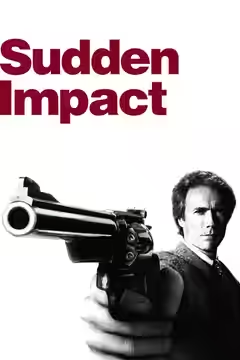
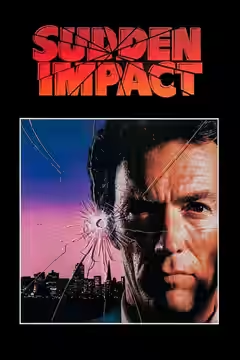
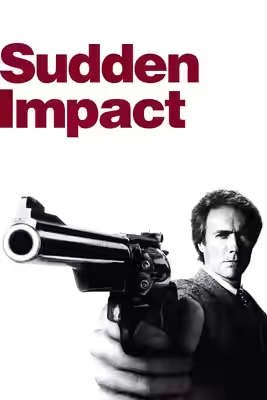
Clint Eastwood gives Sudden Impact enough force and moral discomfort to sustain another investigation. The familiar action and awkward humour limit it, but there is more here than a policeman testing a new gun.
Sudden Impact is a decent, troubling crime thriller that becomes less interesting whenever it settles for another display of police firepower. Clint Eastwood directs and plays Insp. Harry Callahan, whose investigation raises questions about the justice he is supposed to uphold. There is enough force here to keep the familiar material moving, and enough discomfort to make some of it linger. We recommend it to those already interested in this kind of thriller, with reservations about its uneven seriousness.
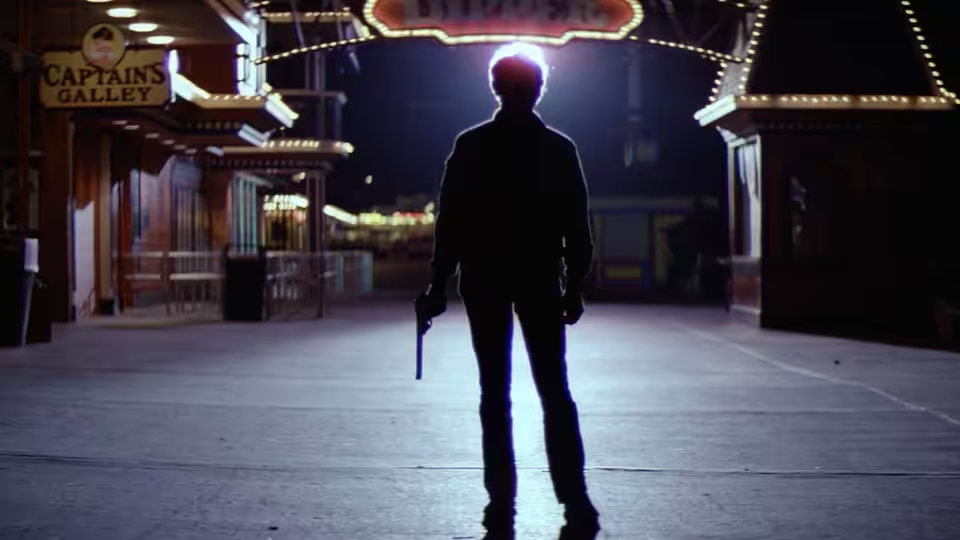
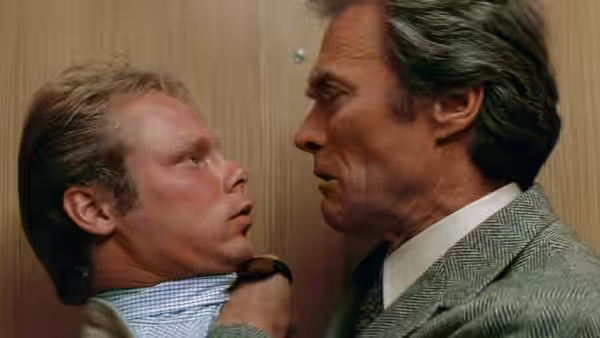
Bruce Surtees’s cinematography and Joel Cox’s editing are central to the film’s harsh, fragmented presentation. We were unsettled by the violence, because those broken glimpses make the action difficult to enjoy simply as a demonstration of competence. The confrontations have force even when their construction feels obvious. The film makes the prospect of further violence unpleasant, which gives it an advantage over thrillers that expect applause every time a weapon appears.
The investigation also raises the question of how a community becomes complicit in wrongdoing, and how much an individual officer can claim to put right. That gives the trail of corpses some weight beyond the next clue. We wanted the screenplay, whose credits include Joseph Stinson and Clint Eastwood, to press harder on the assumptions behind its account of justice. Too often, the ugliness of the situation seems to be offered as sufficient reason to accept the thinking behind it.
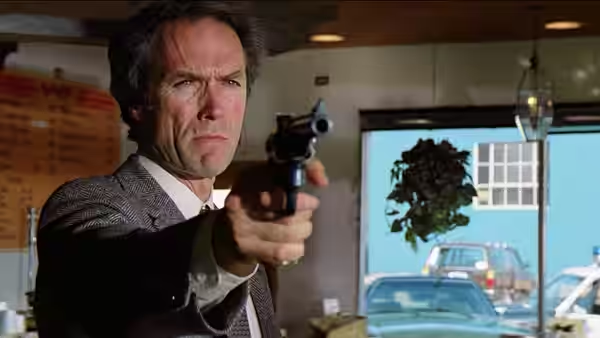
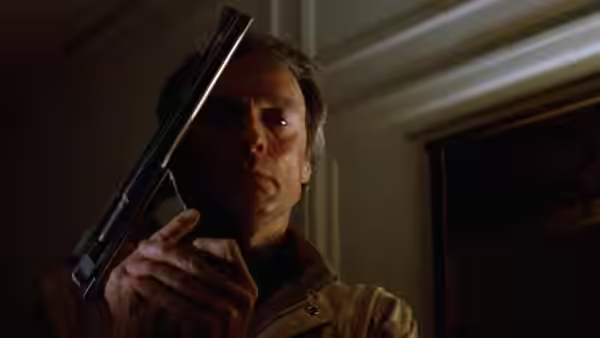
The flatulent dog creates a different problem, and one the film has brought upon itself. A grim investigation can accommodate a foolish interruption, but this joke sits awkwardly beside the violence and makes the changes in tone harder to accept. It feels like an attempt to reassure us that familiar pleasures are still available. The new .44 Magnum Automatic is a more conventional attraction, though we would rather spend longer with the inspector’s difficult decisions than admire another piece of equipment.
Lalo Schifrin supplies music that helps the action exert its pressure, while Edward Carfagno’s production design supports the sense of a threatening place to conduct an investigation. Both contributions serve the immediate demands of the thriller effectively. They cannot do much about confrontations whose direction is too readily apparent, and the film occasionally seems content to rely on force alone. Its questions about the inspector’s responsibilities deserve more attention than the action allows them.
As a police thriller, Sudden Impact has more interest in moral uncertainty than its new gun might suggest. It also remains attached to a formula that is beginning to feel worn, so the difficult questions never fully displace the expected action. That leaves a film with enough conviction to reward an interest in this particular policeman, but not enough freshness to make an easy recommendation beyond it. Come for the uncomfortable investigation; the dog can be endured.