F. W. Murnau’s South Seas romance is worth seeing for its leads and Floyd Crosby’s photography. The story is thin, and island life gets little attention, but Matahi and Anne Chevalier make the lovers matter.
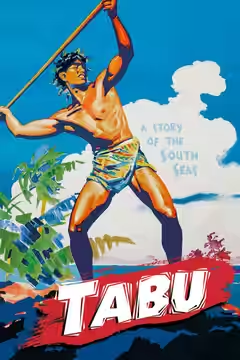
F. W. Murnau’s Tabu: A Story of the South Seas is a spare romance that gives its lovers an unusually heavy share of the work. We recommend it for their performances and the photography, with a reservation about how little attention the story gives the people around them. The concentration on the couple makes their attraction persuasive. It also leaves us wanting to understand more about the community in which their relationship has to survive.
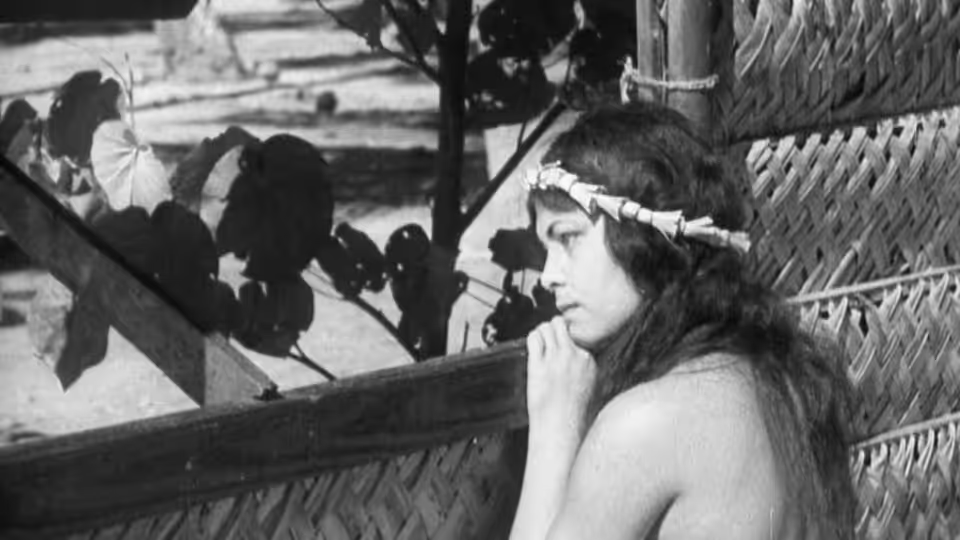
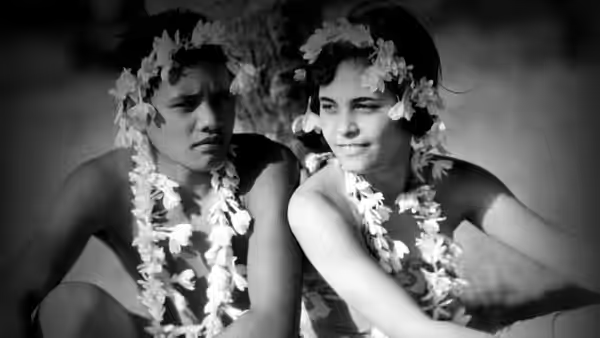
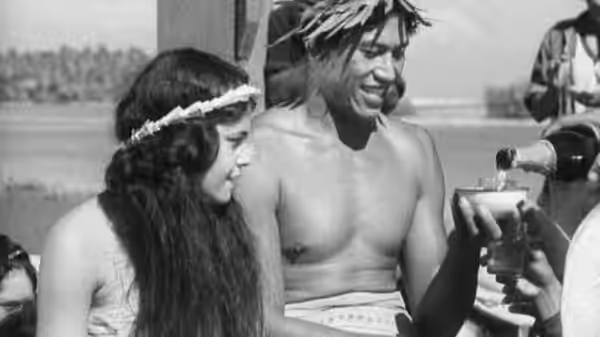
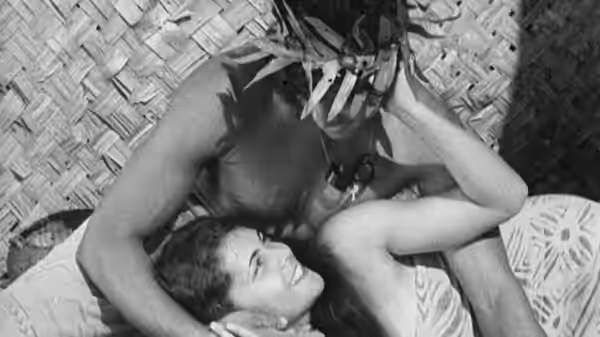
Matahi, credited as The Boy, and Anne Chevalier, credited as The Girl, make that narrow focus rewarding. Their appeal needs little explanation, and both remain interesting when the narrative has little to offer them. We were moved by their attachment because the performances make it feel urgent, even within such a slight story. There is enough individual feeling here to prevent those broad character names from turning the couple into anonymous illustrations of young love.
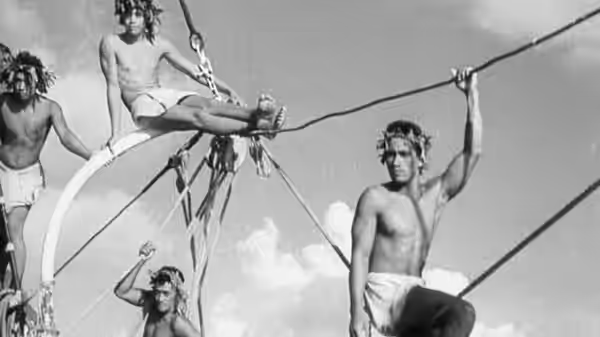
Floyd Crosby’s cinematography gives the romance much of its conviction. The use of natural light allows the outdoor setting to feel changeable and inhabited, and the lovers seem to belong in their surroundings. We can enjoy looking at these images without waiting impatiently for the next piece of information. F. W. Murnau’s direction accommodates the outdoor conditions rather than making everything look fixed and arranged, though the pleasure of watching occasionally distracts from how little the writing has established.
Arthur A. Brooks’s editing cannot quite disguise the shortage of dramatic material at the start. The opening takes a while to establish a firm hold, and there are stretches when the attention lavished on the images exceeds our interest in the story. As the romance gathers force, the concentration on the couple becomes more persuasive. At 86 minutes, the film is hardly overextended, but a short running time does not make every passage equally absorbing.
Hugo Riesenfeld’s music contributes to the emotional pull, though the leads need less assistance than the thin narrative does. The screenplay credits name Robert J. Flaherty, F. W. Murnau and Edgar G. Ulmer; the resulting story remains narrow in incident and social detail. That simplicity is often useful, keeping the couple’s attachment clear and allowing the photography room to work. It becomes a limitation when we want some fuller sense of the lives surrounding them.
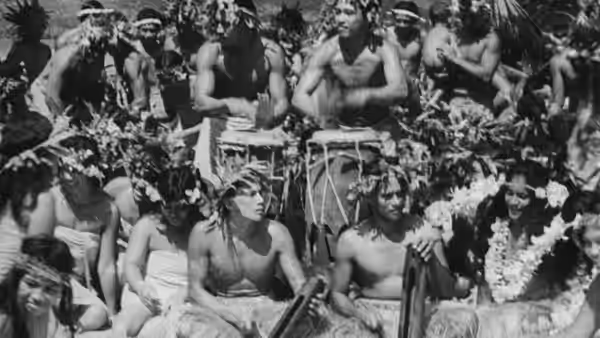
The limited attention to island life is the substantial caveat. A romance need not explain an entire society, but this one draws enough feeling from its location to make the lack of curiosity noticeable. Hitu’s The Old Warrior and Bill Bambridge’s The Policeman suggest a wider community that deserves more consideration than the central love story permits. We would have welcomed more of that world, even if it meant spending a little less time with the couple.
As a romance, the film succeeds because Matahi and Anne Chevalier remain worth watching through the quieter and less convincing passages. Their presence gives us a reason to care beyond the considerable pleasure of the photography. This suits an evening when there is time to attend to faces, light and movement without asking for a complicated plot. Give the uneven opening some patience; the lovers earn it.