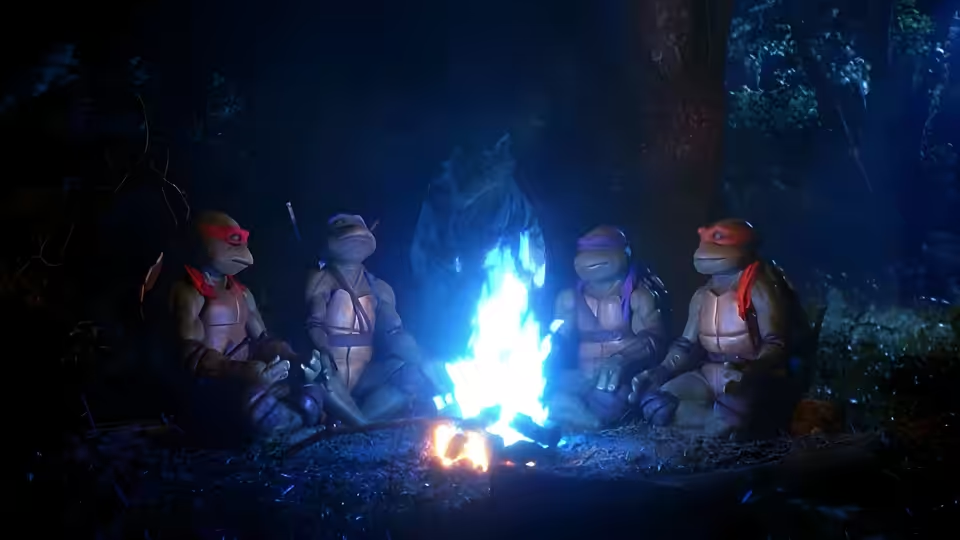
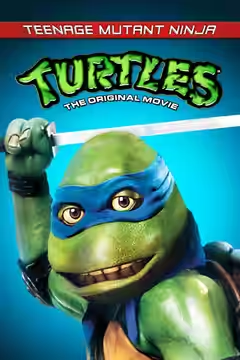
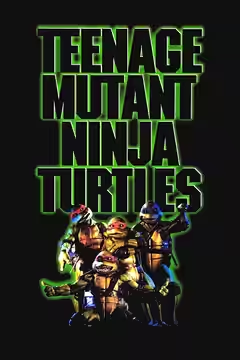
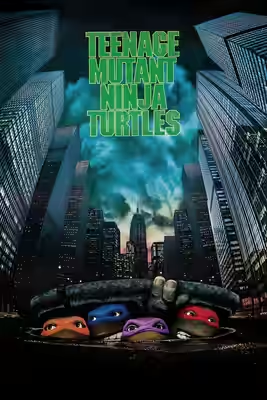
Steve Barron’s Teenage Mutant Ninja Turtles is a likeable martial-arts comedy whose creature effects and distinct personalities survive some sluggish storytelling. It earns an evening for families happy with scrappy action and adolescent jokes.
Steve Barron’s Teenage Mutant Ninja Turtles is a likeable action comedy with more personality than its sluggish plotting ought to permit. It works because the four leads are worth spending time with, even when the story has not found much of interest for them to do. Barron lets their differences matter instead of relying entirely on the novelty of seeing a Turtle perform martial arts. That is enough to sustain a modest recommendation, especially for a family audience willing to forgive some rough edges.
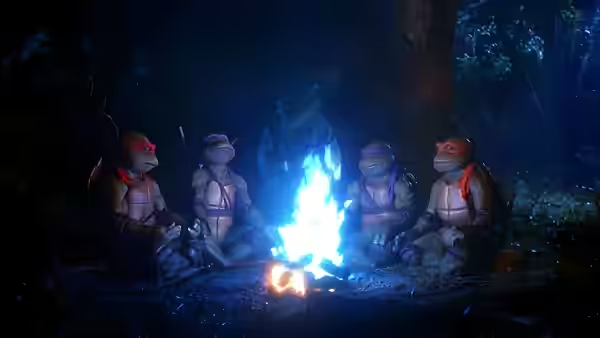
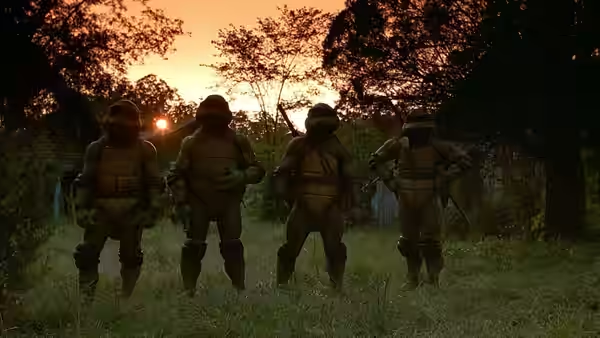
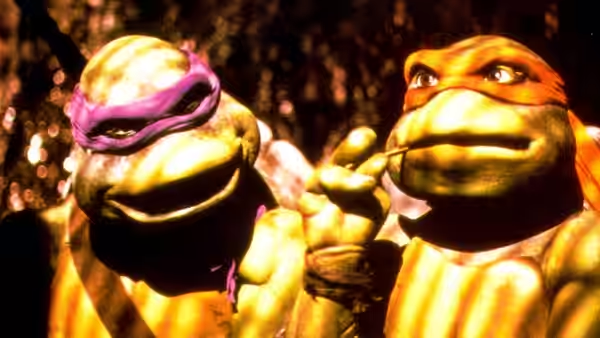
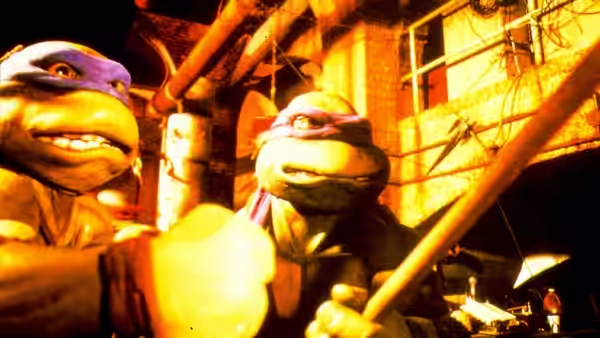
The creature effects do much of the work. The animatronic effects give the Turtles enough expression to carry a comedy; looking like plausible animals is hardly the requirement here. We laughed at their martial-arts clowning because the fighting gives their adolescent personalities another way to show themselves. The physical comedy works even when the action itself is not particularly exciting, and the creatures can hold our attention through a joke without needing another fight to start.
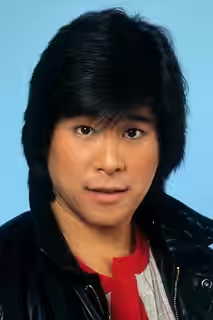
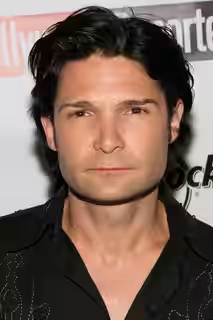
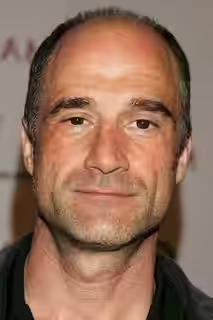
Brian Tochi voices Leonardo, Josh Pais voices Raphael, Corey Feldman voices Donatello and Robbie Rist voices Michelangelo. The four are distinct enough for a joke to change with the Turtle delivering it. Their humour has a welcome cheekiness that gives adults something to enjoy alongside the action. Judith Hoag as April O’Neil and Elias Koteas as Casey Jones have considerable competition for attention. The Turtles remain the attraction, and the film is sensible enough to give their comic exchanges some room.
The surrounding craft is uneven. John Fenner’s cinematography has a roughness that does the action few favours, while Roy Forge Smith’s production design seldom commands as much attention as the creatures. There is nevertheless pleasure in watching these ungainly bodies attempt martial arts: even when the fighting lacks force, their physical awkwardness can help the joke land. The visual shortcomings are easier to forgive during the comedy, when a slightly ridiculous movement can be useful.
The larger problem belongs to the storytelling. Todd W. Langen and Bobby Herbeck’s screenplay takes too long over a plot that offers less entertainment than the characters exchanging jokes. For a film running 93 minutes, there are too many stretches when the next fight seems overdue. The editing, credited to William D. Gordean, James R. Symons and Sally Menke, does not make those passages feel brisk. The stretches between the jokes and fights need to earn their place too.
John Du Prez’s music helps supply the energy that the plotting sometimes loses. It cannot solve the stop-start rhythm, but it suits a film whose action is meant to be fun. As a martial-arts comedy, this is stronger on comic personality than on the excitement of the fights themselves. Anyone coming chiefly for precisely staged combat will have less to enjoy, although the effects give even the less persuasive action something interesting to look at.
It would be easy for a film with this title to assume that recognising the characters was entertainment enough. Barron puts enough work into the Turtles’ personalities to avoid that, and their humour remains appealing when the adventure dawdles. Choose it for a family evening, with fair warning that some patience is required between fights.