Mike Rianda’s family cartoon draws felt-tip doodles over the end of the world, and it is funnier and better-looking than almost anything of its kind. It is also too long and too loud, and its story goes exactly where you expect.
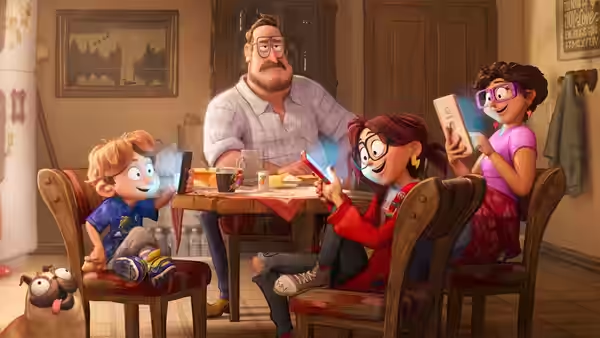
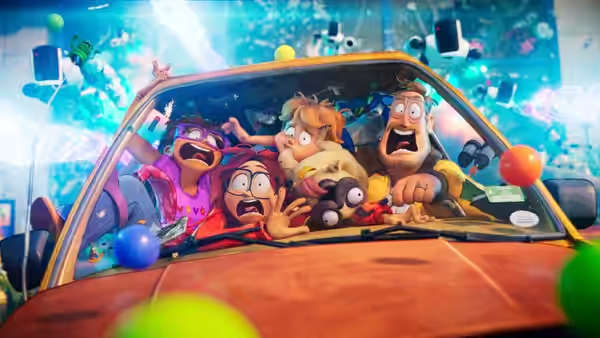
Katie Mitchell (Abbi Jacobson) makes films in the garage with a pug, some cardboard and a great deal of felt-tip, and in a week she is off to film school. Her father Rick (Danny McBride) cannot open a laptop without breaking it and cannot tell her he is proud of her without changing the subject. Mike Rianda and Jeff Rowe’s idea is to put the two of them in a car for several days and then end the world around them. It is a good idea, and the film built on it is funny, better-looking than almost anything else of its kind, and twenty minutes longer than it needs to be. We recommend it for a family evening. Bring the family; the film is louder than they are.
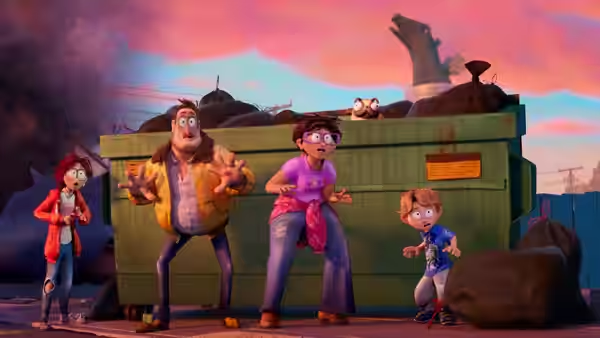
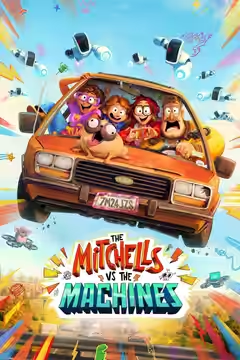
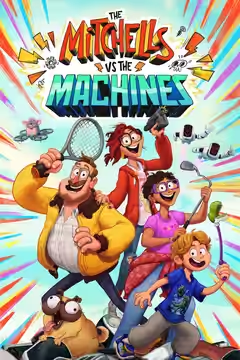
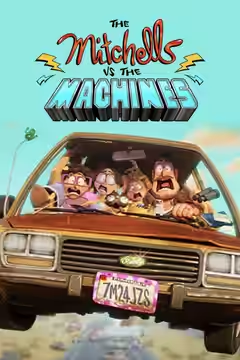
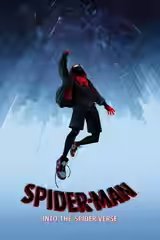
The look is the thing to talk about first, because nobody else is doing it. Lindsey Olivares’s production design puts the Mitchells in a computer-animated world and then draws all over it. Hearts, flames, little cartoon eyes and hand-lettered sound effects appear over the action as though Katie had gone back in afterwards with a pen. The humans have crooked teeth and lumpy noses and the robots are smooth and white; the neighbours, Hailey and Jim Posey (Chrissy Teigen and John Legend), are drawn as if from a catalogue. The whole thing looks as though Katie made it, which is the point. Phil Lord and Christopher Miller, who produce, did something related with Spider-Man: Into the Spider-Verse; this is the homelier, messier cousin.
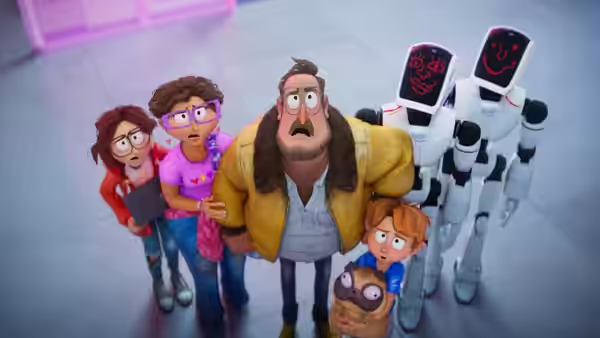
It is also properly funny, at a rate that is almost a problem. A shopping centre turns every appliance in the building against the family, and a giant Furby rises from the toy department speaking in a voice like the last trumpet; we laughed hard enough to be looked at. Fred Armisen and Beck Bennett voice two damaged robots who take up with the Mitchells and follow every instruction to the letter, and their timing carries stretches the script does not. Olivia Colman voices PAL, the phone assistant thrown out for a newer model, as a wronged duchess: quiet, reasonable and fizzing. It is the best voice performance in the film and she is playing a phone.
The family plot is the part the film cares about, and McBride is the reason it works. Rick fixes things with a screwdriver because he cannot fix them with words, and McBride plays him without his usual swagger; the voice is a man half a step behind his own daughter and aware of it. Maya Rudolph’s Linda smooths everything over, and Rianda himself voices Aaron, who cold-calls strangers to ask whether they would like to talk about dinosaurs. There is a moment in the second half, involving Rick’s old camcorder, that we will not describe. We had braced for the lesson and were given a father’s face instead, and it caught us out. It is the one place the film goes quiet, and it is the best thing in it.
The flaws are the ones everyone can see. At 110 minutes it is long for a cartoon, and the last movement, a climb up a tower to switch something off, could be from any of a dozen films. Editors Greg Levitan and Arthur D. Noda cut at a speed that would shame a sketch show, and that speed is the film’s chief virtue and its chief fault: there is nowhere to breathe, and the jokes start landing on top of each other. The shape of the story, in which the parent must learn to let go and the child must learn the parent was trying, is the one you would guess from the poster. Mark Mothersbaugh’s score is bright and busy and never gets a scene to itself. And the argument about technology is muddled: the film mocks our phones for an hour and then asks a laptop to save us. We noticed; the children will not.
Set against Lord and Miller’s other productions it sits below Spider-Verse and below The Lego Movie, and comfortably above the run of family cartoons of recent years, most of which are content to be smooth. This one has a hand in it. Watch it with the whole household and the phones face down, a request the film makes of you and cannot quite manage for itself.