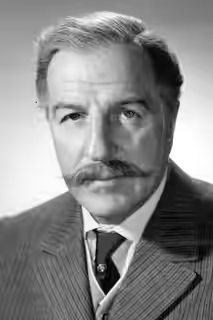
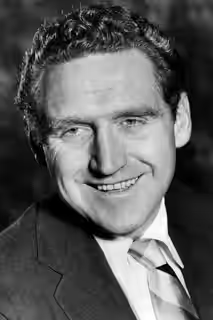
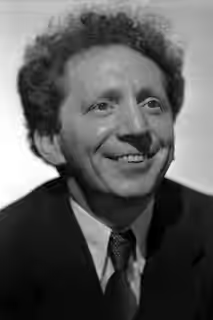
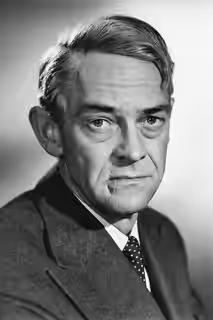
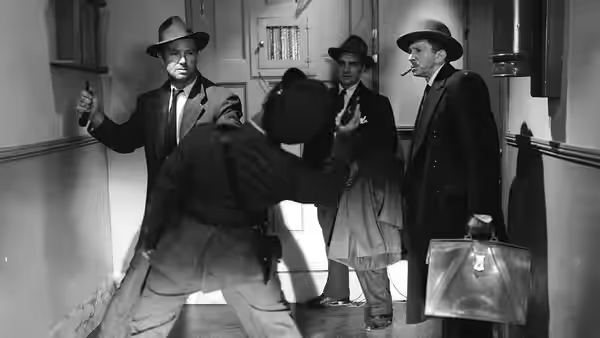
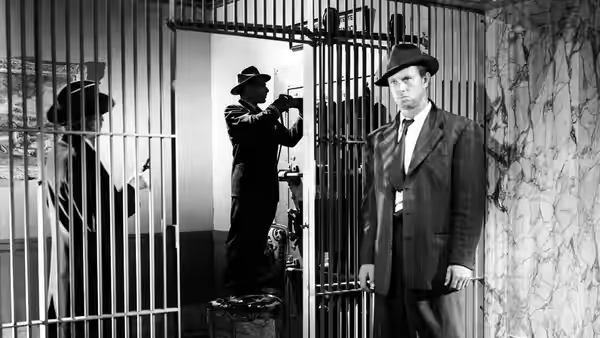
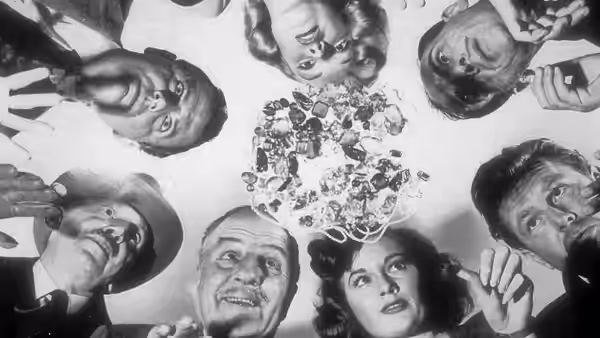
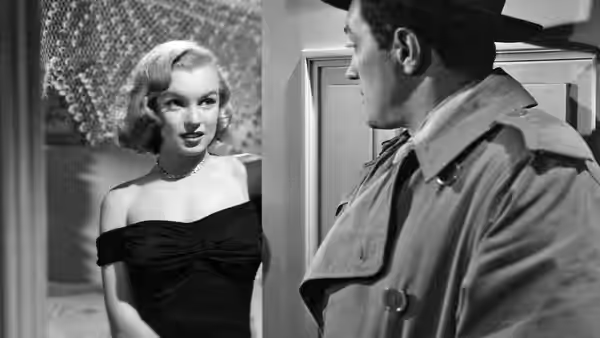
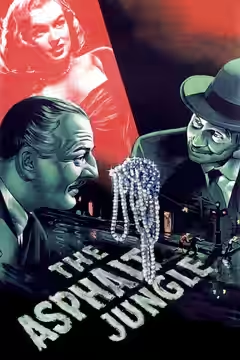
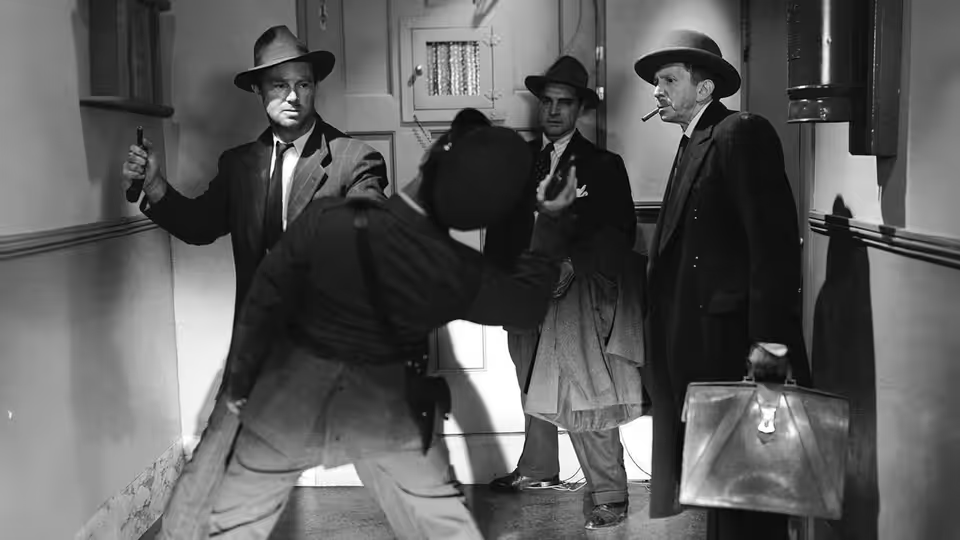
Several suited men gather in a hallway, one holding a suitcase
Film review

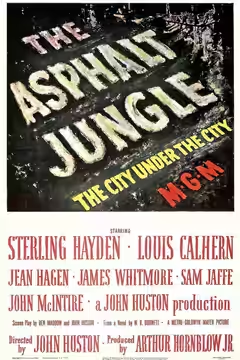
The Asphalt Jungle

1950 · Directed by John Huston · 1h 53m

In a sentenceA robbery planned with rather more care than the lives of the men attempting it

Doc Erwin Riedenschneider (Sam Jaffe) sets about arranging a heist. Among those drawn into the undertaking are Dix Handley (Sterling Hayden) and Alonzo D. Emmerich (Louis Calhern). The immediate problem is how to carry out the theft: the men need a workable plan, and they need one another to see it through. Each also brings private hopes and weaknesses to a task that depends on practical co-operation. As the preparations take shape, the work of committing a crime sits alongside the less manageable business of relying on other people.

Fi1m review

John Huston’s heist film is patient, tense and unusually interested in the people doing the stealing. The planning can feel laborious, but the attention given to each man’s weaknesses makes the suspense worth the wait.

The Asphalt Jungle takes the trouble to make a criminal enterprise look like work, and that trouble pays off. John Huston’s heist film is tense, humane and worth our patience, even when the preparation feels a little overextended. The theft matters because the men undertaking it have weaknesses that cannot simply be put aside until the job is finished. He keeps those weaknesses in view without asking us to treat every criminal as a misunderstood innocent.

Sam Jaffe, as Doc Erwin Riedenschneider, gives the film a criminal mastermind whose intelligence is worth watching. His performance makes the planning engaging in itself; we are interested in how this man thinks before we know whether his thinking will be enough. Sterling Hayden’s Dix Handley brings a different pressure, with a physical force that makes his colleague’s measured manner more conspicuous. The differences between these performances keep us attending to individuals, even while the business of arranging a theft occupies them.

John Huston’s staging and Harold Rosson’s cinematography keep the space around the characters important. We can attend to the practical obstacles facing them, rather than accept that a difficult theft is difficult because someone says so. George Boemler’s editing gives the mechanics enough time to be understood, which makes the suspense more involving. Miklós Rózsa’s music supplies dramatic emphasis, though it is the patient attention to the task that keeps us tense.

We caught ourselves wanting the thieves to succeed. Watching the work proceed step by step had made us take their side, and that was slightly uncomfortable. John Huston earns that response by giving personal hopes and failings as much attention as the crime; he does not require us to approve of the men before becoming interested in them. There is something generous in the care he takes over people whose weaknesses might, in a less attentive thriller, serve only to explain why a plan comes unstuck.

The preparation does ask a little too much patience at times. Knowing why each man matters is useful, but there are stretches when we would rather see him get on with the job. John Huston and Ben Maddow’s screenplay, adapted from W.R. Burnett’s novel, is so attentive to the men’s weaknesses that its interest can feel narrow. Jean Hagen’s Doll Conovan leaves us wishing that curiosity had been spread more evenly.

The temptation with a heist thriller is to admire a plan and treat the people carrying it out as equipment. This one gives us reasons to worry about them long before the question of success can be settled. Its influence is easy to understand, but we recommend it for the continuing pleasure of watching people think, work and make themselves vulnerable. Give it 113 minutes without distractions; this is a poor choice for an evening of answering messages.
Critical consensus AI synthesised

86
Positive
7
Mixed
0
Negative
0

The reviews are uniformly positive, with praise clustering around John Huston’s direction, the tightly organised heist plot and the attention paid to the criminals as people. Most critics find the mechanics of the crime compelling without treating the gang’s private hopes and weaknesses as incidental. The handling of space, suspense and underworld realism also draws praise. Radio Times singles out Sam Jaffe’s performance as the criminal mastermind alongside the plot’s grip.

The differences are chiefly in the strength of the enthusiasm, rather than in any stated objections. Empire offers the most restrained assessment, but still praises the tight plotting and characters made human by their weaknesses. None of these summaries identifies a substantial flaw. The consensus accommodates both admiration for an influential crime thriller and appreciation of its sympathetic, unsentimental treatment of people driven by desire.

Radio Times
★★★★★ · David Parkinson
100

The critic calls it an exceptional, influential film noir with everything a thriller needs. They praise its compellingly unraveling plot and Sam Jaffe’s performance as the criminal mastermind.

Read the full review →
Slant Magazine
13 December 2016 · ★★★★½ · Clayton Dillard
90

Dillard praises the film’s layered, unsentimental portrayal of men driven by desire and trauma. He singles out Huston’s intricate use of space and Criterion’s clean, detailed presentation.

Read the full review →
The Guardian
· Philip French
90*

French calls it possibly the greatest heist thriller ever. He singles out its unprecedented focus on the mechanics of the crime.

Read the full review →
Time Out
31 October 2006 · Wally Hammond
90*

The review presents the film as a major, influential heist-gone-wrong crime story. It singles out John Huston’s direction, calling this his greatest noir.

Read the full review →
Evening Standard
10 April 2012 · The Standard
80*

The review warmly recommends the film for its humane, sympathetic view of criminals. It particularly praises Huston’s ability to make each character’s personal hopes and weaknesses matter alongside the heist plot.

Read the full review →
Variety
31 December 1949 · Variety Staff
80*

The review praises the film’s ironic realism and its hard-hitting portrayal of the underworld. It singles out the suspenseful heist and the gang’s gradual disintegration.

Read the full review →

Straight answers AI written, from our review

Is The Asphalt Jungle worth watching?
The Asphalt Jungle is well worth watching for patient crime-film viewers, and we score it 88 out of 100. We recommend it for the carefully explained heist and the attention to the thieves’ hopes and weaknesses, though the preparations sometimes drag and it rewards an evening without distractions.
How long is The Asphalt Jungle, and what is it rated?
The Asphalt Jungle runs 1h 53m. It is a crime and drama film.
Where can I watch The Asphalt Jungle in India?
The Asphalt Jungle is not on any streaming or rental service in India at the moment. It is available in 10 other countries; change your country at the top of the page to see where. Availability is checked daily.
How violent or frightening is The Asphalt Jungle, and is it suitable for children?
The Asphalt Jungle has a UK PG certificate, which indicates general viewing with parental guidance rather than suitability for every child. We find its suspense tense and its sympathies with the thieves slightly uncomfortable; the patient planning makes it a better fit for older children interested in crime drama than those wanting brisk action.
How does The Asphalt Jungle compare to Victoria?
The Asphalt Jungle is the more measured heist film beside Victoria, and we favour it for its patient attention to planning and character. Victoria offers a more frantic night of crime and loyalty under pressure through one unbroken shot, but its opening rambles and its later crime plotting is more familiar.
Is The Asphalt Jungle based on a true story or a book?
The Asphalt Jungle is adapted from W.R. Burnett’s novel, rather than presented as a true story, with a screenplay by John Huston and Ben Maddow. No familiarity with the book is needed: the film takes time to explain the practical business of the theft and the personal weaknesses that complicate it.

Cast

Awards

Academy Awards, 1951

Nominated
Best Cinematography, Black-and-White
Nominated
Best Director
Nominated
Best Supporting Actor
Nominated
Best Writing, Adapted Screenplay

If you liked this, try…

  1. Rififi (1955) · not on Fi1m yetFor another patient robbery where the practical details make us nervous.

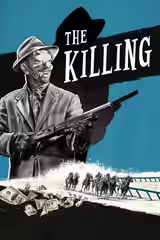
  2. The Killing (1956) · not on Fi1m yetA tightly organised robbery tests how much planning can contain human weakness.

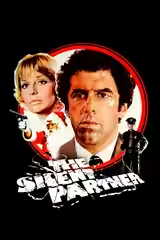
  3. The Silent Partner (1978) · not on Fi1m yetFor a crime story that gives greed time to become personal.

  4. Nine Queens (2000) · not on Fi1m yetFor criminal teamwork made precarious by the suspicion that everyone knows more.

  5. Victoria (2015, Fi1m 76)A more frantic night of crime, with loyalty formed under dangerous pressure.