Ida Lupino makes The Bigamist a persuasive, compassionate drama about a man whose excuses do not quite deserve her patience. The performances convince more readily than the framing story.
The Bigamist is good at making us consider a man we might reasonably have dismissed. Ida Lupino treats bigamy as something done by a recognisable person, capable of hurting others and feeling hurt himself. That approach gives the drama its interest, although her determination to be fair sometimes lends the husband’s excuses more weight than they deserve. We recommend it for the performances, with some reservations about how readily it asks us to sympathise.
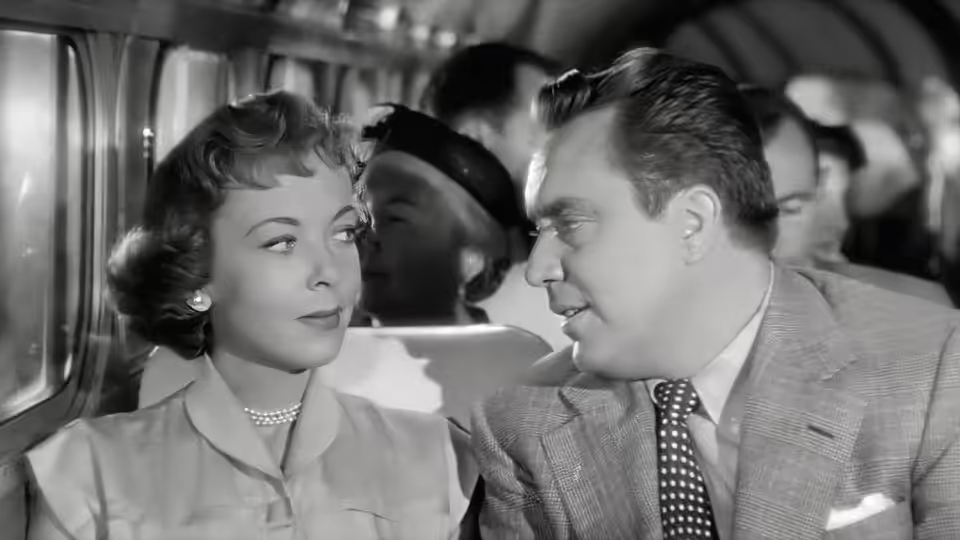
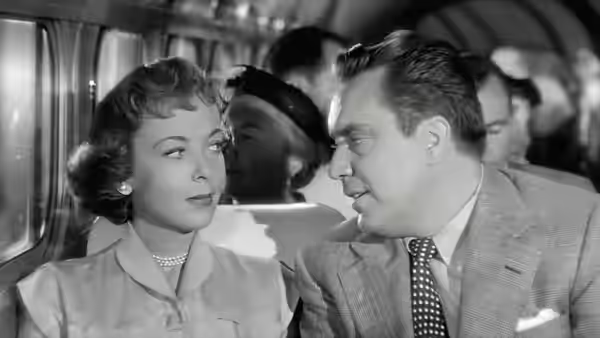
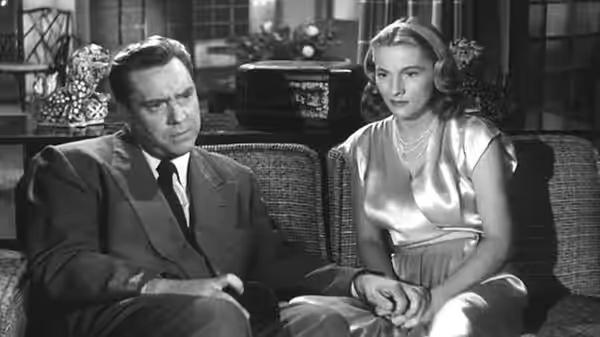
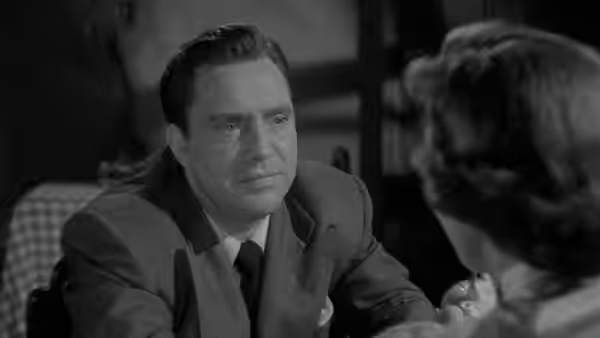
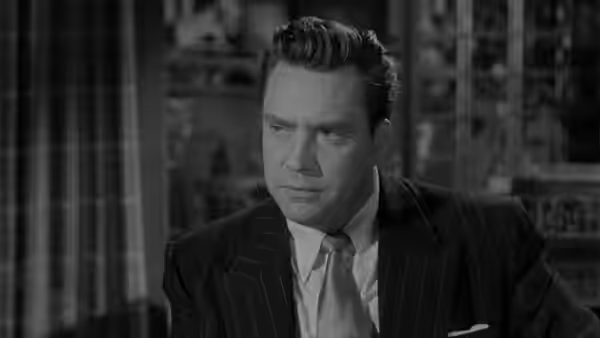
Edmond O’Brien plays Harry Graham, a salesman whose predicament could easily become sordid or faintly ridiculous. He makes it credible, even when the story requires more belief than we can supply. We felt sorry for Harry, and were annoyed with ourselves for it. The performance makes his distress matter before we have finished considering what he has done to the women involved, and that discomfort holds our attention more firmly than the question of what happens next.
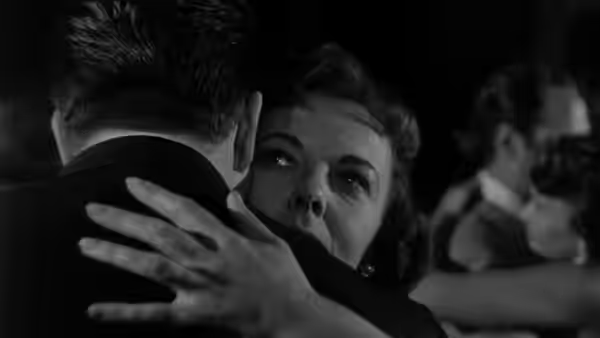
Joan Fontaine’s Eve Graham and Ida Lupino’s Phyllis Martin make it harder to settle comfortably into pity for Harry. Both performances give us reasons to consider the women beyond their relationship to the husband’s predicament. Directing herself, Ida Lupino avoids making Phyllis seem like the person we are being instructed to favour. Joan Fontaine makes Eve equally difficult to dismiss, however much attention Harry receives, and the strength of the casting keeps the film from becoming merely an exercise in hearing him out.
Collier Young’s screenplay is less secure in getting this situation before us. The framing story feels like an unnecessary precaution, as though Harry’s behaviour needs explaining before we can be trusted to consider it. Stanford Tischler’s editing keeps the 80-minute film manageable, but cannot make that frame feel essential. We would rather spend more of the running time attending to the three principal performances than to the arrangements through which their story is presented.
George E. Diskant’s cinematography gives the performances room to work without demanding admiration for itself. Our attention stays with the people, which is the right emphasis for a drama so dependent on how generously we are prepared to judge them. Leith Stevens’s music works well enough, though it contributes less to our response than the actors do. The presentation is effective chiefly because it leaves those performances as the main reason to keep watching.
The larger reservation concerns how far the director’s kindness goes. A serious domestic drama needs to allow us to dislike its central character, and occasionally the effort to understand Harry becomes too solicitous. His unhappiness deserves consideration, but so does his responsibility for the situation, and the writing does not always give the latter enough weight. This is where the film’s compassion begins to weaken its otherwise persuasive treatment of him.
Still, the seriousness is welcome, and the actors make even the less likely parts worth following. There is enough here to sustain disagreement about Harry without requiring us to pretend that his conduct is mysterious. For an evening of uncomfortable domestic drama, the performances justify tolerating the cumbersome frame and the occasional special pleading. We would watch it with someone prepared to be less forgiving of Harry than the director is.