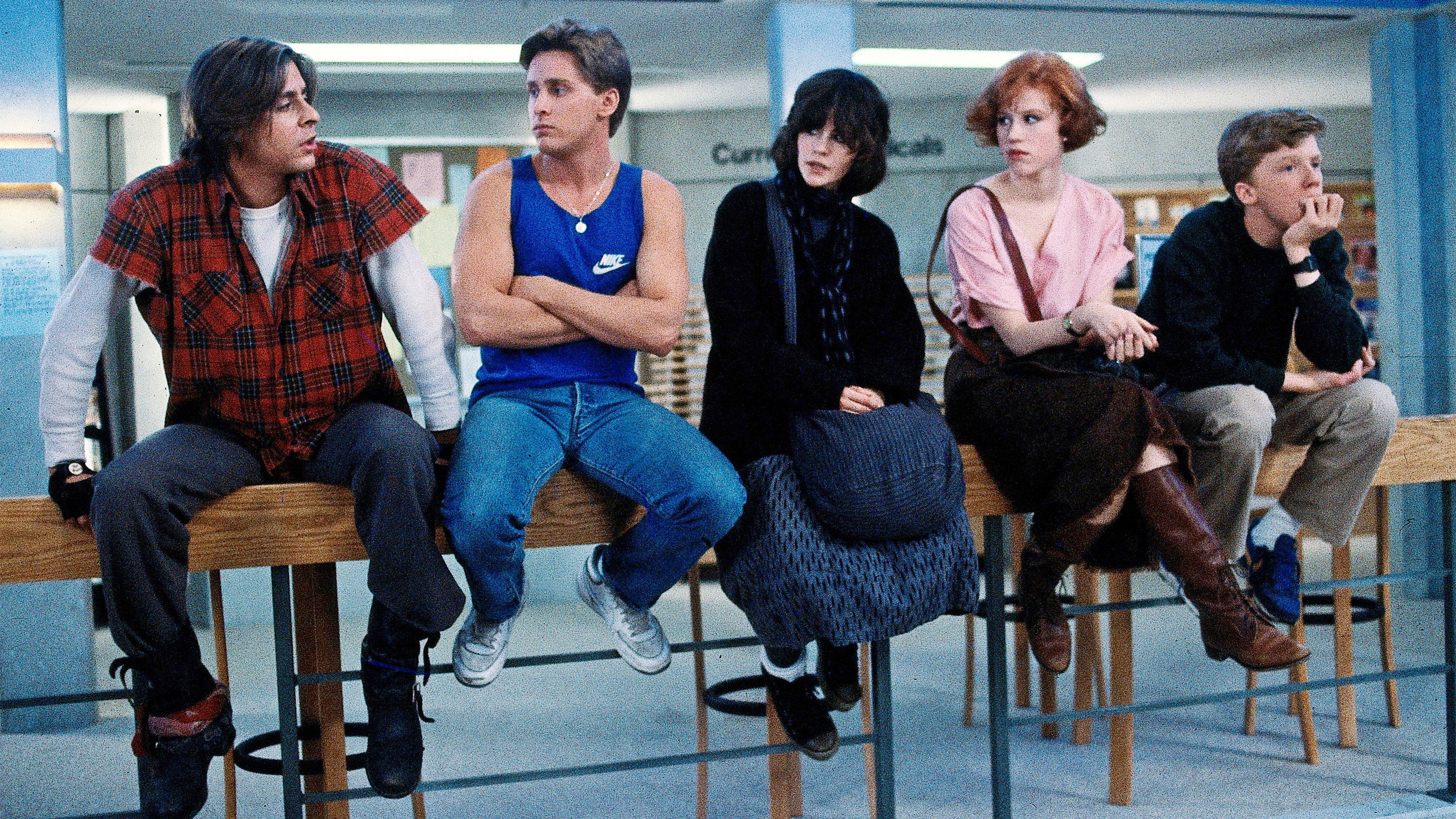
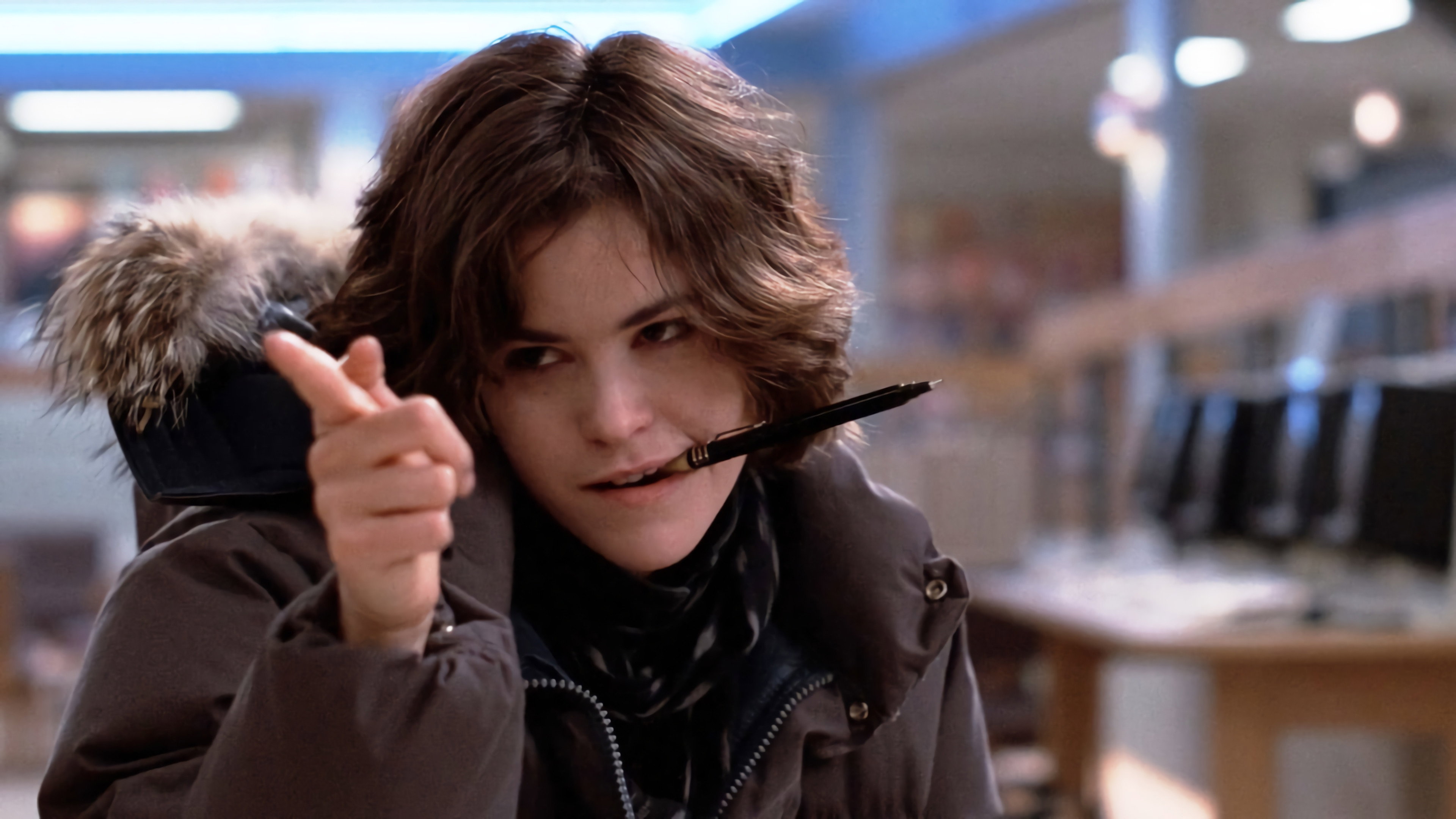
John Hughes’ detention comedy earns our affection through Molly Ringwald and Anthony Michael Hall, who make the school stereotypes worth hearing out. It is funny and perceptive, though Hughes lets the complaints about parents go largely unchallenged.
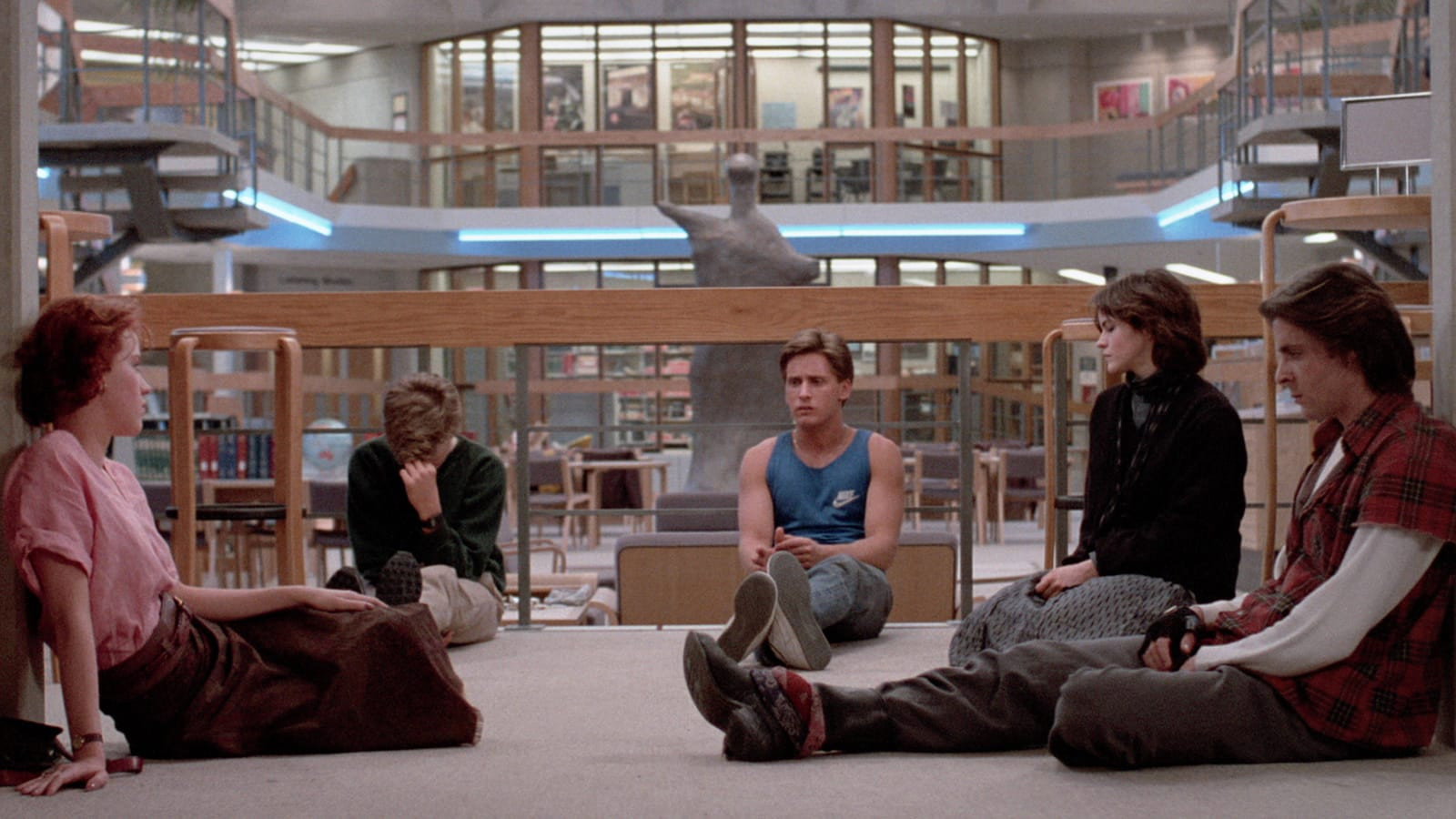
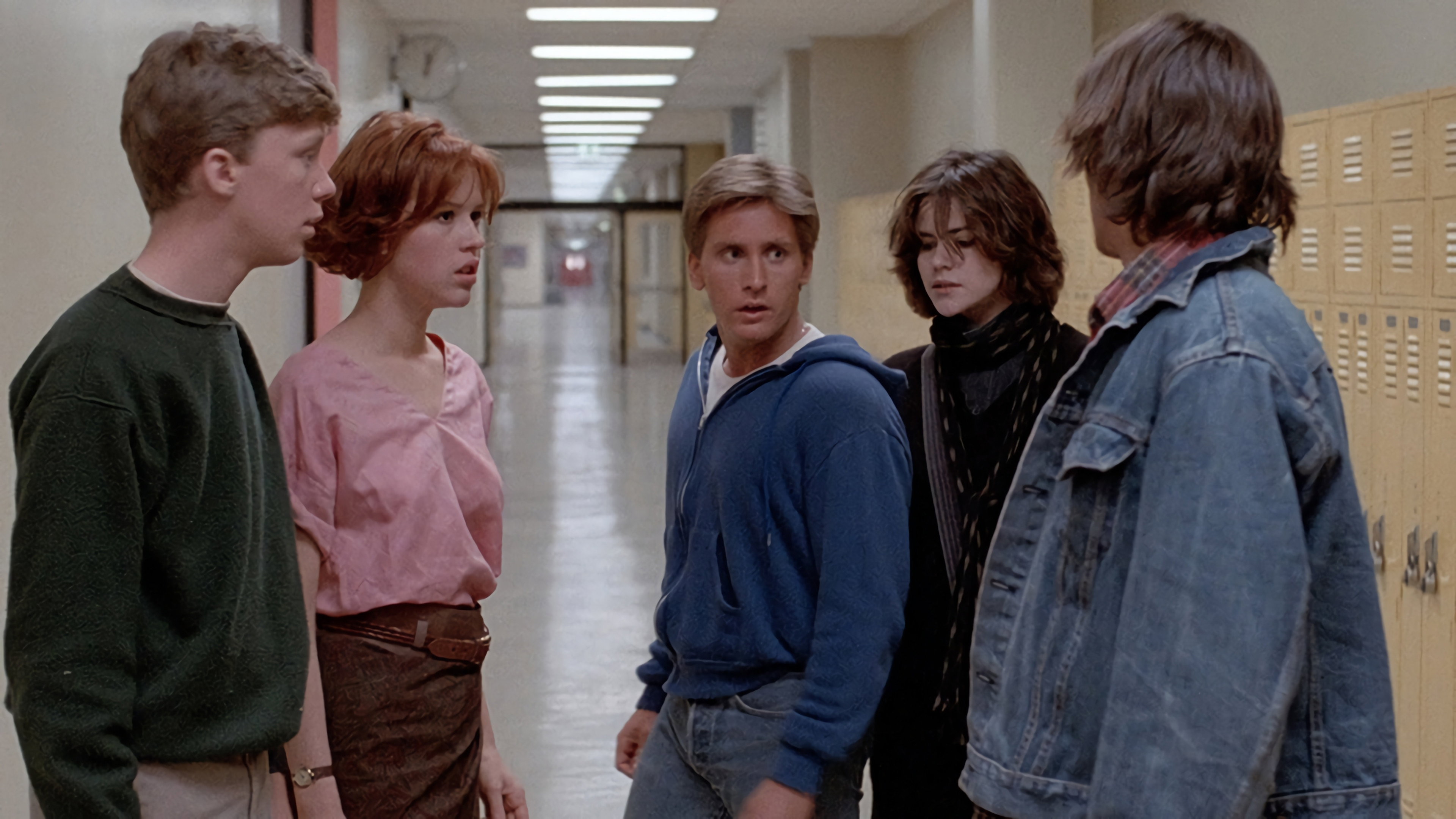
The Breakfast Club is good company for a film about people who would rather be elsewhere. John Hughes puts five teenagers in Saturday detention and lets their conversation carry a 98-minute comedy-drama. The performances and the ear for teenage talk make it worth an evening, though Hughes is too quick to agree with his characters about their troubles. He takes their unhappiness seriously, sometimes beyond what the writing can support.
Hughes starts with school types so familiar that the actors have some work to do before we are willing to hear them out. Judd Nelson’s aggression gets the conversation moving, and Emilio Estevez gives the quarrelling a credible competitive edge. Ally Sheedy helps keep the group awkward enough to resist instant cosiness. These performances can be broad, but the sense that everyone is checking their place in the school pecking order is convincing.
Hall and Ringwald are more persuasive still. Hall gives Brian the anxious concentration of someone trying to get even a personal conversation right, while Ringwald makes Claire’s guardedness understandable without making it especially attractive. We were moved by Hall during the talk about parents, because he makes the effort to satisfy adults look exhausting. Ringwald is particularly good at listening without letting us assume that listening means agreement.
John W. Corso’s production design gives the pupils a shared school space that makes their determination to remain separate look faintly absurd. Thomas Del Ruth’s photography keeps our attention on the faces, which matters when so much depends on how a remark is received. Dede Allen’s editing gives the exchanges enough rhythm to sustain the single setting, although several arguments could still be shorter. Keith Forsey’s music pushes the emotion harder than we need when the actors have already made it clear.
The chief weakness is Hughes’ willingness to make parents answer for almost everything. The complaints are often credible, but he gives them so much room that the conversation starts repeating itself instead of finding something else to ask. Nelson’s forcefulness becomes tiring here, particularly when volume is allowed to do the work of persuasion. A little more scepticism from the writer would have helped the quieter performances, which already suggest that these teenagers cannot always see themselves clearly.
Teenage comedy does not always leave much room for unhappiness that cannot be cleared away by the next joke. Hughes lets embarrassment and resentment linger, and that patience is welcome even when a speech runs long. His faith in the group finding common ground is harder to accept, because some of the personalities he has drawn seem too firmly opposed for such easy understanding. The writing is most convincing when an exchange stays uncomfortable.
There is enough wit and recognisable hurt to forgive the passages that sound like prepared speeches. The pleasure is in watching the cast complicate people whom the script initially makes so easy to identify. Give it an evening for Hall and Ringwald, with some patience for Hughes when he insists on explaining what they have already shown.