Guan Hu stages the warehouse siege with force and clarity, but the crowded cast never acquires enough depth. The battle scenes justify interest; the insistent music and patriotic urging make 147 minutes feel longer.
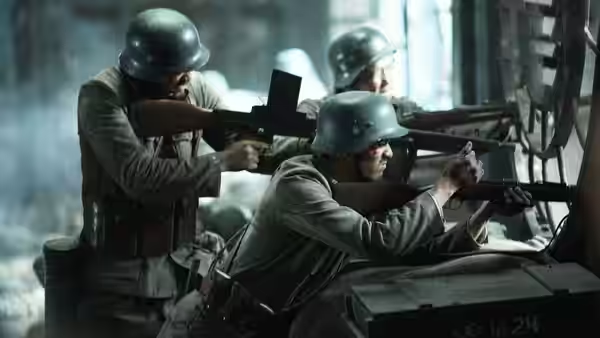
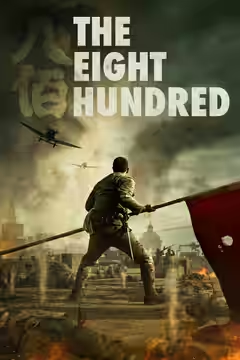
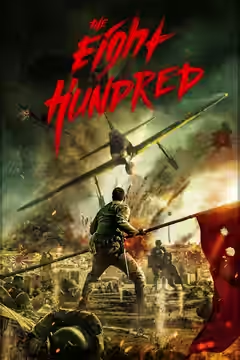
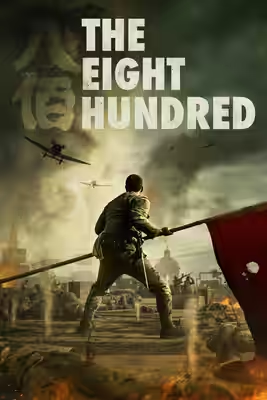
Guan Hu’s The Eight Hundred is a forceful war film worth seeing for its combat, with substantial reservations about the characters and the patriotic insistence. Chinese soldiers defend a warehouse against successive attacks, and the confined setting gives the action a clear purpose. We understand what has to be held and how difficult that will be. Across 147 minutes, though, the film spends too long telling us to admire men it has barely allowed us to know.
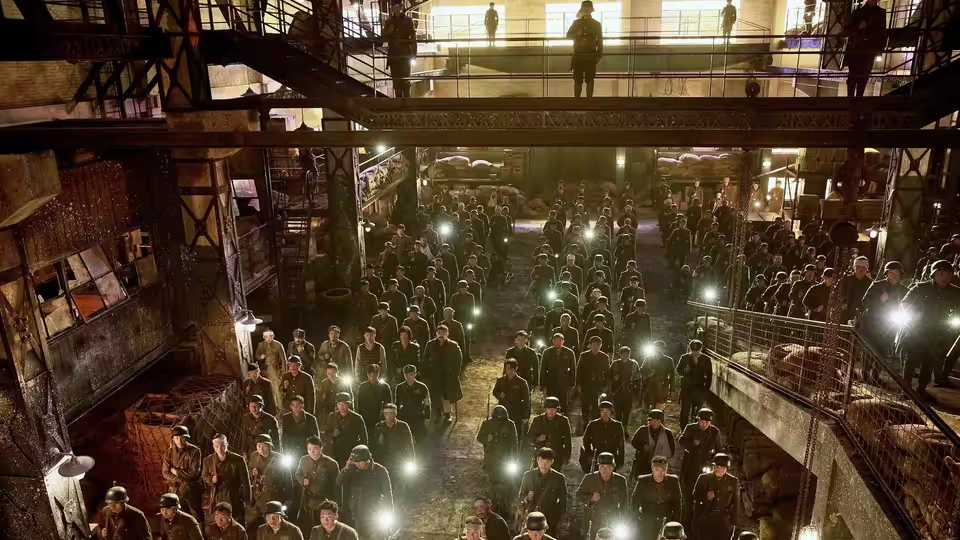
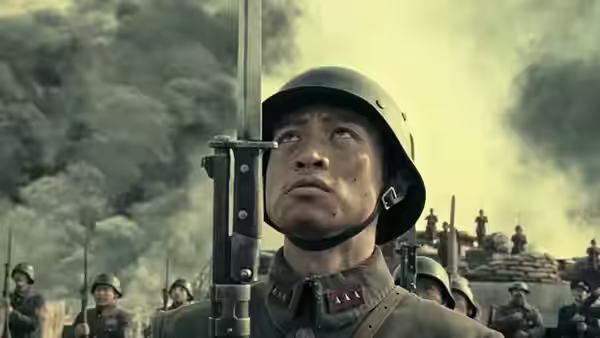
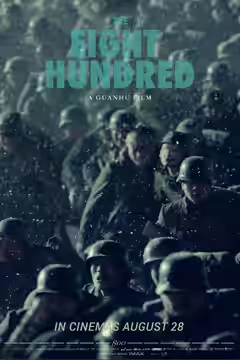
The opening battle is the strongest reason to stay. Cao Yu’s cinematography makes the violence clear enough to follow while allowing the inexperienced soldiers’ confusion to remain frightening. We were shaken by the rookies’ disorientation amid fighting too brutal for them to take in. The images give us a clearer view of the danger than the men seem to have themselves. That difference keeps the sequence tense without requiring much explanation from the dialogue.
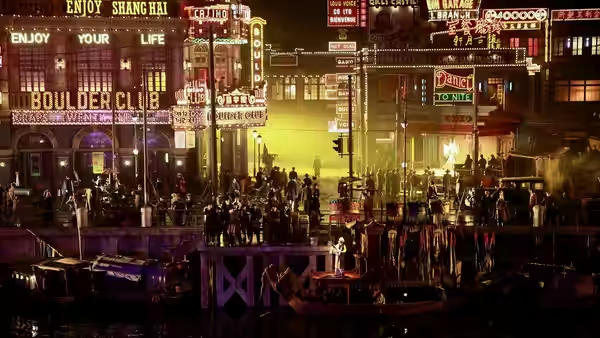
Lin Mu’s production design is most useful in making the warehouse a place whose defence we can follow. The building provides a fixed point when the cast threatens to become unmanageable, while the people watching across the river allow the film to consider how civilians respond to combat. Their curiosity is an uncomfortable response to men fighting for their lives. These scenes make something of the civilians’ distance from the danger and give the film something to do besides mount another attack.
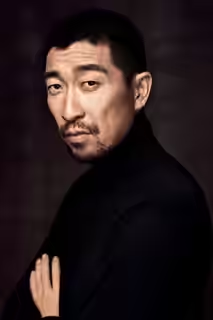
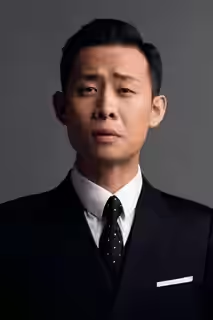
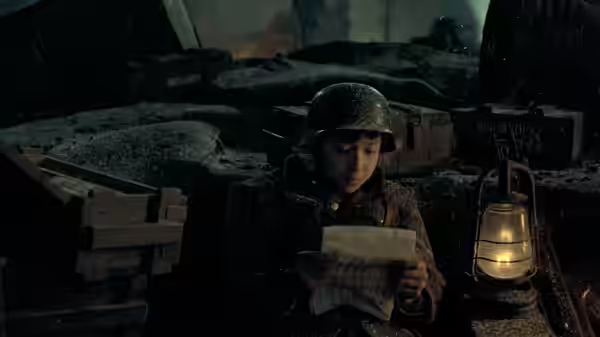
The crowded cast is harder to defend. Wang Qianyuan’s Yang Guai, Zhang Yi’s Old Abacus and Jiang Wu’s Lao Tie belong to an ensemble that the writing keeps struggling to distinguish. Guan Hu and his co-writers leave too many men with too little life beyond their place in the fighting. There are quieter passages, and the change of pace is welcome, but they do not consistently give these soldiers enough individuality for the emotion being demanded.
Editors He Yongyi and Tu Yiran keep the attacks moving, and their work on the opening makes confusion feel deliberate rather than careless. The larger structure is less assured. As attention spreads between soldiers, spectators and political concerns, the film becomes overfilled without becoming richer in character. A siege supplies its own pressure, yet the repeated detours make us conscious of the running time when we should be anxious about the next assault.
Rupert Gregson-Williams and Andrew Kawczynski’s music is the most persistent obstacle. The score demands emotions that the thinly written characters have not earned, adding noise to battle scenes that already have plenty. We wanted it to quieten down and let the violence register without further encouragement. Its force can suit the spectacle, but the repeated emotional prompting makes the suffering feel arranged for our approval.
A siege film needs us to understand the space and care about the people trapped inside it. This one manages the first requirement much more reliably, and its fascination with heroic sacrifice makes the second harder. The frightened soldiers in the opening are affecting enough without the film repeatedly directing us towards national pride. See it for the battle staging, provided thin characters and an overbearing score are frustrations we can agree to live with for an evening.