David Leitch’s tribute to stunt performers is a romantic comedy with car crashes attached, and Ryan Gosling and Emily Blunt are good enough company to carry it. The mystery plot is not, and it stays twenty minutes too long.
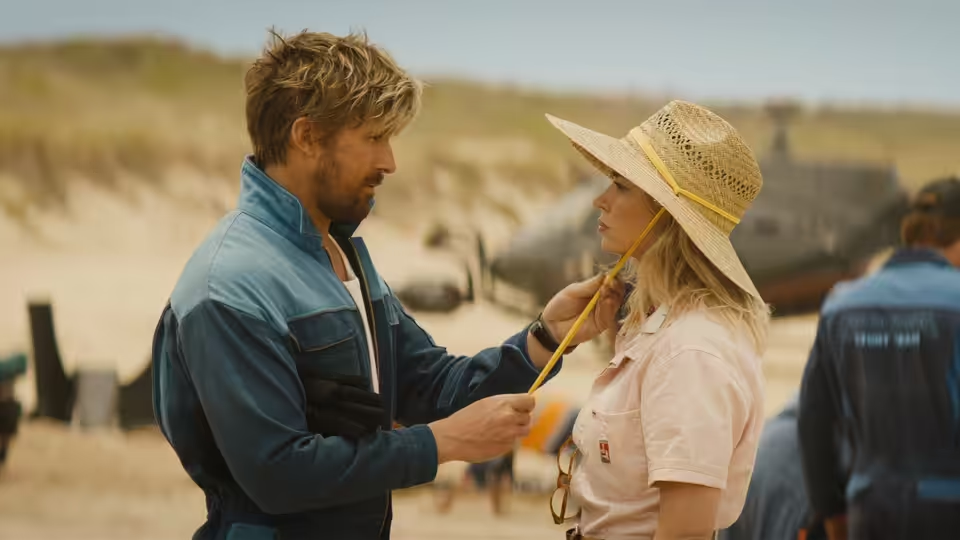
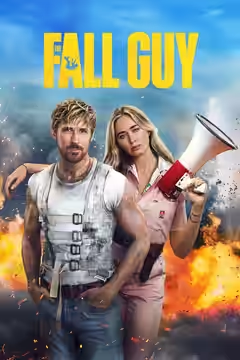
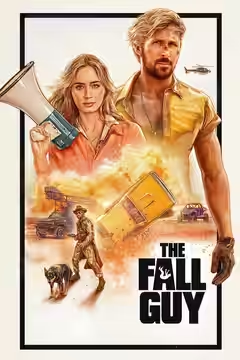
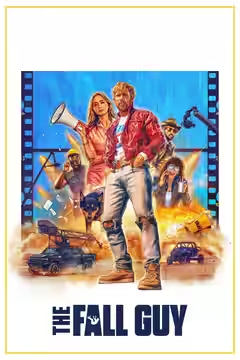
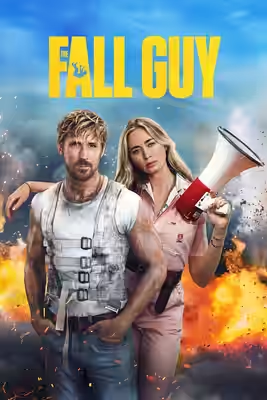
David Leitch was a stunt performer before he was a director, and The Fall Guy is the film in which he finally says so out loud. Colt Seavers (Ryan Gosling) doubles for the action star Tom Ryder (Aaron Taylor-Johnson) until one fall too many puts him out of work. The producer Gail Meyer (Hannah Waddingham) talks him back onto a set run by Jody Moreno (Emily Blunt), who has not forgiven him for the way he left. Ryder is missing, Gail wants him found quietly, and that is the plot. It is the least interesting thing in the film, and we recommend the film anyway, with the caveat that it runs 127 minutes and earns about a hundred.
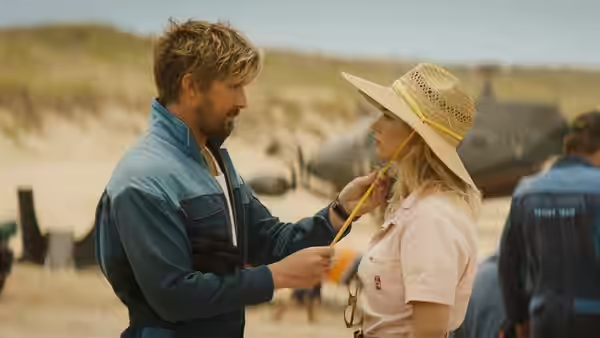
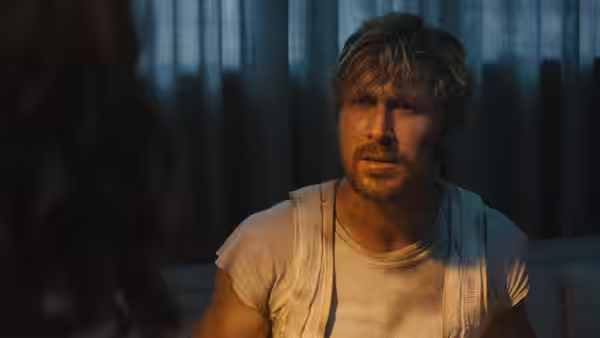
Drew Pearce’s script knows that Gosling is funniest when he is trying to be sincere and failing. Colt gives a thumbs up because he cannot think of anything true to say, and looks wounded when a punch lands, as if it were a personal remark. Blunt plays Jody as a woman who has decided to be angry and keeps forgetting, and the scenes in which she directs him through take after take, with the whole crew listening, are the best thing in it, because both of them are talking about the film they are making and both know they are not. It got to us more than a film with this many explosions had any right to. It was the forgetting that did it: every time Blunt lets the anger slip, Gosling notices, and neither of them says so.
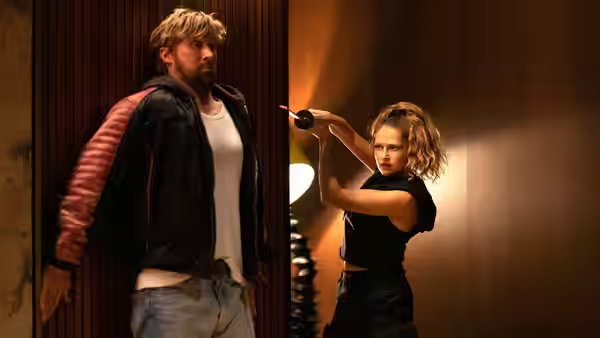
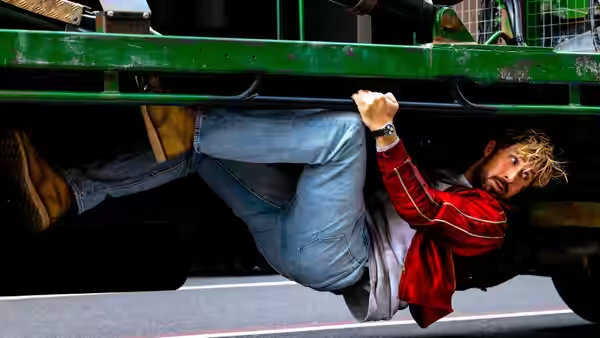
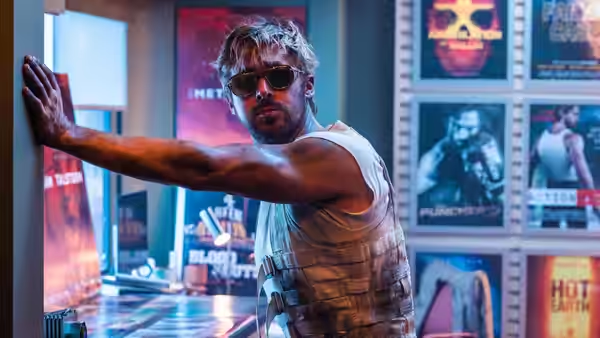
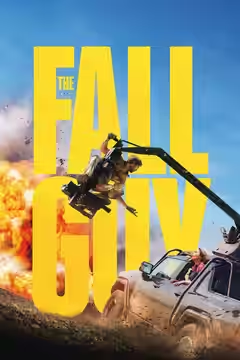
The falls are real, and Jonathan Sela shoots them so that you can tell, keeping the camera wide enough that you can see it is a body and not a drawing of one. The fight in Ryder’s flat uses the props of an action star’s career, and we laughed out loud, partly because Gosling fights like a man paid to lose well. The car chase cut to karaoke is the film’s one real piece of invention, and Elísabet Ronaldsdóttir times the crashes to the song. Elsewhere her cutting is busier than it needs to be, and one or two of the fights turn into a blur of arms.
The mystery is a nuisance. It has more moving parts than it needs, and about an hour in we stopped keeping track and were mildly annoyed to find the film still keeping track for us. Waddingham enjoys herself as a producer who lies in the same warm voice she uses for praise. Winston Duke, as the stunt coordinator Dan Tucker, gets the good lines about how films are made and delivers them as if he has heard them all before. Stephanie Hsu and Teresa Palmer are given a scene each and then set aside, and Taylor-Johnson’s Ryder is a one-note vanity turn that is funny for about half its screen time.
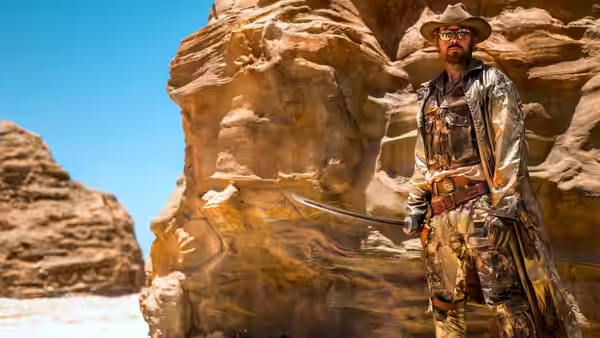
David Scheunemann’s production design for the film within the film looks like exactly the sort of thing that gets made for the wrong reasons, which is the joke, and he has the nerve to make it handsome anyway. Sarah Evelyn dresses Colt in the jacket of a man who does not want to be noticed and Ryder in things that catch the light. Dominic Lewis’s score is mostly drum rolls between pop songs, of which there are a great many; one of them comes back so often it stops being a joke and becomes a habit.
Set against Leitch’s own films it is the gentlest. Atomic Blonde was cruel and Bullet Train was pleased with itself; this one wants to be liked, and mostly it is. What it lacks is the clean line of the John Wick fights, where you always knew where everyone was standing. The last half hour takes a turn we will not describe, and every scene in it runs a beat past its punchline.
Then the credits roll over footage of the stunt team doing the falls you have just watched, and it is the most honest minute in the film. See it with someone you are trying to impress, and do not worry too much about who did what to whom. The film does not.