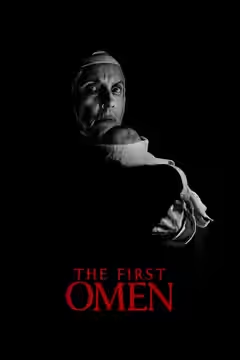
Arkasha Stevenson’s first feature is the most frightening thing to carry the Omen name since the original, with one delivery-room scene we will not forget in a hurry. Then the plot has to reach 1976, and the last half hour lies down and lets it.
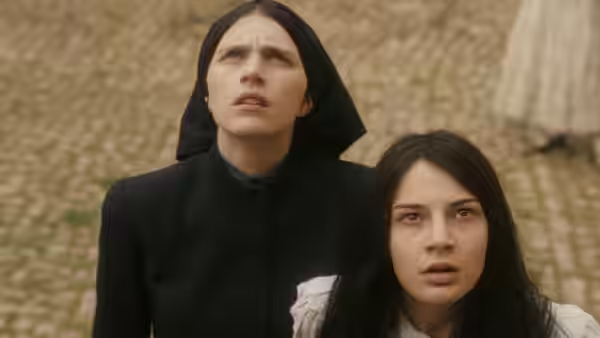
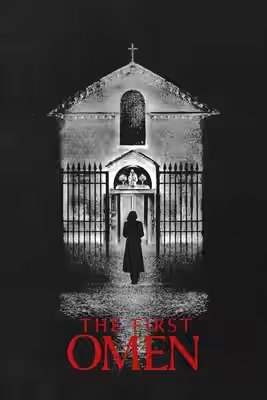
Rome, 1971. Margaret (Nell Tiger Free), a young American novice, arrives to take her vows at an orphanage run by Sister Silva (Sonia Braga), with Cardinal Lawrence (Bill Nighy) as her sponsor and a roommate, Luz (María Caballero), who thinks she should see a nightclub before she sees a veil. Outside, students throw stones at the police. Inside, a silent girl called Carlita (Nicole Sorace) draws pictures the nuns would rather she did not, and a hoarse, frightened priest, Father Brennan (Ralph Ineson), tells Margaret to keep away from her. Anyone who has seen Richard Donner’s The Omen (1976) knows roughly where this must end. Arkasha Stevenson’s first feature is a good, frightening horror film for about eighty of its 119 minutes and a dutiful one for the rest.
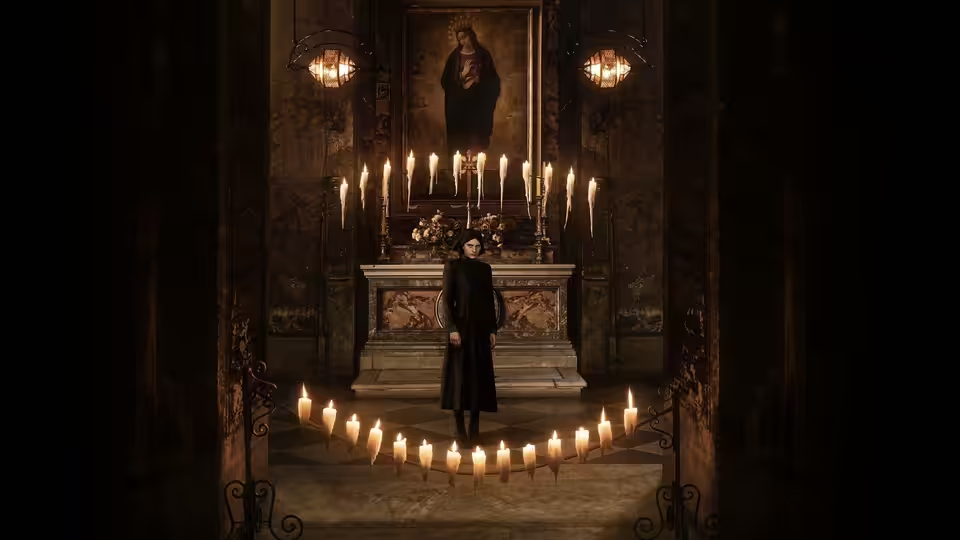
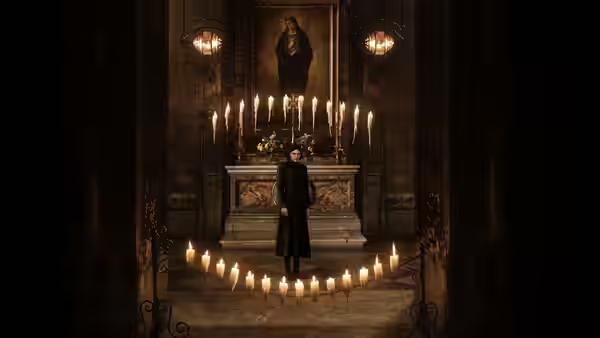
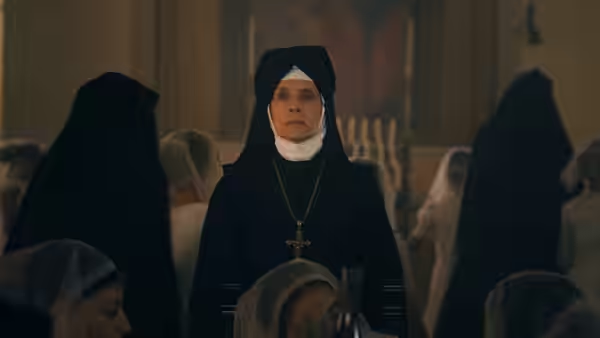
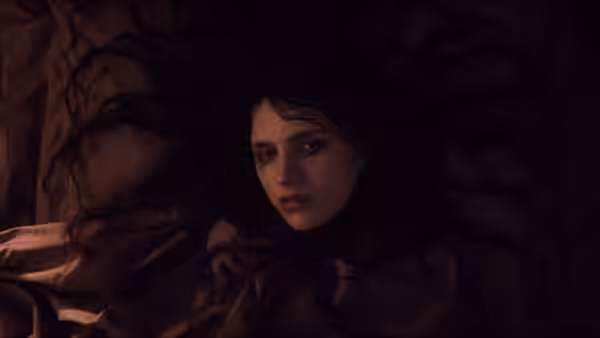
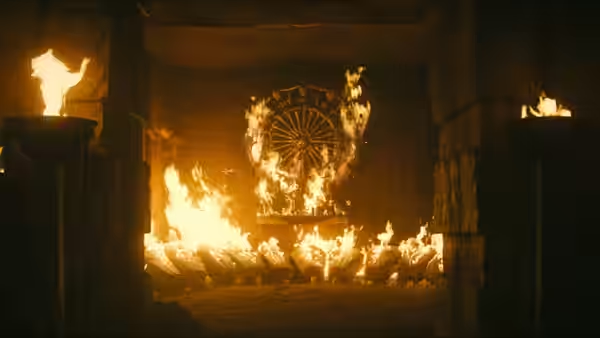
Stevenson and the cinematographer Aaron Morton shoot the city in the browns and burnt oranges of an old photograph, grain in the shadows, daylight coming through high windows in slabs. Eve Stewart’s orphanage is long corridors, iron beds and a chapel too large for the people in it, with locked rooms nobody explains. Paco Delgado cuts the habits close about the face, so that in a group of nuns you see only eyes, and on the one night Luz gets Margaret into a dress it sits on her like a costume, which is the point. For most of its length the film repays being looked at.
Then, about an hour in, there is a scene in a delivery room. We will not describe it, except to say that it was not the blood that got to us but the angle Stevenson chooses to show it from and the calm of the women standing round the bed. We put our tea down and did not pick it up again for some minutes. Bob Murawski and Amy E. Duddleston cut most of the film briskly; here they hold, and the holding is what does the damage. It is the scene the film exists for.
Free carries it. She plays Margaret as someone who has been good for so long she has stopped checking whether she means it, and when the strangeness starts she does not scream, she watches, which is worse. Ineson has the other job, the man who knows and cannot make anyone listen, and he does it with a voice like gravel in a bucket. Braga smiles a great deal and we trusted her less each time. Nighy is warm and tired. Charles Dance plays Father Harris, and what happens to him sets the terms.
Mark Korven, who scored The Witch, gives it a choir that sounds recorded in the wrong room and low strings that arrive half a second before anything happens. It works when it is quiet. It is not always quiet: there are three or four jump scares here that a film this confident did not need, each announced by a stab of sound loud enough to count as a fault.
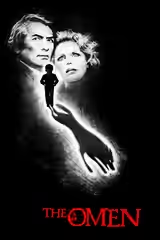
The trouble is the year 1976. This is a prequel to a film whose ending everyone knows, so the last half hour stops being a story and becomes a checklist. Characters explain things to each other in full sentences. A famous name is spoken. A shot from the original is reproduced so exactly that it plays as a bow to the audience rather than a scene. The screenplay, by Tim Smith, Keith Thomas and Stevenson from a story by Ben Jacoby, is at its best when it forgets what it owes, and it is not allowed to forget for long. We relaxed in the last twenty minutes, and a horror film should never let you do that. It did not help that Immaculate, another film about an American novice in an Italian convent, reached cinemas the same year with a premise close enough to swap posters.
Donner’s film had patience; it knew what it was and let the audience get there in their own time. Stevenson’s has more nerve, a better lead and one scene the original would never have dared, and it has a studio’s list of obligations pinned to its back. See it for the first eighty minutes, on as large a screen as you can manage, and forgive the rest. It runs 119 minutes and carries a 15, and it uses it.