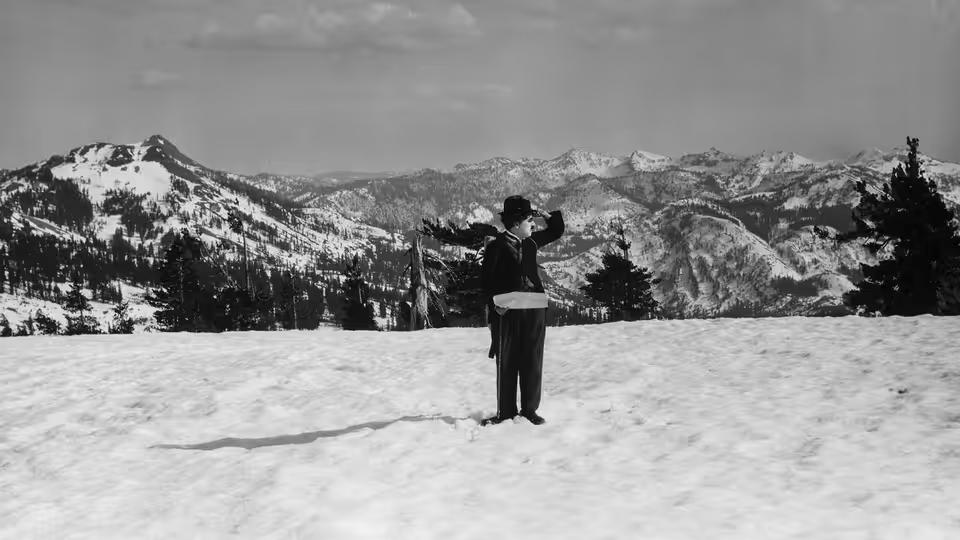
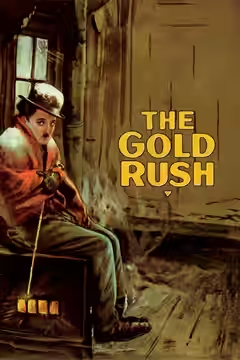
Charlie Chaplin’s hungry prospector can make a boiled boot look worth serving. The Gold Rush is funny and unexpectedly moving, though the romantic passages sometimes take longer than they need.
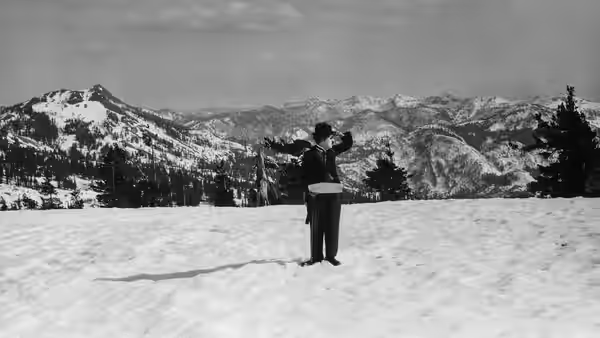
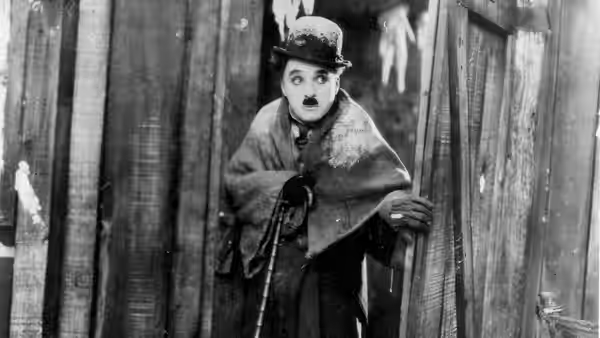
We recommend The Gold Rush warmly, with a small reservation about the pace of its romance. Charlie Chaplin, writing and directing as well as playing The Lone Prospector, wants us to enjoy the resourcefulness of a man who has almost nothing to work with. Hunger gives him a practical problem before it gives us a reason to feel sorry for him. The comedy is patient enough to let us see the effort involved, which makes our attachment to him feel earned.
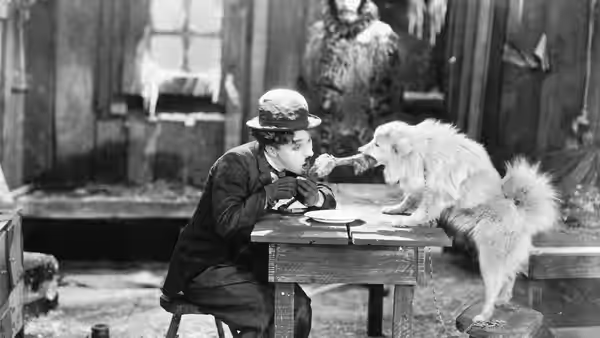
The boiled boot is a useful test of how this comedy works. A prop that might support one disgusted reaction becomes a whole meal, and Chaplin keeps finding business in the act of treating it as something fit to serve. It moved us more than we expected. He is making an effort over dinner when there is barely a dinner to make, and Chaplin lets the practical details carry the sadness rather than interrupting the meal to ask for sympathy.
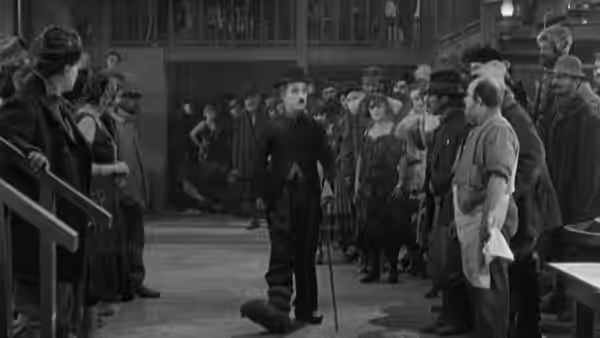
Roland Totheroh’s cinematography gives the physical routines the space they need, keeping our attention on how Chaplin moves rather than insisting on a picturesque image. The bread-roll dance depends on that clarity: the food remains recognisable while the little movements persuade us to see a dancer. It is an absurd thing to do, taken seriously enough to be worth watching closely. The rhythm allows us to recognise the idea, enjoy its execution and then notice another small adjustment.
Mack Swain’s Big Jim gives Chaplin another performer to work against, and the physical comedy benefits from having two people caught in the same difficulty. Their exchanges are easy to follow because each bit of action has time to register before the next complication arrives. There is pleasure in the pauses, when the prospect of another attempt is enough to keep us watching. The cabin material is particularly good at turning a confined playing area into a succession of practical problems, without making the action hard to read.
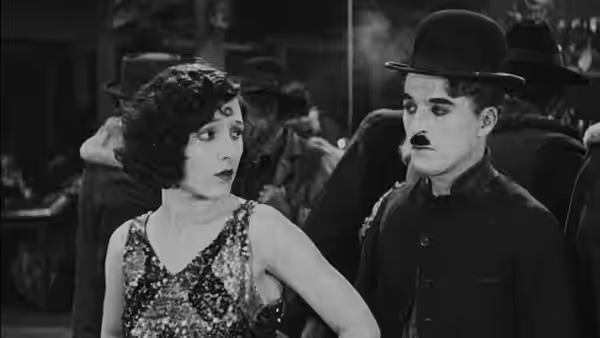
Georgia Hale’s Georgia gives the romantic longing someone specific to settle on, but those passages are less consistently inventive than the physical comedy. Chaplin can be patient with a yearning look after we have already understood what it means. The film occasionally seems reluctant to leave its hero’s disappointment alone, extending an emotion that needed no extra help. These are small stretches of slackness, but they matter because the better routines are so sharply measured.
This is physical comedy that expects us to stay with a gesture long enough to see how it changes. Even if we know the boot is going to be eaten, there is still pleasure in watching exactly how Chaplin eats it. A familiar routine can remain funny when the performer is this attentive to each stage, and the pauses give us time to grow fond of the person doing it. The occasional drift is worth accepting for that company. Put the distractions aside; there are small movements here that deserve our full attention.