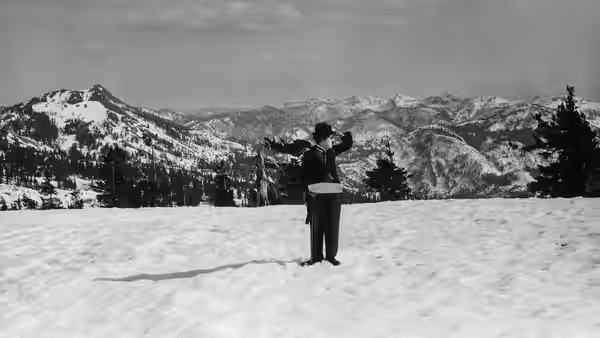
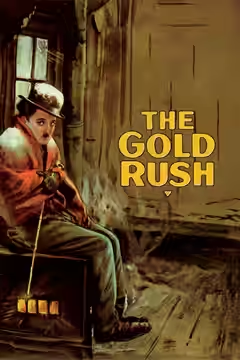
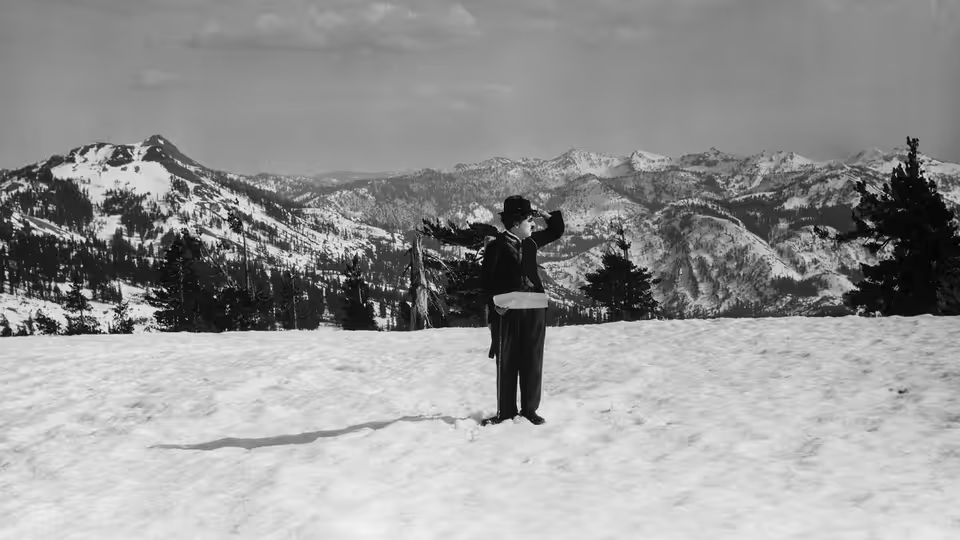
A lone man stands in a snowy field, facing a mountain range with his arms raised
Film review

The Gold Rush

1925 · Directed by Charlie Chaplin · 1h 35m

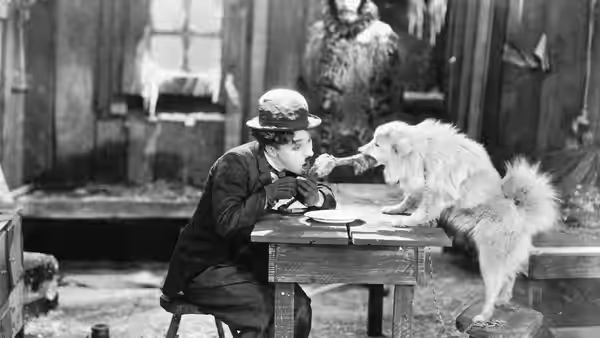
In a sentenceA boiled boot, served by a man who still believes in table manners

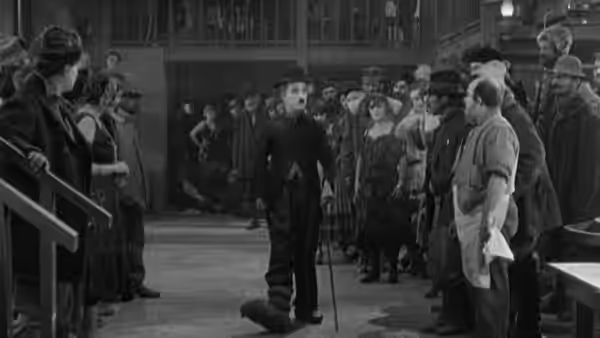
Hunger is the immediate concern of The Lone Prospector (Charlie Chaplin). Big Jim (Mack Swain) and Black Larsen (Tom Murray) are among the men around him, but company does not fill an empty stomach. A cabin provides shelter without solving the problem of dinner. When there is nothing fit to eat, a boot has to serve as food, and the prospector sets about boiling it. He approaches the meal with care, preserving the habits of a proper dinner even when there is scarcely anything on the table worth eating.

Plays from YouTube when you press play; nothing loads from them until then.

Fi1m review

Charlie Chaplin’s hungry prospector can make a boiled boot look worth serving. The Gold Rush is funny and unexpectedly moving, though the romantic passages sometimes take longer than they need.

We recommend The Gold Rush warmly, with a small reservation about the pace of its romance. Charlie Chaplin, writing and directing as well as playing The Lone Prospector, wants us to enjoy the resourcefulness of a man who has almost nothing to work with. Hunger gives him a practical problem before it gives us a reason to feel sorry for him. The comedy is patient enough to let us see the effort involved, which makes our attachment to him feel earned.

The boiled boot is a useful test of how this comedy works. A prop that might support one disgusted reaction becomes a whole meal, and Chaplin keeps finding business in the act of treating it as something fit to serve. It moved us more than we expected. He is making an effort over dinner when there is barely a dinner to make, and Chaplin lets the practical details carry the sadness rather than interrupting the meal to ask for sympathy.

Roland Totheroh’s cinematography gives the physical routines the space they need, keeping our attention on how Chaplin moves rather than insisting on a picturesque image. The bread-roll dance depends on that clarity: the food remains recognisable while the little movements persuade us to see a dancer. It is an absurd thing to do, taken seriously enough to be worth watching closely. The rhythm allows us to recognise the idea, enjoy its execution and then notice another small adjustment.

Mack Swain’s Big Jim gives Chaplin another performer to work against, and the physical comedy benefits from having two people caught in the same difficulty. Their exchanges are easy to follow because each bit of action has time to register before the next complication arrives. There is pleasure in the pauses, when the prospect of another attempt is enough to keep us watching. The cabin material is particularly good at turning a confined playing area into a succession of practical problems, without making the action hard to read.

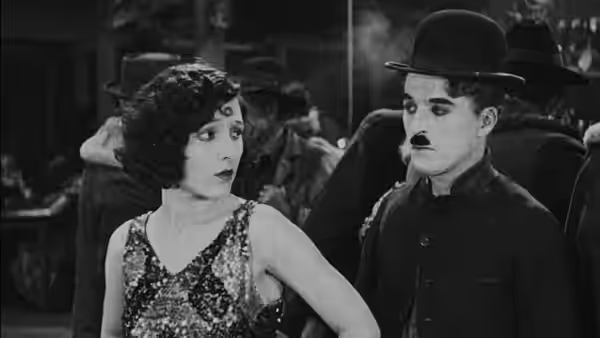
Georgia Hale’s Georgia gives the romantic longing someone specific to settle on, but those passages are less consistently inventive than the physical comedy. Chaplin can be patient with a yearning look after we have already understood what it means. The film occasionally seems reluctant to leave its hero’s disappointment alone, extending an emotion that needed no extra help. These are small stretches of slackness, but they matter because the better routines are so sharply measured.

This is physical comedy that expects us to stay with a gesture long enough to see how it changes. Even if we know the boot is going to be eaten, there is still pleasure in watching exactly how Chaplin eats it. A familiar routine can remain funny when the performer is this attentive to each stage, and the pauses give us time to grow fond of the person doing it. The occasional drift is worth accepting for that company. Put the distractions aside; there are small movements here that deserve our full attention.

Critical consensus AI synthesised

80
Positive
7
Mixed
2
Negative
0

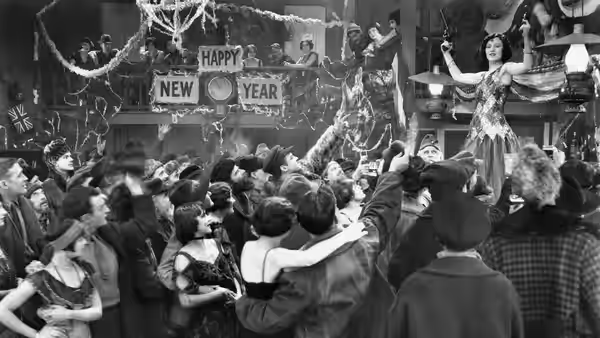
Most critics respond warmly to The Gold Rush, with praise clustering around Chaplin’s physical comedy and his ability to make hunger and loneliness funny without dismissing either. The boot banquet, bread roll dance and teetering cabin recur as examples of carefully worked comic invention. Several reviews find the melancholy just as important as the slapstick, singling out Chaplin’s expressive use of space and the New Year’s Eve sequence for the strength of their feeling.

The differences are chiefly in the degree of enthusiasm, rather than any sustained case against the film. Slant Magazine finds stretches slack but admires the romantic emotion, while Collider’s preference for Keaton and Lloyd does not prevent it finding Chaplin charming, funny and poignant. The accessible verdicts range from appreciative to emphatic praise; two entries lack accessible judgements, so they provide no firm evidence of further reservations.

IndieWire
4 February 2015 · Max O'Connell
95*

O’Connell presents the film as a hilarious, enduring masterpiece that balances comedy with loneliness and longing. He particularly praises Chaplin’s expressive use of space and the emotional force of the New Year’s Eve sequence.

Read the full review →
The Hollywood Reporter
1 July 2025 · ANDRÉ DIDYME-DÔME
95*

The critic calls the film a masterful, deeply human work that turns hardship into tender, ingenious comedy. The review singles out the boot banquet and roll dance as memorable scenes blending physical humor with melancholy.

Read the full review →
Variety
1 July 1925 · Variety Staff
95*

The review calls the film a triumph and the greatest comedy ever filmed. It especially praises the comic sequence with Chaplin and Swain in the teetering cabin.

Read the full review →
Empire
1 January 2000 · Scott Russon
80*

The review finds the film’s lasting appeal easy to understand. It praises the hungry boot-boiling scene and the bread roll dance as memorable comic moments.

Read the full review →
Slant Magazine
20 December 2011 · ★★★/4 · Jaime N. Christley
75

Christley finds the film occasionally slack but ultimately sublime in its grand romantic emotion. He singles out the scene of the Tramp listening alone to “Auld Lang Syne” as a perfect moment.

Read the full review →
The New Yorker
1 July 2012 · Richard Brody
75*

Brody offers an appreciative reading of the film and its contrasting 1942 sound version. He singles out Chaplin’s memorable comic set pieces and the later version’s revealing shift in tone.

Read the full review →

Straight answers AI written, from our review

Is The Gold Rush worth watching?
The Gold Rush is warmly worth watching for its patient physical comedy and unexpectedly moving portrait of hunger; we score it 89 out of 100. Chaplin’s careful treatment of a boiled boot as a proper dinner makes the comedy and sadness work together. The romance sometimes lingers too long, but the small gestures reward close attention.
How long is The Gold Rush, and what is it rated?
The Gold Rush runs 1h 35m. It is an adventure and comedy film.
Where can I watch The Gold Rush in Hungary?
The Gold Rush is not on any streaming or rental service in Hungary at the moment. It is available in 11 other countries; change your country at the top of the page to see where. Availability is checked daily.
How does The Gold Rush compare to Modern Times?
The Gold Rush and Modern Times both earn our warm recommendation, with Chaplin bringing stubborn dignity to hunger in one and factory work in the other. We favour The Gold Rush for closely observed comic routines, despite its lingering romance; Modern Times is the stronger choice for comedy about the cruelty of machinery, though its story wanders.
What should I watch after The Gold Rush?
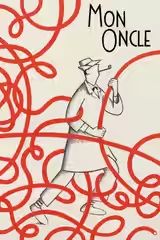
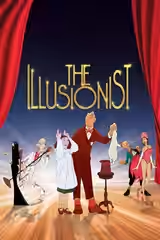
After The Gold Rush, try Modern Times (1936, Fi1m 88): Chaplin brings the same stubborn dignity to factory work and the search for food. Then Mon Oncle (1958, Fi1m 82): Patient visual jokes reward close attention, with human awkwardness troubling an orderly modern home; and The Illusionist (2010, Fi1m 78): An ageing performer faces loneliness, with delicate visual comedy keeping sentiment in check.

Cast

Awards

Academy Awards, 1943

Nominated
Best Original Dramatic or Comedy Score
Nominated
Best Sound

If you liked this, try…

  1. The Navigator (1924) · not on Fi1m yetAnother struggle for survival in which practical incompetence produces meticulously arranged physical comedy.

  2. Modern Times (1936, Fi1m 88)Chaplin brings the same stubborn dignity to factory work and the search for food.

  3. Mon Oncle (1958, Fi1m 82)Patient visual jokes reward close attention, with human awkwardness troubling an orderly modern home.

  4. The Lunchbox (2013) · not on Fi1m yetFood and loneliness bring strangers into contact in a quietly observant romance.

  5. The Illusionist (2010, Fi1m 78)An ageing performer faces loneliness, with delicate visual comedy keeping sentiment in check.