Film review

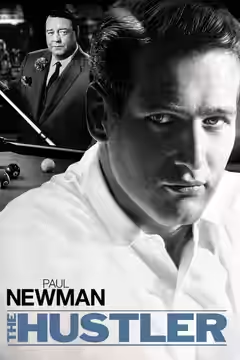
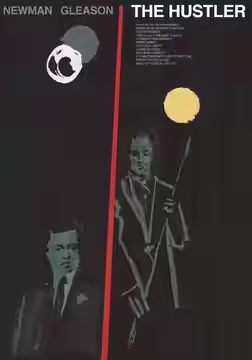
The Hustler

1961 · Directed by Robert Rossen · 2h 14m · MPA NR

In a sentenceHe plays pool for a day and a night and loses to a man who stopped to wash his hands

DramaRomance

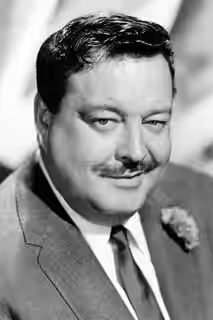
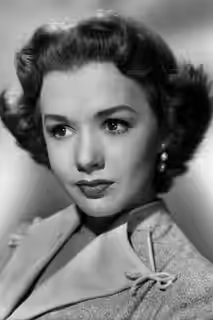
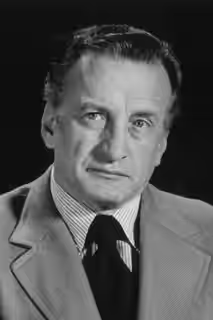
Eddie Felson (Paul Newman), known as Fast Eddie, and his manager Charlie Burns (Myron McCormick) drive from town to town working roadside bars. Eddie plays the drunk salesman who has never held a cue, bets too much on a trick shot, and takes the money. What he wants is a game with Minnesota Fats (Jackie Gleason), the best straight-pool player in the country, who holds court at Ames, a pool hall in New York. Eddie finds him, and the two men play through a night and a day while a gambler named Bert Gordon (George C. Scott) watches from a bench and says little. Eddie wins a great deal and then does not stop. Afterwards, alone and nearly broke, he meets Sarah Packard (Piper Laurie), a woman drinking in a bus station at dawn, and moves into her flat.

Fi1m review

Robert Rossen’s pool-hall drama is nearly as good as its reputation: Paul Newman has rarely been this alive, George C. Scott is quietly poisonous, and Eugen Schüfftan’s black-and-white halls look like real rooms. It says the word loser out loud a little too often.

Eddie Felson (Paul Newman) and his manager Charlie Burns (Myron McCormick) make their living in roadside bars. Eddie pretends to be a salesman who has had a few, bets too much on a trick shot, and takes the money. What he wants is Minnesota Fats (Jackie Gleason), the best straight-pool player in the country, who plays at Ames in New York, and Robert Rossen’s opening stretch is the night Eddie finds him. The Hustler is superb, and we recommend it with one caveat: it does not always trust its own pictures.

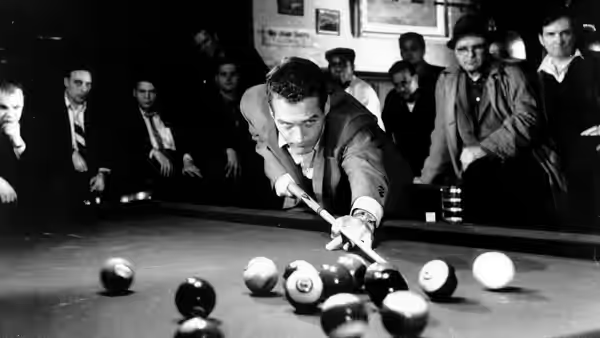
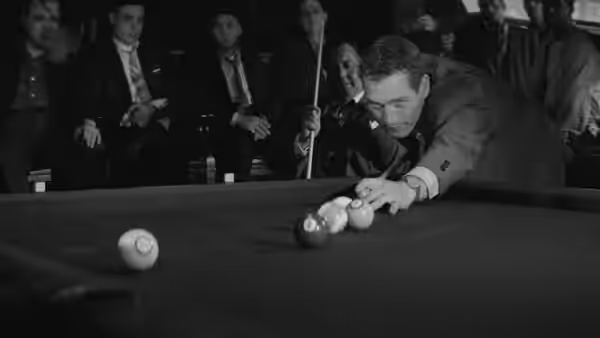
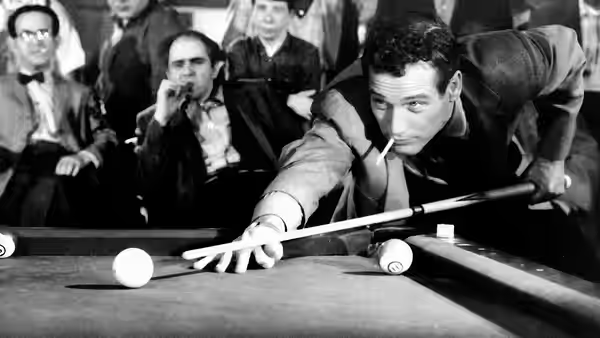
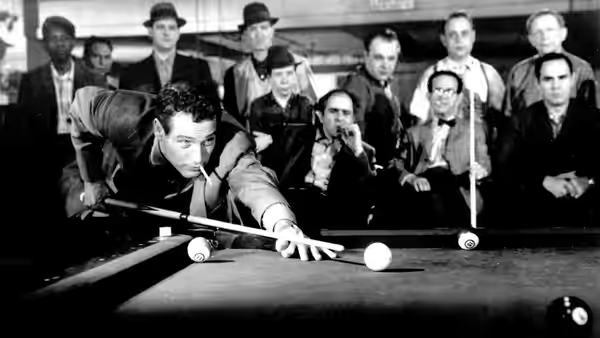
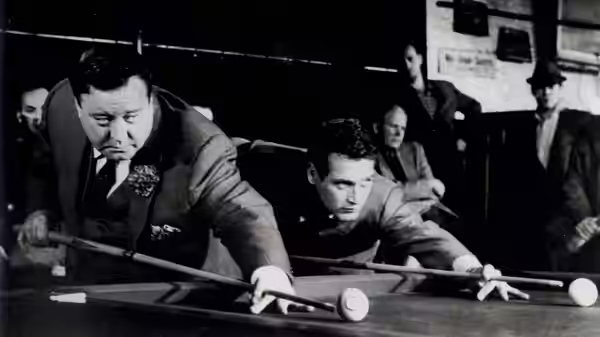
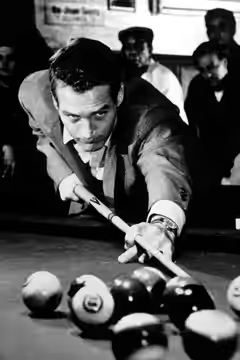
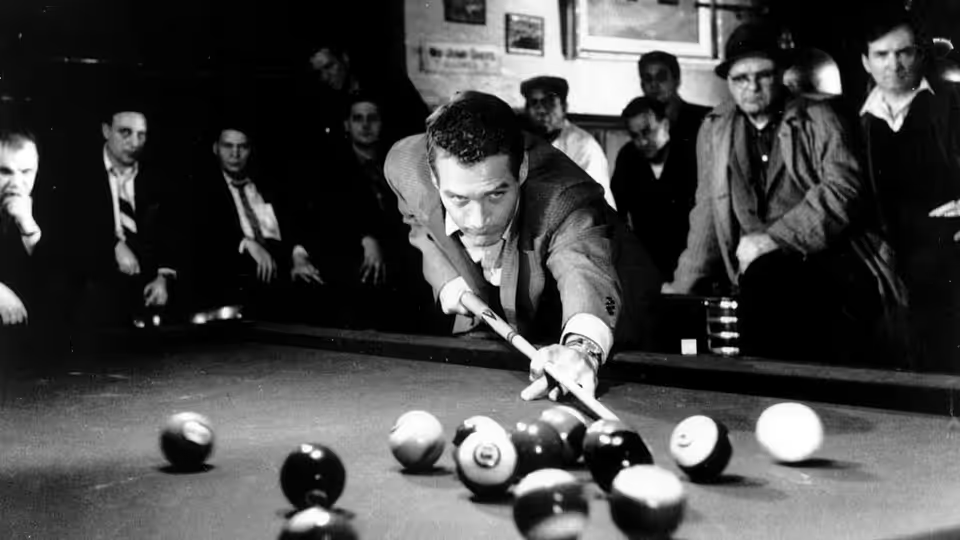
The game against Fats is the film’s great sequence. Fats arrives in a good suit with a flower in his lapel, chalks his cue and says almost nothing. Eddie talks. Eddie drinks. Eddie wins, and the more he wins the more he needs Fats to admit it. Dede Allen cuts the hours down to their turning points: a clock, a ball dropping, Fats going to the sink to wash his hands and coming back with his tie straight while Eddie’s collar is open. That was the moment that got us: we had been enjoying Newman’s cheek, then saw Gleason’s face and knew what was coming twenty minutes before Eddie did. Bert Gordon (George C. Scott) sits at the side in dark glasses and offers one word on Eddie, and it is not a kind one.

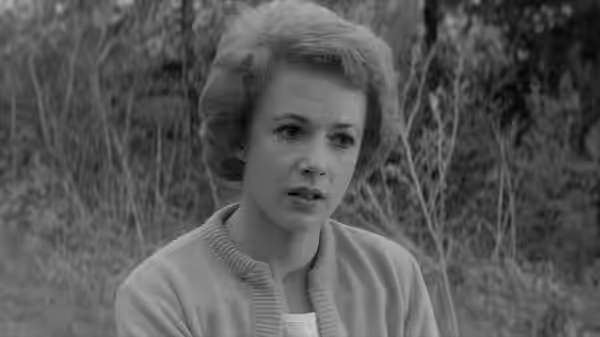
Eddie, alone and nearly broke, meets Sarah Packard (Piper Laurie) in a bus station at dawn. She walks with a limp, drinks before breakfast, and is writing something she will not show him. Laurie plays her without asking for pity. The scenes in her flat, two people who have each decided not to want anything and are failing at it, are the quietest in the film and moved us more than the pool did. Rossen and Sidney Carroll, adapting Walter Tevis’s novel, give her the hardest lines in the script, and Laurie makes most of them sound like things a person would say.

Eugen Schüfftan shoots it in black and white on a wide frame, and the halls look like halls: high windows, dust in the light, tables lit from above so the men bending over them are mostly hat and shoulders. Harry Horner’s production design keeps everything worn without making it picturesque. Ruth Morley puts Eddie in a suit that spends the marathon coming apart, jacket off, tie gone, and puts Bert in a coat he never seems to take off. Kenyon Hopkins’s score is thin jazz and stays out of the game itself; the click of the balls does that work.

Bert is the part everyone remembers and Scott plays him small. He explains to Eddie what Eddie is and what it would cost to be otherwise, and the offer is so reasonable it takes a moment to see the leash in it. Murray Hamilton arrives later as Findley, a rich man who can afford to lose, and the second half follows the money out of the halls. We will not say where it goes.

The trouble is the talking. Characters keep saying loser, winner and character out loud, as if Rossen were afraid we would miss the point, and Sarah is handed speeches that stop her scenes dead. Variety found it sordid and long; the sordidness is the point and the length mostly earned, but there are ten minutes we would give up. The ending is fast; we see why Rossen wanted it that way and still wished for one more scene.

Rossen had made Body and Soul, about a boxer, and All the King’s Men, about a politician, and this is the best of them because the arena is smallest. The stakes are a few thousand dollars and a man’s opinion of himself. Jake LaMotta, who knew something about that, is behind the bar in one scene. At 134 minutes it is a film for a late night. Do not expect to like Eddie, and watch Gleason’s hands.
Critical consensus AI synthesised

82
Positive
10
Mixed
1
Negative
1

Most critics rate The Hustler highly, and the praise settles on the acting. Paul Newman’s Fast Eddie Felson is singled out in nearly every review, with George C. Scott’s gambler and Jackie Gleason’s dramatic turn close behind, and several reviews name Piper Laurie’s Sarah as the film’s tender centre. Robert Rossen’s handling of the smoky pool-hall world is admired for feeling authentic rather than dressed up, and the reviews agree the film is about character and self-respect more than about pool.

The spread is wider than the average suggests. The New Yorker finds the story overambitious and sprawling, collapsing under complications it does not need, though still worth seeing. Variety, the one negative notice, objects to the downbeat, sordid realism and the length, while conceding the performances. The Guardian, otherwise approving, notes an abrupt ending and a speeded-up clock device. The 1961 reviews are cooler than the later ones.

Radio Times
★★★★★ · Adrian Turner
100

This is hailed as a masterpiece and showcase for one of Paul Newman's best performances. The critic singles out the perfectly captured seedy pool-hall atmosphere and the sparks between Newman, Gleason and Scott.

Read the full review →
RogerEbert.com
23 June 2002 · ★★★★/4 · Roger Ebert
100

The film centers on Fast Eddie Felson’s journey of self-discovery through pool, where his lack of character ultimately defeats him more than any opponent. Ebert praises the deep character development, especially Piper Laurie’s Sarah, and the way the story reveals inner strength beyond the game itself.

Read the full review →
Slant Magazine
29 June 2007 · ★★★★/4 · Arthur Ryel-Lindsey
100

The critic describes it as the loneliest American movie with the purest examination of an athlete’s internal struggle, highlighting Newman’s force-of-energy performance and the story’s Cinderella-Faust blend.

Read the full review →
Empire
1 January 2011 · Rob Fraser
90*

The critic calls The Hustler one of the coolest movies ever made but stresses it has more substance than style alone. Rossen uses the pool-hall world to explore male machismo and existential themes, with Piper Laurie’s role adding a tender heart to the cynical tone.

Read the full review →
The Hollywood Reporter
25 September 1961 · James Powers
90*

The critic calls the film provocative, powerful, odd, and serious, an important and satisfying experience outside usual Hollywood fare, with a daring structure that Rossen pulls off through vital sequences and authentic pool scenes.

Read the full review →
The Guardian
17 September 2006 · Philip French
85*

Philip French calls The Hustler Robert Rossen's greatest film, a stylised fable about loyalty, betrayal, character and self-respect set in a smoky pool-hall underworld. He praises the superb performances from Newman, Scott, Gleason and Laurie, along with the Oscar-winning black-and-white photography, while noting minor flaws in the abrupt ending and speeded-up clock device.

Read the full review →

Cast

Awards

Academy Awards, 1962

Nominated
Best Actor
Nominated
Best Actress
Nominated
Best Director
Nominated
Best Supporting Actor
Nominated
Best Writing, Adapted Screenplay
Won
Best Art Direction, Black and White
Won
Best Cinematography, Black-and-White

BAFTA Film Awards, 1962

Won
Best Film

Directors Guild of America Award for Outstanding Directing – Feature Film, 1961

Nominated
Directors Guild of America Award for Outstanding Directing – Feature Film

Golden Globes, 1961

Nominated
Best Actor – Motion Picture Drama
Nominated
Best Supporting Actor – Motion Picture
Nominated
New Star of the Year – Actor

If you liked this, try…

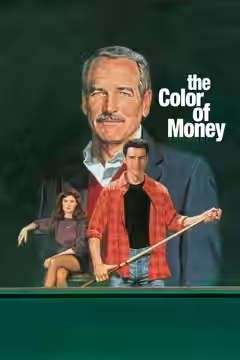
The Color of Money poster

The Color of Money

1986 · Newman picks Eddie up twenty-five years on; Scorsese shoots the pool like a chase.

Fat City poster

Fat City

1972 · Huston’s Stockton boxers are Eddie’s poorer cousins, and the bars are just as sad.

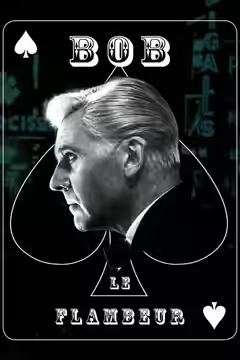
Bob le flambeur poster

Bob le flambeur

1956 · A Montmartre gambler with better manners than Eddie and the same bad habit of not stopping.

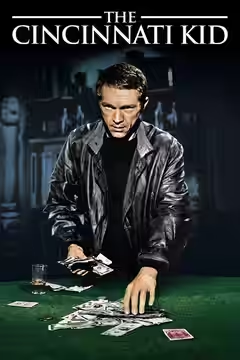
The Cincinnati Kid poster

The Cincinnati Kid

1965 · Poker instead of pool, McQueen instead of Newman, and Edward G. Robinson as the wall he hits.

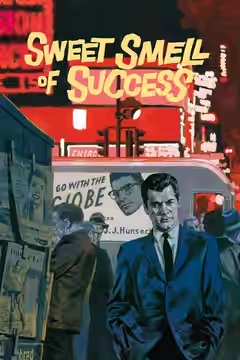
Sweet Smell of Success poster

Sweet Smell of Success

1957 · Another black-and-white New York night where everyone owes somebody and nobody sleeps.