Ken Loach’s drama about Syrian refugees arriving in a dying pit village is plainly made and occasionally moving, and half its characters talk like leaflets. Dave Turner and Ebla Mari carry it further than the script deserves.
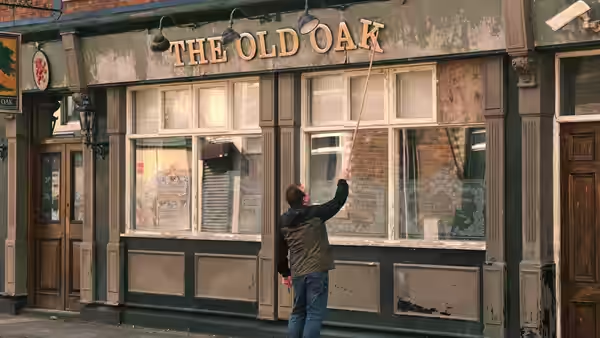
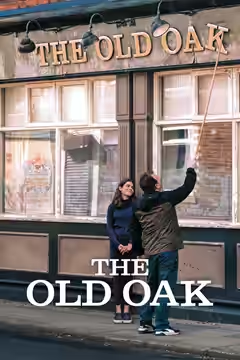
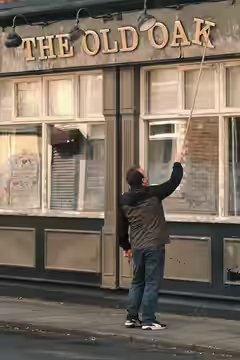
Ken Loach and his screenwriter Paul Laverty have gone back to the north-east of England for a third time, after I, Daniel Blake and Sorry We Missed You, and this time they have taken on a whole village rather than a family. A coach of Syrian refugees arrives in a former pit village where the terraces are being sold off cheap and the pub is the only one left. The Old Oak is about what happens when the landlord decides to help the newcomers and his regulars decide he has betrayed them. It is decent, honest work with two good people at the centre of it, and it lectures us more often than it shows us. We came out moved, and slightly cross, because the film had told us how to feel about as often as it had made us feel it.
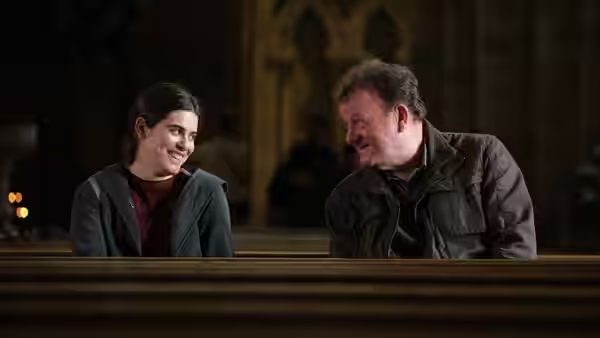
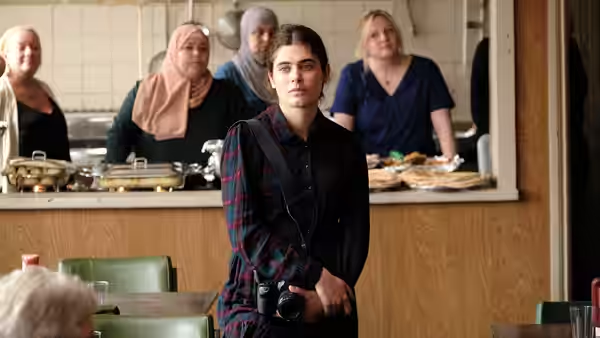
Dave Turner plays TJ Ballantyne as a big, tired man who has stopped expecting anything and is kind before he has decided to be. He moves behind the bar as if he has been doing it for thirty years, which is what the part needs, and he can let a whole conversation happen on his face while somebody else does the talking. Ebla Mari’s Yara is the film’s other asset: watchful, careful with her English, quick to put the camera between herself and a street that stares at her. When the two of them are alone in the pub’s shut-up back room, looking at old photographs of the miners’ strike, the film stops explaining itself and simply watches, and it is a much better film for those minutes.
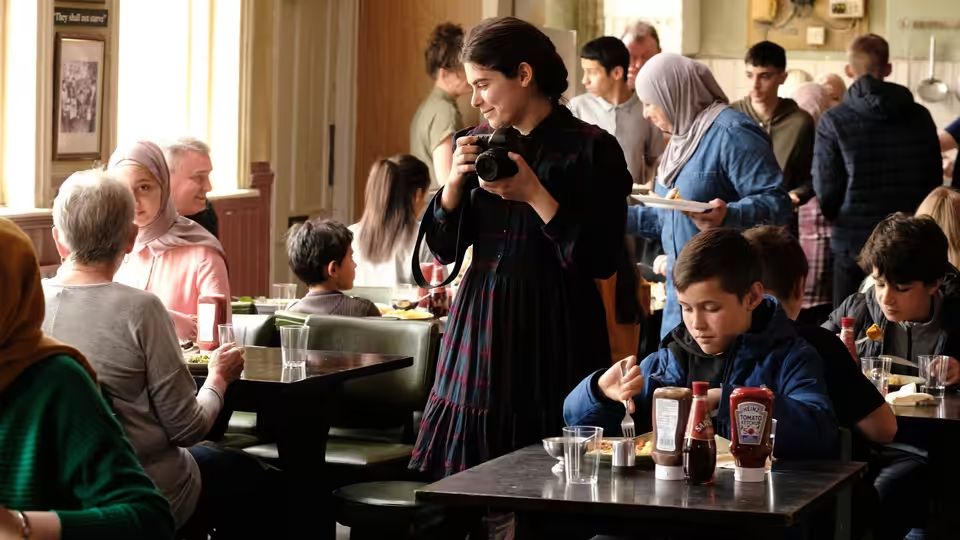
Fergus Clegg’s back room is the best set in it, dust sheets over the tables and the strike photographs still up on the walls, a place the village stopped using and never cleared. Robbie Ryan shoots the whole thing at eye level in whatever light the windows give, grey street and brown bar, and never draws attention to himself, which is the Loach way and suits the material. Jo Slater dresses the regulars in football shirts and anoraks that have not been new for a long time. The first shared meal in that room, plates passed down trestle tables under the photographs, is the scene that got us. We had been resisting the film for an hour, and then a room full of people with nothing to say to each other sat down and ate, and we found we had stopped resisting.
The trouble is the bar. Charlie (Trevor Fox), Vic (Chris McGlade), Eddy (Col Tait) and Gary (Jordan Louis) are each handed a grievance and each states it whole: the house prices, the handouts, the charity that never came for them. Laverty has written these men as a radio phone-in, and Loach’s non-professional cast, so good when asked to be, are asked here to deliver arguments and cannot make them sound like things people say over a pint. We winced through several of these exchanges. The film knows these men have been abandoned and says so, repeatedly, and it never quite lets them be anything but the case for the prosecution.
George Fenton’s score stays out of the way for most of the running time and then arrives in the last stretch to make sure we know how to feel, which by then we did. Jonathan Morris cuts as Loach films always cut, letting scenes run to their natural end without hurry, and that patience is generous to Turner and Mari and merciless to the weaker players, whose pauses become visible. The second half also piles on misfortune faster than the village can plausibly absorb it, and takes a turn we will not describe.
Against the two films before it, this is the softest and the least precise. I, Daniel Blake had one man and one form and followed them to the end; Sorry We Missed You had one van. The Old Oak has a whole village to look after and a point to make, and it keeps stopping the village to make the point. Most critics have been a little kinder than this and some far harsher; the two leads have been praised nearly everywhere, and rightly.
See it for Turner, for Mari, and for that back room. Go in knowing you will be told what to think, and that the telling is at least in a good cause. It runs 113 minutes and carries a 15.