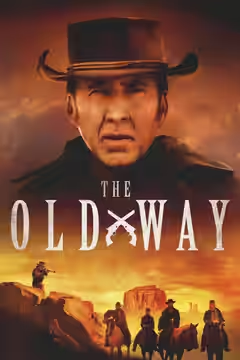
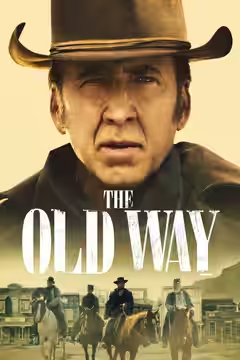
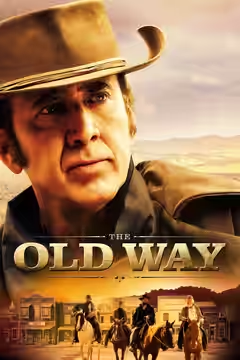
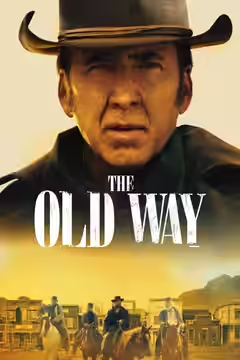
A tidy, familiar revenge western that keeps Nicolas Cage on a low flame and finds its one good idea in a daughter as blank as her father. That fireside scene is worth having; the ninety minutes around it are a film you have seen before.
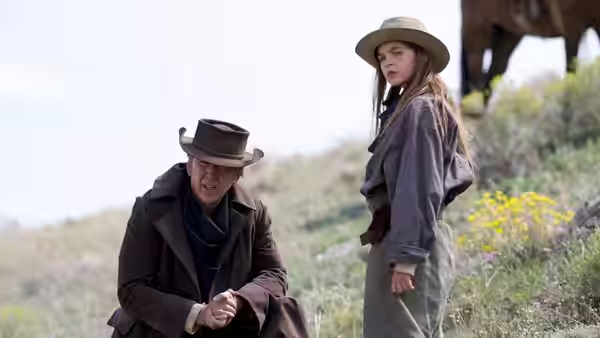
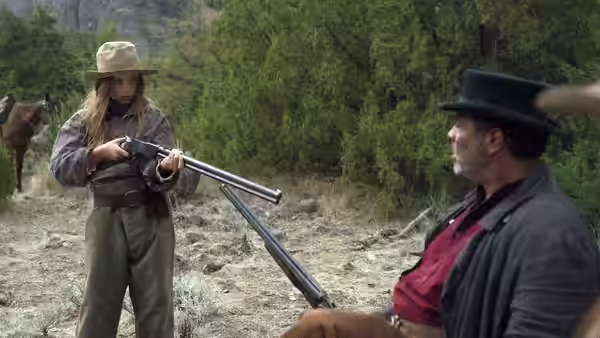
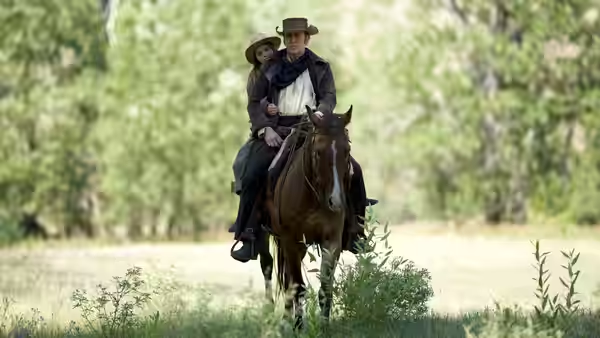
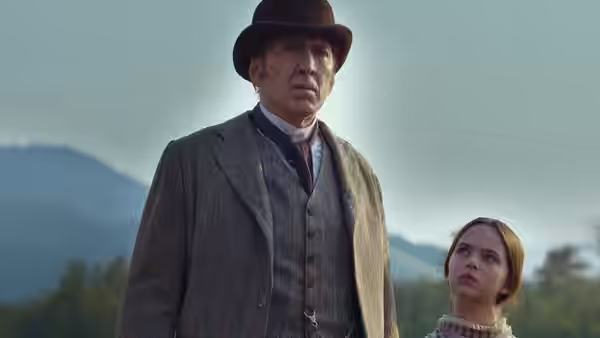
Brett Donowho’s The Old Way is a revenge western built from parts you will recognise, and it knows it. A gunman kills a man in front of the man’s son; twenty years on, the son comes back with friends. Carl W. Lucas’s script adds one thing to this. Colton Briggs (Nicolas Cage) has put the gun down and become a shopkeeper, and his daughter Brooke (Ryan Kiera Armstrong) has turned out exactly like him, a child who does not cry, rarely smiles, and says the true thing at the wrong moment. The film is at its best when it is about those two, and it is about them for perhaps fifteen of its 95 minutes.
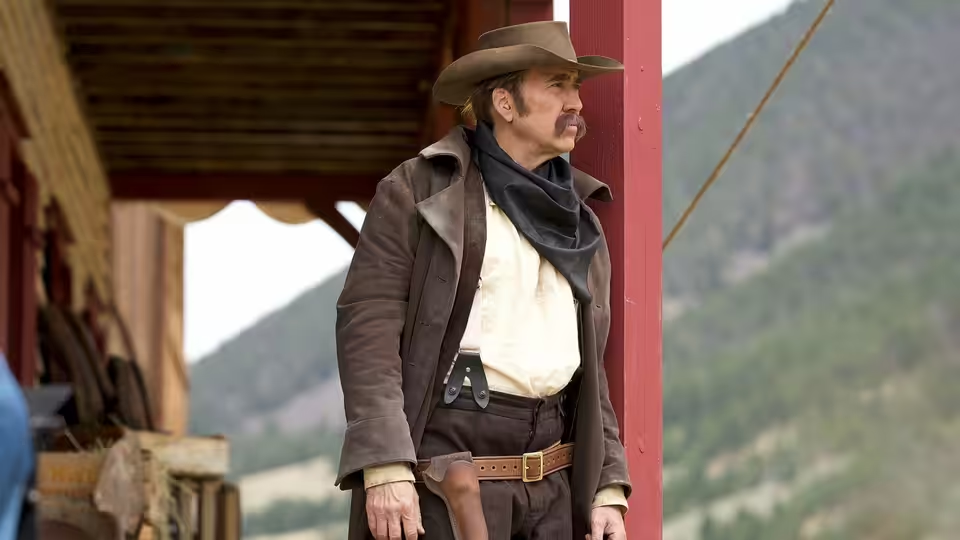
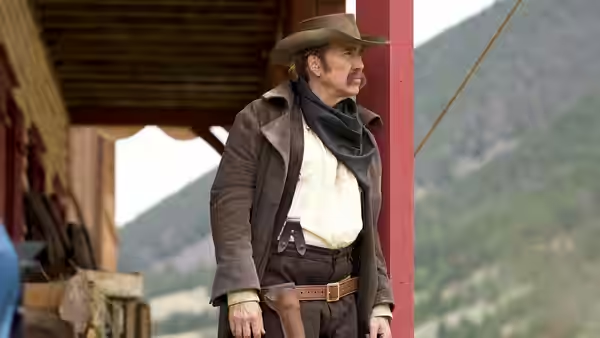
Cage plays Colton flat and quiet. There is none of the shouting people expect from him; he speaks slowly, in whole sentences, and holds his face still, as if he stopped having feelings some years ago and did not miss them. It is a considered piece of work and it is also a little inert, because the script gives him almost nothing to react to until the last reel. He has one speech, delivered at a campfire, about the way other people seem to feel things he has never been able to feel. It is the reason to see the film.
We did not expect to be moved by that scene, and we were. Armstrong listens with the same blank face she has been wearing for an hour, then asks a plain, practical question about whether she is like him, and Cage answers it honestly. Frederick Wardell holds the two of them in the shot long enough for the silence to do the work, and for a few minutes this is a picture about a father telling his daughter what she has inherited. Nothing else in the film earns the moment, but the moment is real. Then somebody says it is time to ride, and it goes back to being a chase.
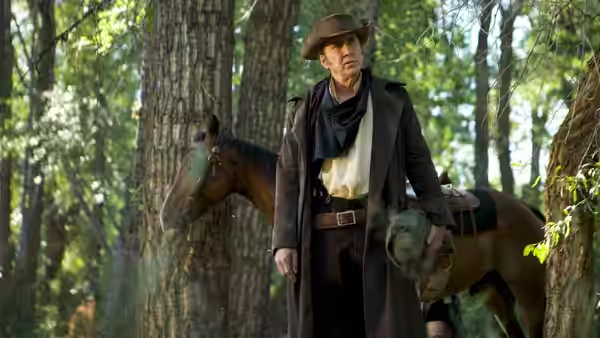
Noah Le Gros plays James McCallister with a soft, courteous menace and more relish than the rest of the cast put together, and the film perks up whenever he is talking. Clint Howard’s Eustice is the gang’s nervous, chattering old-timer, and Howard gets more laughs than the script seems to have planned. Vicki Hales-Daly’s costumes tell the whole story in cloth: Colton in a shopkeeper’s clean waistcoat, then in the long dark coat he has kept all these years; the gang in sweat-stained layers that look as if they have not come off since the war. Tessla Hastings’s general store, swept and orderly with everything on its shelf, is the clearest statement of what this man has been trying to become.
The action is the disappointment. The tagline promises a man nobody can outfight, and the film shows us perhaps three brief exchanges of fire, each cut short before it can build. Sion Michel shoots the country wide and in a flat, even daylight that never changes, so a ride of several days looks like one long afternoon, and the gunfights happen in the same light as the shopping. Andrew Morgan Smith’s score swells under every horseback shot as if we might otherwise forget it is a western. Wardell’s cutting, so patient at the campfire, is merely brisk everywhere else. We were bored through the middle third, and being bored in a 95-minute film takes some doing.
Against the westerns it is borrowing from, it is small. Unforgiven made a man’s retirement from violence its whole subject; here it is a costume change. Nick Searcy’s Marshal Jarret exists to tell Colton not to do what the film needs him to do, and Kerry Knuppe’s Ruth gets a warm kitchen scene and not much else. The second half goes where you think it will, and we will leave it there.
Most critics landed around the middle, and so have we. If you want Cage quiet, and a western that lasts an evening rather than an epoch, it will do. Watch it for the fire, and be honest with yourself about how much you are prepared to sit through for one good conversation.