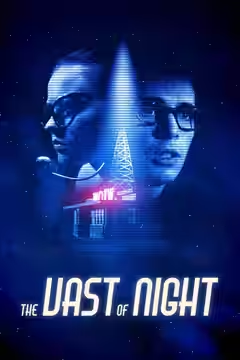
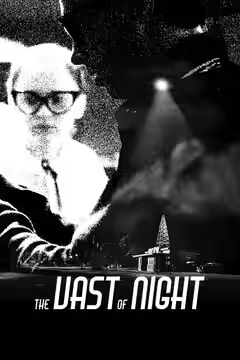
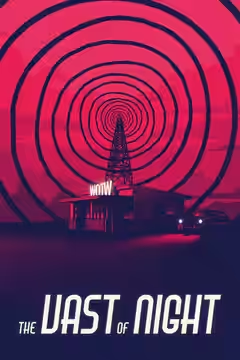
Andrew Patterson’s first film is a 1950s alien-visitation story told almost entirely down telephone lines and over the airwaves, and for eighty minutes it is one of the most confident debuts we have seen. Then it shows us what it should have kept hidden.
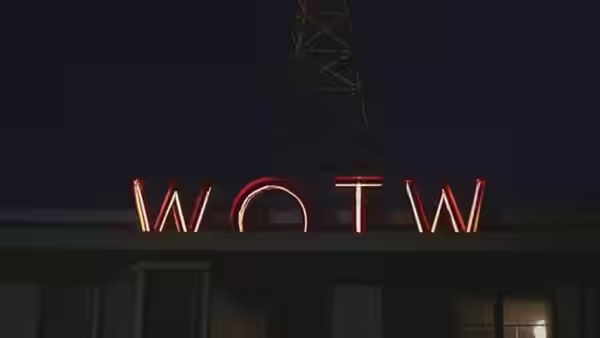
Andrew Patterson’s first film opens on an old television set. A black-and-white anthology programme is starting, an announcer promises a tale of the strange, and the camera pushes into the screen until the picture fills the frame and turns to colour. It is a nod to The Twilight Zone, and a warning: this is the sort of story that used to be told in half an hour, stretched by Patterson and co-writer Craig W. Sanger to 91 minutes and set almost entirely in two small rooms and the telephone lines between them.
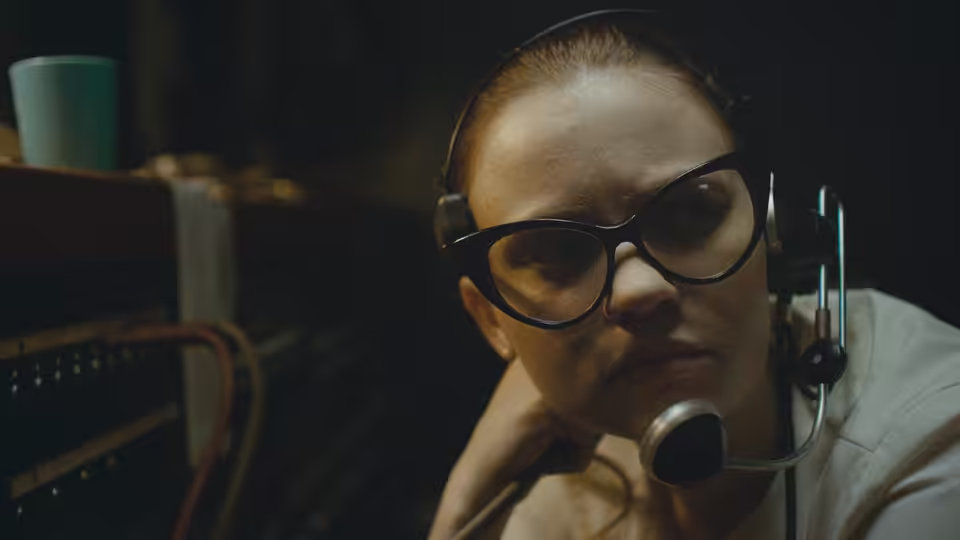
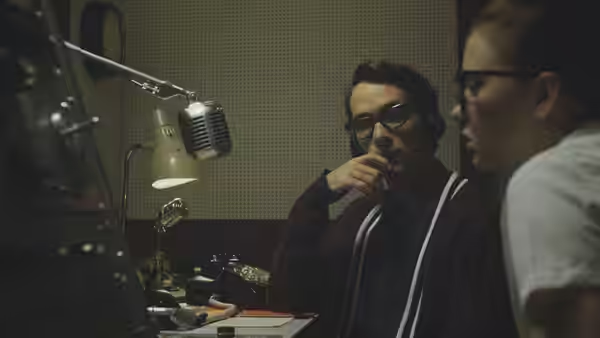
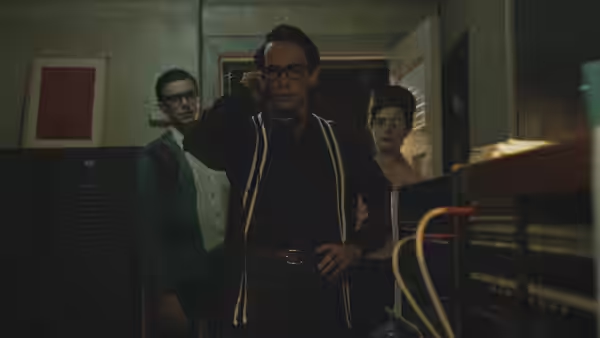
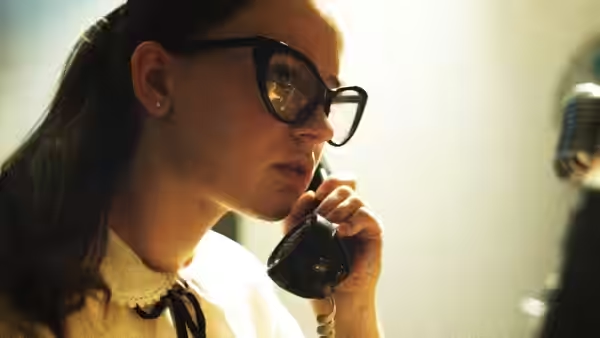
The rooms are a switchboard and a radio booth in Cayuga, New Mexico, on a night in the 1950s when the rest of the town is at the basketball game. Fay Crocker (Sierra McCormick) is a schoolgirl who runs the telephones. Everett (Jake Horowitz) runs the radio station, or at least its late shift. They talk fast and over each other, and Horowitz has Everett’s patter exactly, a young man who has learned how to be a person from the wireless. McCormick is the film’s centre. Watch her at the board with the headset on, cords in both hands, as a sound comes down a line that should not carry one. She listens, and Patterson lets us watch her listen.
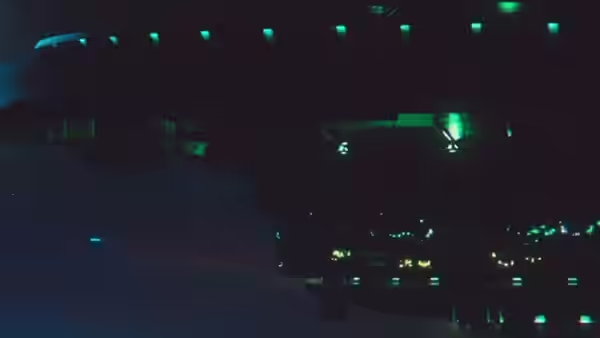
Then the camera leaves. The most talked-about shot, from cinematographer M.I. Littin-Menz, starts at the switchboard, drops to ground level and travels across the whole town in the dark, past parked cars and dim porches, into the gym where the crowd is roaring, and out again to the radio station, without a visible cut. We sat up. It is showing off, and it earns it, because it tells us how small the town is, how empty it is tonight, and how far Fay’s voice has to travel to reach Everett’s.
The middle of the film is people on the telephone, and it is the best part. Everett plays Fay’s sound on air and asks whether anyone recognises it. A man called Billy rings in. We never see him; Bruce Davis is a voice on a bad line, talking slowly about something he was made to do years ago, and Patterson, who cut the film himself, takes the picture to black for long stretches while he speaks. We sat in the dark listening the way Everett does, and we did not want the picture back. Erick Alexander and Jared Bulmer’s score stays under the voices, a low electric hum that is hard to tell from the sound on the line, which we take to be the point. A second caller, Mabel Blanche (Gail Cronauer), asks the pair round to her house and gets a long speech from an armchair in one held shot. Some critics found the monologues strain. Cronauer’s did not, for us. She plays a woman who has waited a long time to be asked, and it moved us more than a film about a noise in the sky has any right to.
Adam Dietrich, who produced the film and designed it, builds the fifties out of things that work: the switchboard’s jacks and lights, the booth’s reel-to-reel machines, Fay’s new portable tape recorder. Nothing glows the way the decade usually glows on screen. The town looks like a place people would like to leave, which is what Everett keeps saying about it.
Two things hold it back. The framing device keeps returning. Every so often the picture shrinks into that fuzzy television screen, the sound goes tinny, and we are reminded that we are watching a pastiche, which we had noticed. It puts a pane of glass between us and two people we were happy to be close to. And Fay and Everett are not given much to want. He wants out of Cayuga; she wants to keep up with him; that is about it, and by the last act we found we cared more about the callers than about the pair who took the calls.
Then there is the ending, which we will not describe except to say that after eighty minutes of showing us nothing, the film shows us something, and it is roughly the something we had been picturing. We were let down, and then slightly cross about it, because the black screen had been braver. Most critics forgive it and, on balance, so do we. It is a first film made on a small budget, and it is more confident than most tenth films. Watch it at night with the sound up and the phone off. The best minutes are the ones with nothing on the screen.