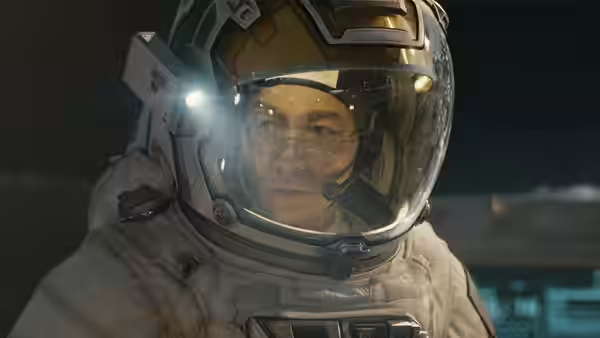
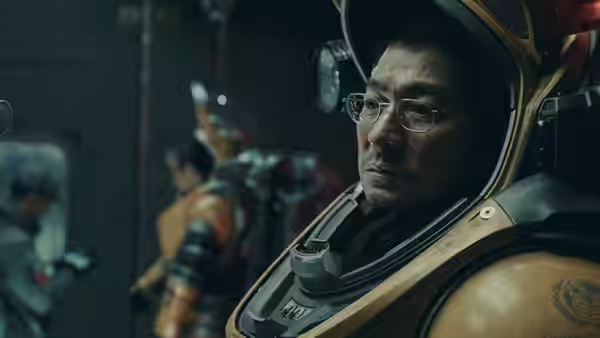
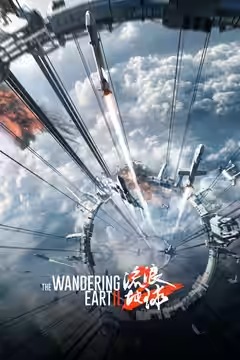
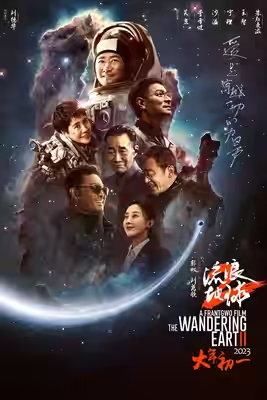
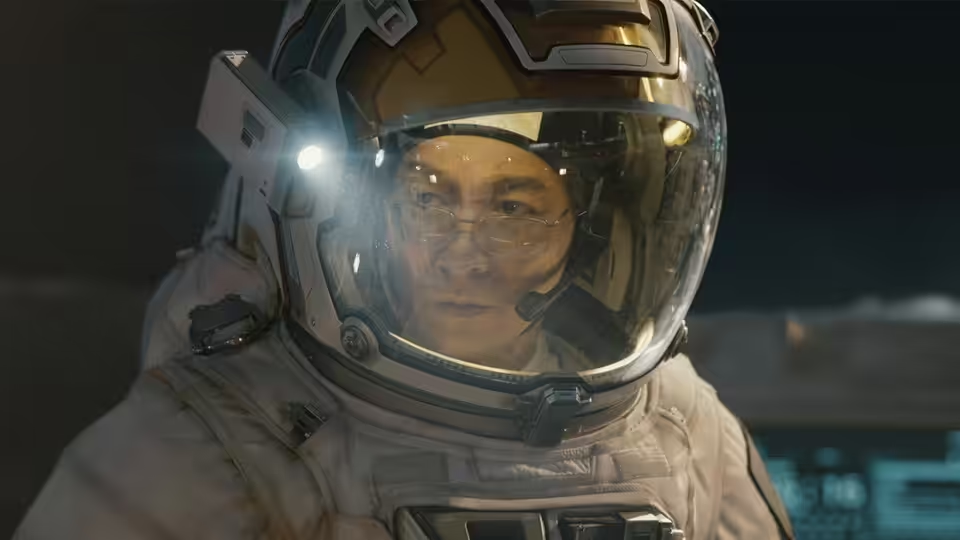
Liu Peiqiang (Wu Jing) in a spacesuit, looking ahead through his helmet visor
Film review

The Wandering Earth II

2023 · Directed by Frant Gwo · 2h 54m

In a sentenceThe special effects are ready; the screenplay would like another meeting

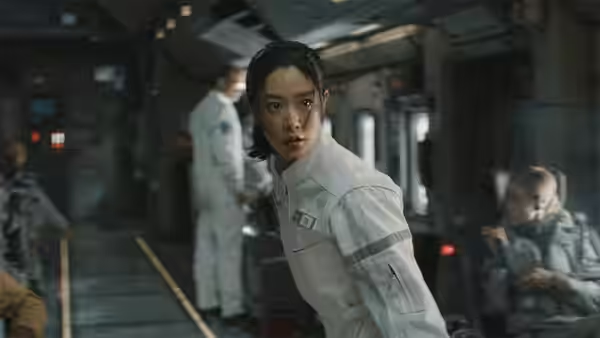
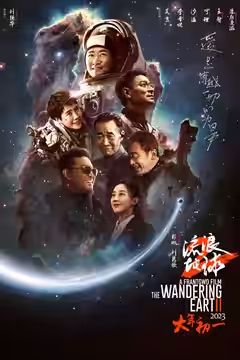
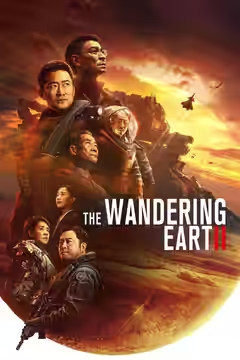
Liu Peiqiang (Wu Jing), Tu Hengyu (Andy Lau) and Zhou Zhezhi (Li Xuejian) lead the ensemble of this science-fiction action adventure directed by Frant Gwo. The cast also includes Zhang Peng (Sha Yi), Ma Zhao (Ning Li) and Hao Xiaoxi (Zhu Yanmanzi), with Wang Ruoxi as Tu Yaya and Tong Liya as Tu Hengyu’s Wife. Written by Gong Geer, Frant Gwo, Ye Ruchang and Yang Zhixue, The Wandering Earth II runs 174 minutes and carries a 12A certificate.

Plays from YouTube when you press play; nothing loads from them until then.

Fi1m review

Frant Gwo delivers imposing science-fiction spectacle, but tangled exposition and sidelined performances make 174 minutes feel longer. Worth considering for the effects, provided the characters are not the main attraction.

Frant Gwo’s The Wandering Earth II is worth considering for its science-fiction action, provided patience is part of the evening’s plan. At 174 minutes, it gives its effects plenty of opportunity to impress and its exposition rather too much opportunity to interfere. The ambition is welcome, as is the confidence that an audience will take a complicated science-fiction story seriously. The trouble is how often the film stops to explain itself.

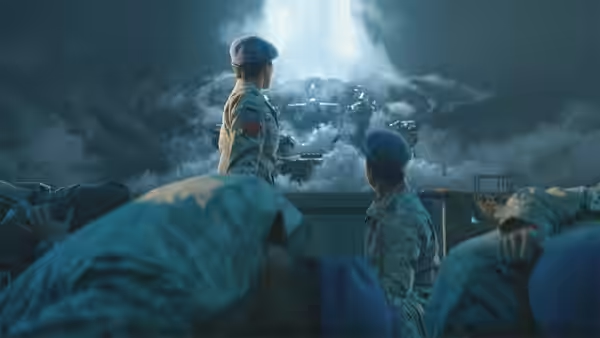
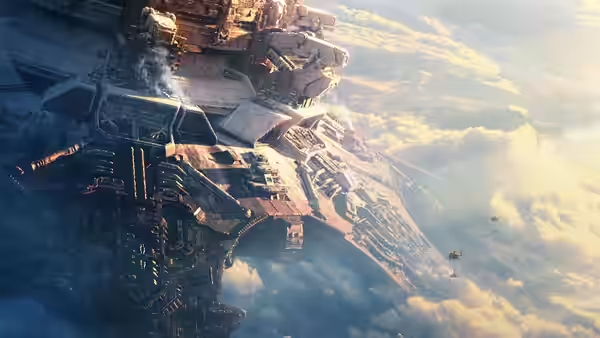
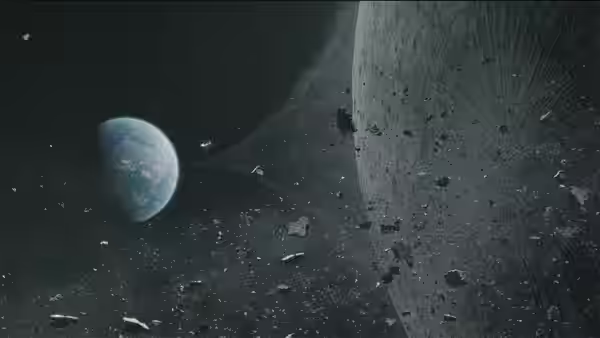
Michael Liu’s cinematography and Hanrui Wang’s production design contribute to a spectacle whose scale is its clearest achievement. The computer-generated action has enough conviction to hold attention even when the storytelling becomes cumbersome. We were excited by the effects, then frustrated by how quickly another stretch of explanation could let that excitement drain away. Gwo gives the set pieces an importance that the material surrounding them struggles to earn.

The performances suffer from that imbalance. Wu Jing plays Liu Peiqiang, Andy Lau plays Tu Hengyu and Li Xuejian plays Zhou Zhezhi, but the ensemble has to compete with the film’s appetite for another enormous incident. Too often, the actors have insufficient room to hold our attention before the spectacle takes over again. That becomes a practical problem for the action, since there is only so much interest to be had in watching impressive things happen to people we scarcely care about.

The screenplay is credited to Gong Geer, Frant Gwo, Ye Ruchang and Yang Zhixue, and it gives the audience a considerable amount to absorb. Some density is welcome in science fiction; there is pleasure in paying attention to an unfamiliar idea and gradually understanding it. Here, however, the explanations become burdensome without making the characters more interesting. Another set piece can begin to feel like a welcome break from the dialogue, which is a limited sort of involvement for a film this long.

Editors Ye Xiang and Cheung Ka-Fai have the difficult job of keeping all that action and explanation moving together. The set pieces deliver excitement, but the film never finds a comfortable rhythm around them, and its uneven tone adds to the strain. A shorter cut would help without necessarily solving the problem. The more important decision is how much explanation an audience needs before being allowed to enjoy what is happening.

Roc Chen supplies the music, though the film’s emotional distance is beyond anything a composer could repair. No score can give performers the time and attention that the surrounding film denies them. Against the standards of effects-led science fiction, the visual ambition is enough to distinguish this from something merely going through familiar motions. But the genre also needs curiosity about its people, particularly when it asks for nearly three hours of our company.

There is still sufficient pleasure in the action to make this a reasonable choice for an enthusiast. The effects are a substantial attraction, and the willingness to attempt so much deserves some patience, though not an unlimited supply. Allow for a long evening and stretches when following the explanations feels unnecessarily laborious. If the characters matter more to the evening than the spectacle, choose something else.

Critical consensus AI synthesised

56
Positive
1
Mixed
2
Negative
1
RogerEbert.com
65*

The page is inaccessible, so the critic’s verdict and specific praise or complaint cannot be verified. The URL identifies a RogerEbert.com review page for the specified film.

Read the full review →
Screen Daily
22 January 2023 · John Berra
65*

The visible standfirst suggests the sequel builds on the original’s scale. The page does not expose the critic’s detailed verdict or further praise and complaints.

Read the full review →
The Guardian
24 January 2023 · Phuong Le
30*

The review finds the ambitious prequel emotionally distant and weighed down by convoluted exposition. It praises the spectacular CGI but says the emphasis on set pieces sidelines the performances.

Read the full review →
Digital Spy
24 January 2023
70*

The critic finds the ambitious prequel entertaining despite its length and uneven tone. Its epic action and crowd-pleasing special effects stand out as its greatest strengths.

Read the full review →

Straight answers AI written, from our review

Is The Wandering Earth II worth watching?
The Wandering Earth II is worth considering for patient science-fiction enthusiasts drawn to large-scale effects, and we score it 62 out of 100. The action delivers excitement, but tangled explanations, sidelined performances and an uneven rhythm make its 174 minutes demanding; we would choose something else if characters matter more than spectacle.
How long is The Wandering Earth II, and what is it rated?
The Wandering Earth II runs 2h 54m. It is a science fiction and action film.
Where can I watch The Wandering Earth II in Romania?
The Wandering Earth II is not on any streaming or rental service in Romania at the moment. It is available in 15 other countries; change your country at the top of the page to see where. Availability is checked daily.
How violent or frightening is The Wandering Earth II, and is it suitable for children?
The Wandering Earth II carries a UK 12A certificate, so children under 12 need an accompanying adult at the cinema. That classification allows some material unsuitable for younger children, but we cannot give a more specific violence or fright warning from the action described in our review. Its lengthy explanations also make it a demanding choice for younger viewers.
How does The Wandering Earth II compare to Sunshine?
The Wandering Earth II offers imposing effects-led spectacle, but we recommend Sunshine for its closer attention to the crew facing a vast space emergency. We find Sunshine patient and frightening through its first two acts, despite a weaker third; The Wandering Earth II struggles more persistently with burdensome explanations and characters who receive too little attention.
Is The Wandering Earth II based on a true story or a book?
The Wandering Earth II is based on a novel by Liu Cixin, rather than a true story. We cannot establish how faithfully it follows the book or whether reading it first helps, but the film itself spends considerable time explaining its science-fiction ideas, often at the expense of its characters.
What should I watch after The Wandering Earth II?
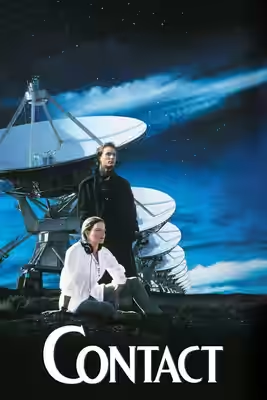
After The Wandering Earth II, try Sunshine (2007, Fi1m 74): Another vast space emergency, with closer attention paid to its crew. Then Contact (1997, Fi1m 76): A more measured science-fiction drama that lets human curiosity drive the spectacle.

Cast

Awards

International Submission to the Academy Awards, 2024

Nominated
International Submission to the Academy Awards

If you liked this, try…

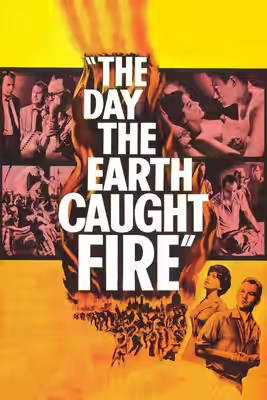
  1. The Day the Earth Caught Fire (1961) · not reviewed yetA planetary emergency made urgent through people arguing in rooms.

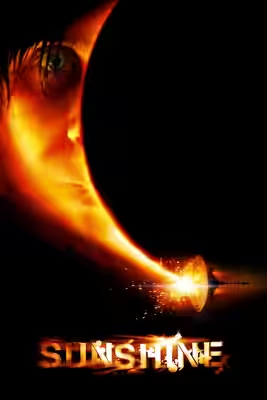
  2. Sunshine (2007, Fi1m 74)Another vast space emergency, with closer attention paid to its crew.

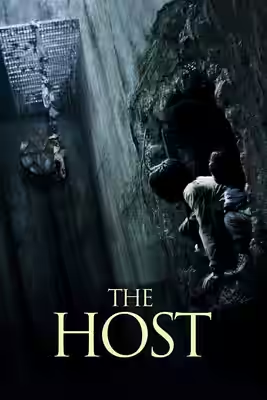
  3. The Host (2006) · not reviewed yetCreature trouble, unruly humour and a family worth worrying about.

  4. Aniara (2018) · not reviewed yetFor a colder, more patient account of humanity stranded in space.

  5. Contact (1997, Fi1m 76)A more measured science-fiction drama that lets human curiosity drive the spectacle.

Free account

Know what to watch tonight

Two lists that know where things are streaming, collections you can share, your own score beside ours, and Discover that remembers what you have seen.

  • Want to see, sorted by what is streaming now
  • Seen, with your score out of ten
  • No adverts, ever