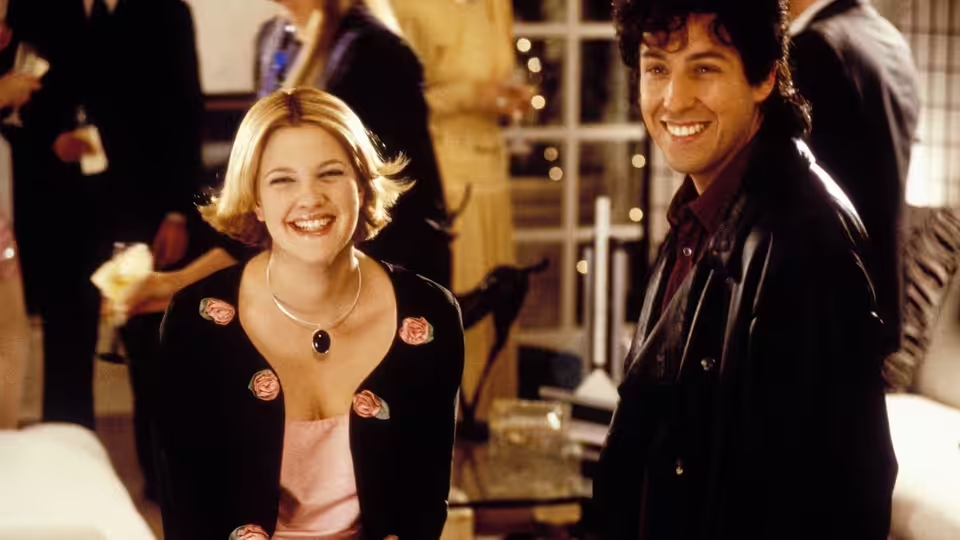
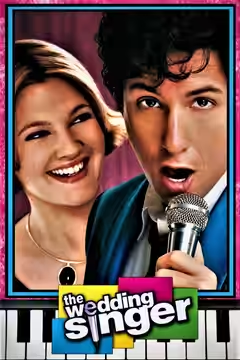
Adam Sandler and Drew Barrymore make this a warm, appealing romance, helped by a lively pop soundtrack. The middle drifts and the broad humour sometimes gets in their way, but we recommend it to anyone with a weakness for romantic comedy.
Frank Coraci’s The Wedding Singer is a likeable romance with an uneven supply of jokes. Anyone coming chiefly for the comedy may feel a little short-changed, though there is enough affection here to compensate. Adam Sandler and Drew Barrymore give a simple courtship the warmth it needs to carry us through some ordinary writing. The film wants us to enjoy being with these people, and for most of its 97 minutes we do.
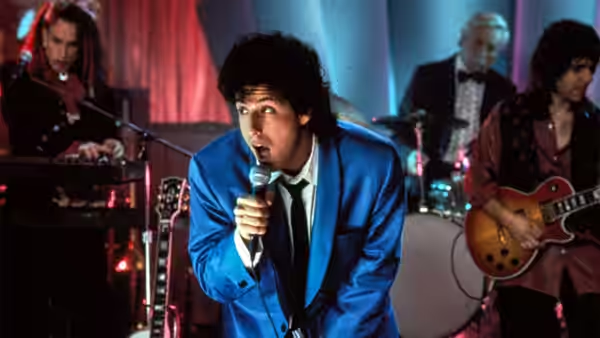
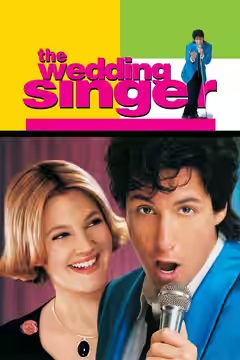
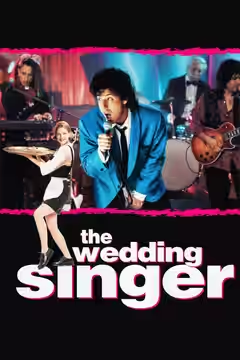
Robbie Hart is a would-be rock star working the wedding-band circuit, where everyone else’s big day is another shift. It is a useful comic occupation, requiring cheerfulness regardless of how the person holding the microphone feels. Adam Sandler makes Robbie’s need to be liked affecting without asking us to mistake him for a saint. We were more touched than we expected by the gentleness of his performance; his eagerness to please gives Robbie something vulnerable beneath the comic business. The broader humour can obscure that quality, but it remains the reason to follow him.
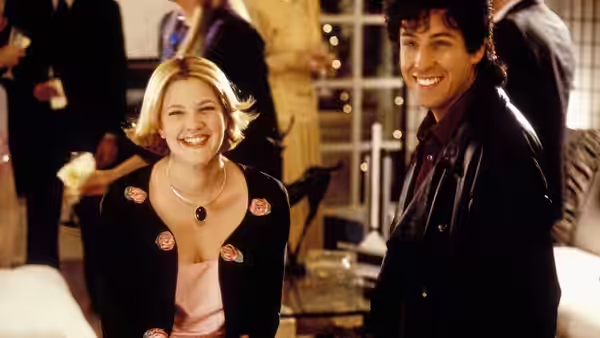
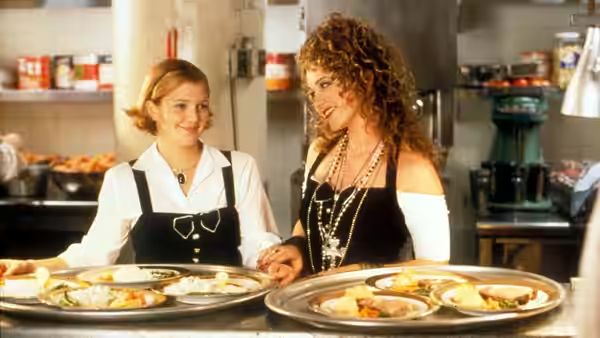
Drew Barrymore is equally important to the film’s appeal, giving Julia Sullivan a warmth that makes the attraction easy to believe. She has a relaxed presence, and the romance benefits from the sense that these two might enjoy an ordinary conversation. Tim Herlihy’s screenplay does not give their story many surprises, but it does give the actors a relationship we can accept. The trouble comes when the comic writing presses harder than the romance needs, leaving the performers to supply the tact.
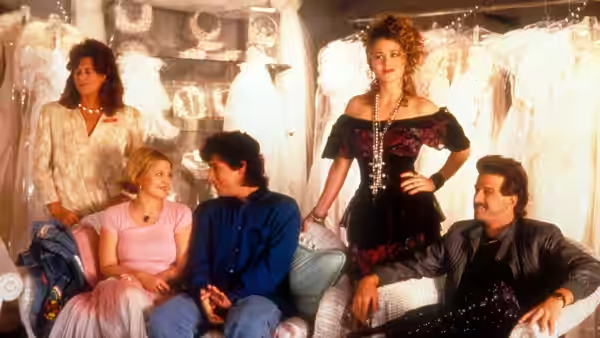
The 1980s setting provides plenty of amusement, although some of it amounts to congratulating us for recognising the decade. Perry Andelin Blake’s production design contributes to that cheerfully exaggerated nostalgia, which is enjoyable until it starts competing with the people. Tim Suhrstedt’s cinematography keeps the courtship looking approachable, an appropriate choice for a romance with such modest ambitions. The look suits the film, but the period jokes occasionally feel like a substitute for better writing.
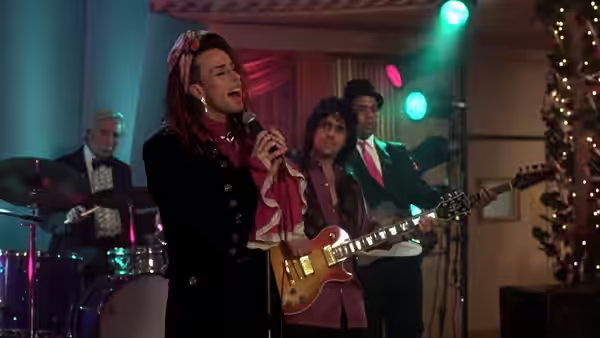
The pop soundtrack does more useful work, supplying energy and feeling without requiring another comic interruption. Teddy Castellucci’s music is less distinctive, though it fits the film’s straightforward emotional approach. A romance this modest does not need much help announcing what it wants us to feel. The songs are enjoyable company, and the film usually knows when to let that be enough.
The slack middle is harder to excuse. Tom Lewis’s editing does not keep the courtship moving with the same assurance as the lighter comedy, and the story spends too long relying on goodwill already earned. The lowbrow jokes are uneven too; some have an amiable foolishness, while others interrupt a mood the actors have worked to establish. Nothing here ruins the romance, but enough of it could go for us to notice.
As a romantic comedy, it has more interest in making its couple likeable than in testing the familiar formula. We can live with that when the attraction is this persuasive, though the film would benefit from trusting it more consistently. Its sweetness survives the weaker material without becoming exhausting. Choose it for an undemanding evening, with a tolerance for jokes that try a little too hard.