Raine Allen-Miller’s first feature is a quick, bright south London romance with two leads good enough to make its stock machinery hum. It is slight, and it knows it, and at 82 minutes it stops before that becomes a problem.
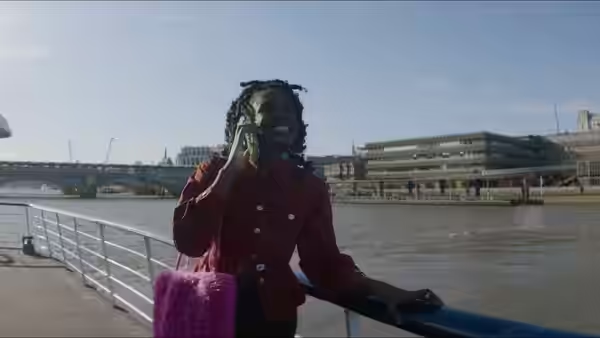
Dom has been dumped, and he is taking it badly in a toilet cubicle at an art show. Yas is in the next one and can hear him. Rye Lane is what happens after she decides to say something: one afternoon in Peckham and Brixton with two strangers who have both been left. Raine Allen-Miller, directing her first feature, has made a small, quick, likeable romance, and we recommend it. Its plot is second-hand and its supporting characters are cartoons, but the two people at the centre of it are real, and 82 minutes is as long as they need.
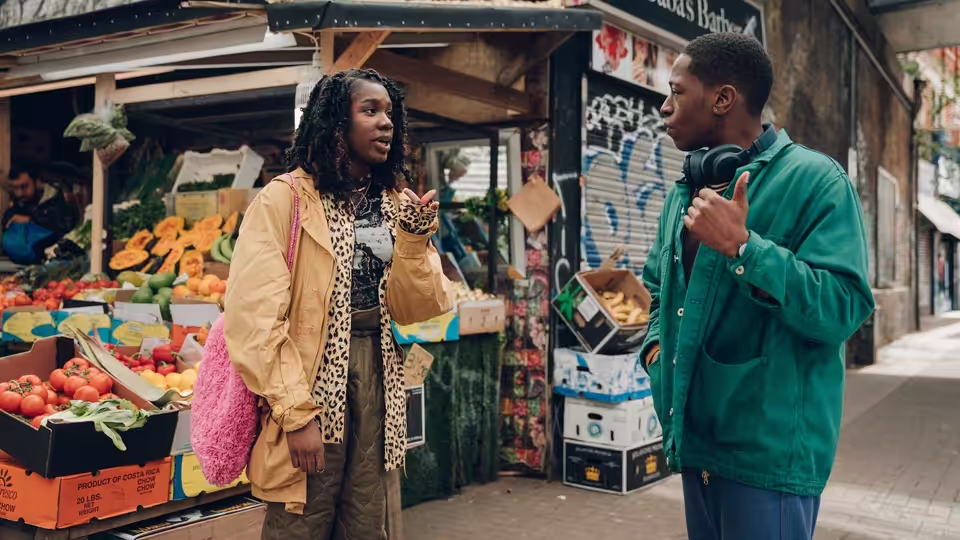
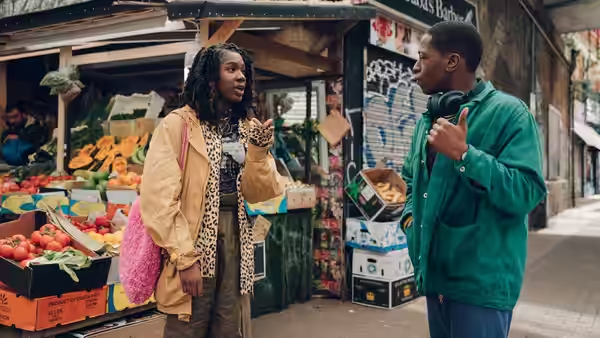
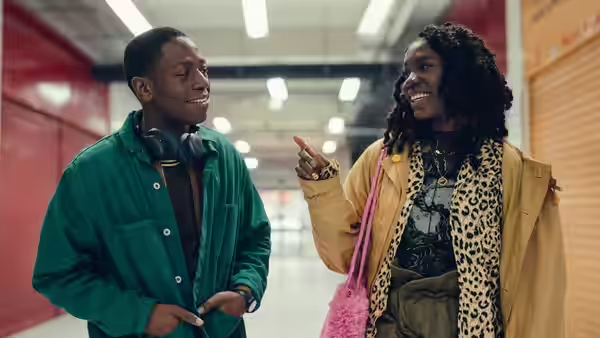
Olan Collardy shoots almost all of it on a lens so wide that the edges of the frame curve. Shop fronts bulge, pavements bend, and the two leads, walking towards us, look as if they are about to fall into our laps. It ought to be exhausting and for a long while it is exhilarating instead, and Collardy straightens the image for the scenes where the two of them stop walking and mean what they say. Anna Rhodes fills every room with colour: the exhibition is a hall of enormous photographs of mouths, the market is a wall of fruit and plastic, and nobody’s flat is beige. Cynthia Lawrence-John puts Yas in colours that clash on purpose and Dom in a shirt buttoned to the collar. Kwes’s score is soft and electronic and sits under the talk without pushing it.
Victoria Boydell’s editing is the other reason it moves. When Dom tells Yas how he was left, we do not get a man talking at a table; we get the break-up restaged in the room where it happened, with Yas standing at the edge of the scene, watching and commenting. Boydell cuts between the two timelines as if they were one, and the film does its exposition at a run.
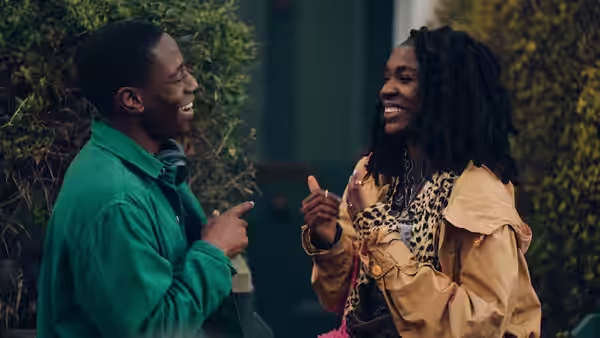
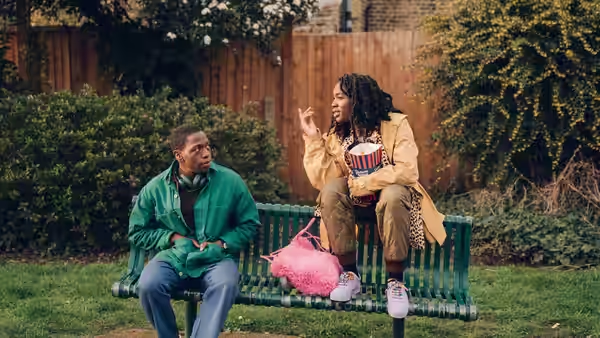
Vivian Oparah is the engine. Yas talks the way some people drive, fast and slightly too close to things, and Oparah makes every line sound as if she thought of it a second ago. David Jonsson has the quieter part and plays it without asking to be liked: Dom is a man who has organised his grief into a spreadsheet, and Jonsson lets us watch him decide, scene by scene, to put it away. We laughed at a grown man weeping in a cubicle, which we are not proud of, and then, twenty minutes later, found ourselves wanting these two to kiss with an urgency we had not felt at a romantic comedy in years. It was the listening that did it. Both actors hear the other’s lines before they answer them.
The script, by Nathan Bryon and Tom Melia, is not as good as the people saying it. The middle turns on a lunch at which Yas pretends to be Dom’s new girlfriend in front of the ex and the best friend, a set-up as old as the genre, and the film plays it broad. Karene Peter’s Gia and Benjamin Sarpong-Broni’s Eric are drawn as fools so that Yas can be seen to flatten them. It is funny, and it is easy. A second errand, involving Yas’s ex Jules (Malcolm Atobrah) and a record she wants back, exists mainly to give the pair somewhere to walk to. And the last twenty minutes, which we will not describe, tidy things up faster than the first hour had led us to expect.
The debts are worn openly. This is the Before Sunrise model, two strangers and a city, and the Richard Curtis model too, London as a place where nice things happen to nice people; there is a burrito shop whose name is a joke at Curtis’s expense, and its proprietor is a cameo we will leave you to find. Allen-Miller moves the genre a few miles south and some decades on, to a Peckham that is Black, young and loud. Most critics have been a shade warmer than we are, and we understand why. The film is such pleasant company that its thinness is easy to forgive. We forgave most of it.
See it with someone you are still working out. It is short enough that if the evening is going badly you will have time for something else, and if it is going well you will not want anything else.