Peter Jackson’s First World War documentary is moving and carefully assembled, with veterans’ voices that hold us throughout. Its restored images deserve attention, and some caution: added colour and sound cannot tell us exactly how it was.
Peter Jackson’s They Shall Not Grow Old is a moving war documentary that earns its concentration on ordinary servicemen. It uses restored First World War footage and recorded recollections to bring us close to people who can get overlooked in accounts of campaigns and casualties. The Western Front supplies the setting, and the larger political history receives little attention. That limitation is worth knowing about, but it rarely diminishes the force of listening to the men.
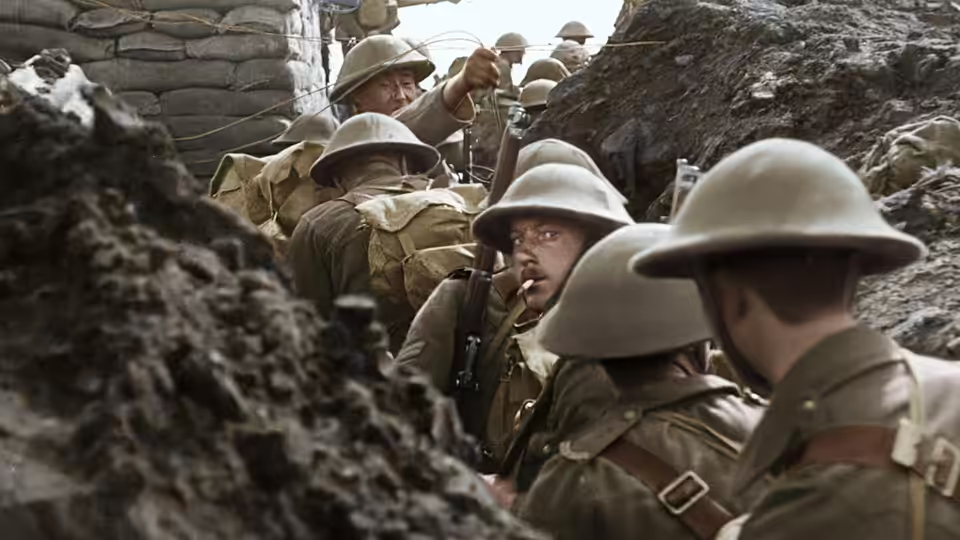
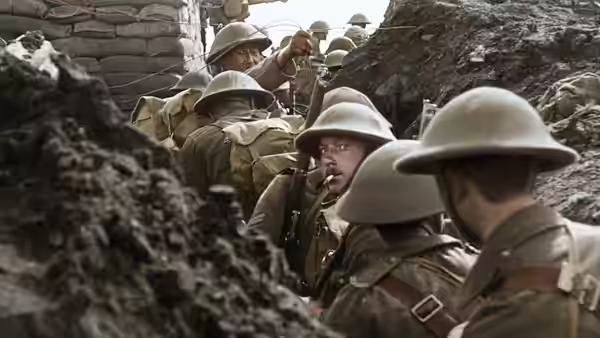
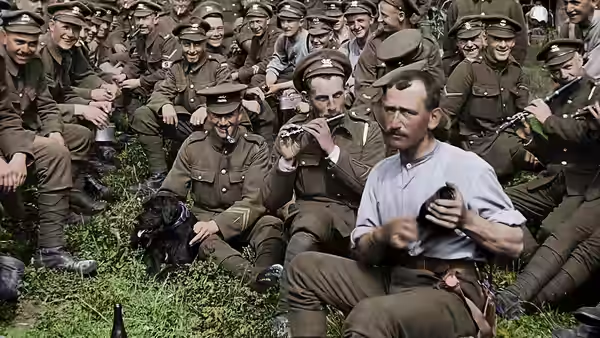
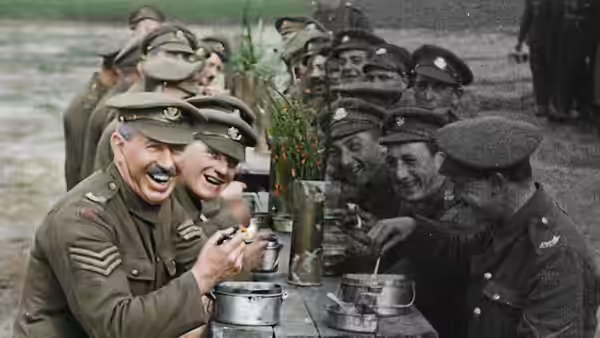
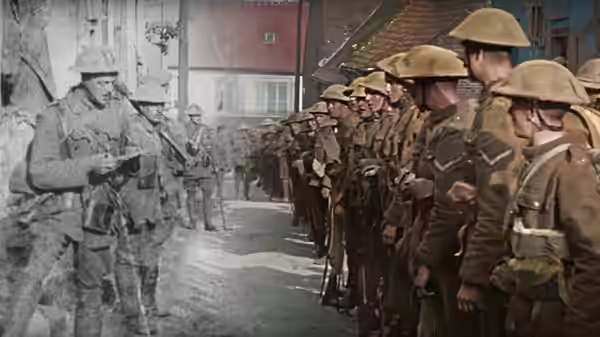
The restored footage gives faces a clarity that makes it harder to treat the men as an anonymous crowd. Colour, reframing and added sound all encourage us to stay with the image, rather than dismiss it as something seen before. We found ourselves moved more than we expected by those faces. The effect comes from being able to study an individual man while listening to accounts of everyday military life, with enough detail in the image to keep our attention on him.
The recorded voices are at least as important as the restoration. The veterans describe everyday life and wartime horror without straining to make their experiences sound extraordinary, and that restraint lets us listen without feeling pressed towards a response. Their humour matters too, because it gives us a sense of personalities that a solemn tribute could easily leave out. The accounts of companionship help explain how life continues amid conditions that sound intolerable, without turning the soldiers into examples of courage for us to admire.
Editors Jabez Olssen and Reginald Harber Jr. shape the recorded accounts into a shared story, keeping it comprehensible without asking one speaker to carry everything. The succession of voices holds our attention, and 99 minutes is enough time to become absorbed without feeling that every recollection is being asked to prove the same point. There is a cost to that fluency: it can be difficult to keep the men separate as the memories accumulate. We wanted more room to consider where one man’s experience might differ from the next.
Our reservation about the images is more persistent. Colour and sound make this material easier to approach, but they also involve choices about things the surviving footage cannot establish on its own. Jackson’s treatment can feel so immediate that we have to remind ourselves how much work has gone into producing that impression. We would have welcomed more encouragement to distinguish what was recorded from what has been added. That does not undo the effect of the faces, though it makes the word restoration seem insufficient for everything happening here.
There is no need to settle the argument about colourisation before watching this. Those who distrust the process may still find themselves absorbed by what the veterans have to say, and we would not want sensible reservations to keep anyone from hearing them. Give it a quiet evening and listen closely to the men.