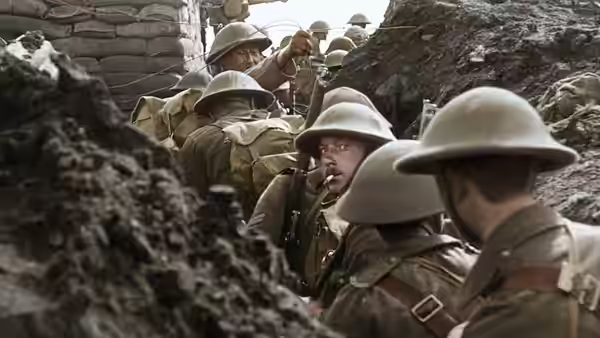
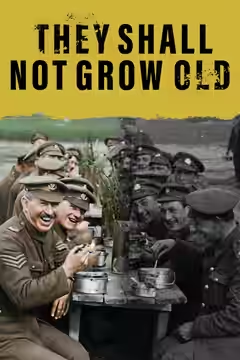
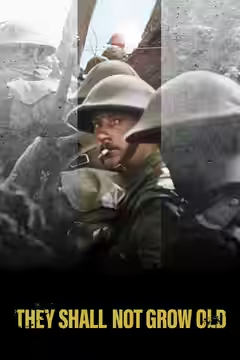
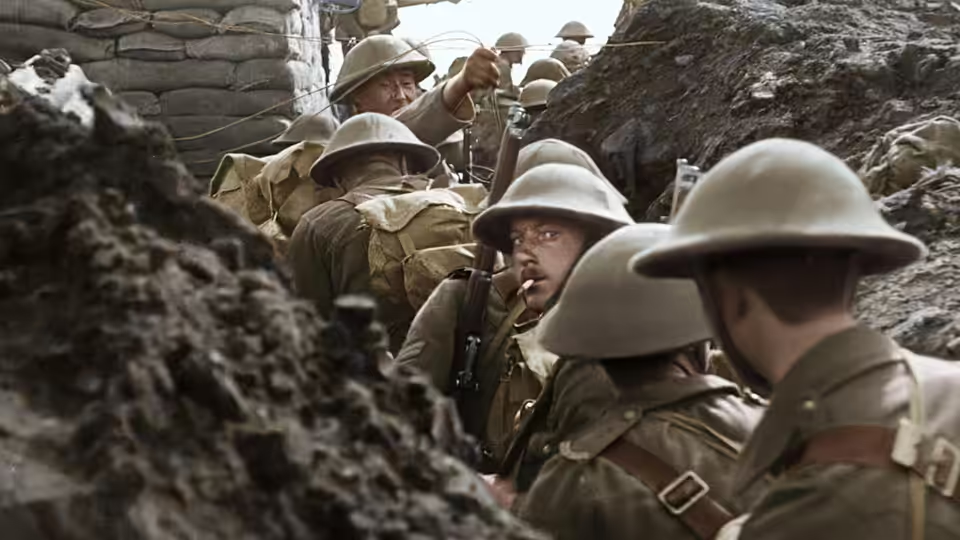
British soldiers in steel helmets move through a narrow, sandbagged trench
Film review

They Shall Not Grow Old

2018 · Directed by Peter Jackson · 1h 39m

In a sentenceAll that restoration, and the old soldiers still hold our attention with a few plain words

British servicemen recall life on the Western Front during the First World War. Their recorded accounts accompany archival footage that Peter Jackson restores, colours and reshapes with sound. Among the voices are Thomas Adlam of the Bedfordshire Regiment, William Argent of the Royal Naval Air Service and John Ashby of The Duke of Cambridge’s Own (Middlesex Regiment). The men describe everyday military life, companionship and the horror of fighting. The film combines their separate memories into a shared account of service, with the men providing both the detail and the commentary.

Plays from YouTube when you press play; nothing loads from them until then.

Fi1m review

Peter Jackson’s First World War documentary is moving and carefully assembled, with veterans’ voices that hold us throughout. Its restored images deserve attention, and some caution: added colour and sound cannot tell us exactly how it was.

Peter Jackson’s They Shall Not Grow Old is a moving war documentary that earns its concentration on ordinary servicemen. It uses restored First World War footage and recorded recollections to bring us close to people who can get overlooked in accounts of campaigns and casualties. The Western Front supplies the setting, and the larger political history receives little attention. That limitation is worth knowing about, but it rarely diminishes the force of listening to the men.

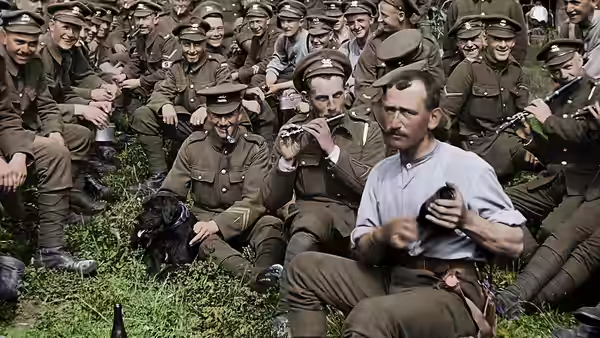
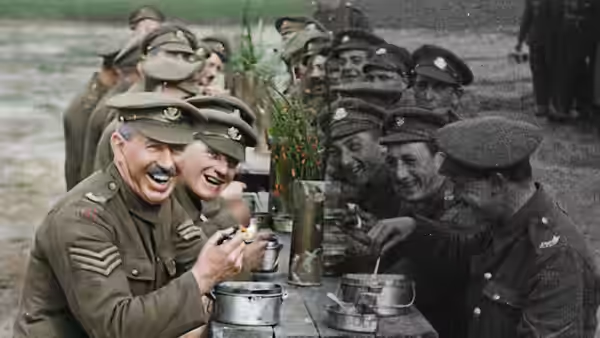
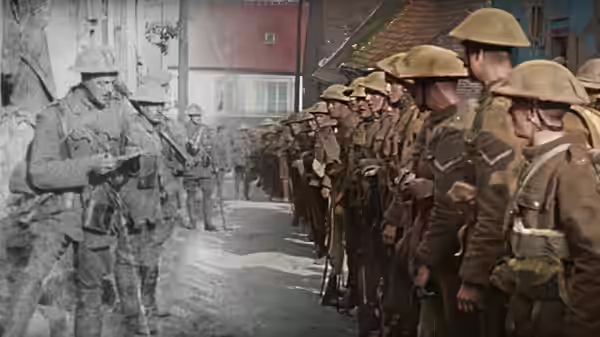
The restored footage gives faces a clarity that makes it harder to treat the men as an anonymous crowd. Colour, reframing and added sound all encourage us to stay with the image, rather than dismiss it as something seen before. We found ourselves moved more than we expected by those faces. The effect comes from being able to study an individual man while listening to accounts of everyday military life, with enough detail in the image to keep our attention on him.

The recorded voices are at least as important as the restoration. The veterans describe everyday life and wartime horror without straining to make their experiences sound extraordinary, and that restraint lets us listen without feeling pressed towards a response. Their humour matters too, because it gives us a sense of personalities that a solemn tribute could easily leave out. The accounts of companionship help explain how life continues amid conditions that sound intolerable, without turning the soldiers into examples of courage for us to admire.

Editors Jabez Olssen and Reginald Harber Jr. shape the recorded accounts into a shared story, keeping it comprehensible without asking one speaker to carry everything. The succession of voices holds our attention, and 99 minutes is enough time to become absorbed without feeling that every recollection is being asked to prove the same point. There is a cost to that fluency: it can be difficult to keep the men separate as the memories accumulate. We wanted more room to consider where one man’s experience might differ from the next.

Our reservation about the images is more persistent. Colour and sound make this material easier to approach, but they also involve choices about things the surviving footage cannot establish on its own. Jackson’s treatment can feel so immediate that we have to remind ourselves how much work has gone into producing that impression. We would have welcomed more encouragement to distinguish what was recorded from what has been added. That does not undo the effect of the faces, though it makes the word restoration seem insufficient for everything happening here.

There is no need to settle the argument about colourisation before watching this. Those who distrust the process may still find themselves absorbed by what the veterans have to say, and we would not want sensible reservations to keep anyone from hearing them. Give it a quiet evening and listen closely to the men.
Critical consensus AI synthesised

80
Positive
17
Mixed
5
Negative
0

Most critics respond warmly to They Shall Not Grow Old, with praise centred on the restoration and colourisation of archival footage. The reviews repeatedly describe soldiers’ faces becoming recognisable as individuals, making their experiences feel immediate rather than remote. Veterans’ recorded voices draw similar approval: their humour, understatement and accounts of ordinary life give the technical work its emotional force, and even the more reserved critics find passages moving.

The spread runs from strong enthusiasm to mixed assessments, with no wholly negative verdicts. Reservations concern the limited historical and political context, and whether digital intervention helps viewers understand the past. Little White Lies questions whether the enhancements turn suffering into spectacle, while Eye for Film regards the result as artistic reinterpretation rather than restoration. Sight and Sound takes the opposing view, defending the colour, reframing and sound as effective ways of bringing viewers closer to the soldiers.

Empire
7 November 2018 · Jonathan Pile
90*

Pile praises the documentary as a technical and emotional triumph that brings audiences closer to the realities of the Great War. He singles out the painstaking restoration and colourisation for making the soldiers feel like real people.

Read the full review →
Los Angeles Times
15 December 2018 · Kenneth Turan
90*

Turan calls the documentary an exceptional, gorgeous tribute that makes World War I soldiers feel alive to modern viewers. He particularly praises the meticulous restoration and colorization, which transform the archival footage into a vivid human portrait.

Read the full review →
Radio Times
16 October 2018 · Andrew Collins
90*

The critic presents the documentary as a powerful, resonant memorial. They single out its restored footage and collage of commentary for creating an immersive picture of a nation at war.

Read the full review →
The Guardian
16 October 2018 · festival review · Peter Bradshaw
90*

Bradshaw finds the film outstanding and its effect electrifying, despite its limited focus on the Western Front. He especially praises the restored, colourised footage for bringing the soldiers’ faces and experiences vividly back to life.

Read the full review →
Variety
16 October 2018 · Guy Lodge
90*

Lodge finds the documentary a dazzling, humane achievement that makes familiar history feel newly immediate. He especially praises the restored faces, which turn blurred archival figures into empathetic individuals.

Read the full review →
The Hollywood Reporter
16 October 2018 · festival review · Stephen Dalton
85*

Dalton finds the documentary haunting, moving and consistently engaging. He particularly praises its vivid technical restoration of archival footage and its ability to humanize soldiers’ experiences.

Read the full review →

Straight answers AI written, from our review

Is They Shall Not Grow Old worth watching?
They Shall Not Grow Old is worth watching for its absorbing veterans’ testimony and moving attention to ordinary servicemen; we score it 81. We recommend it particularly for those interested in lived experience on the Western Front, with one reservation: the added colour and sound can make the footage seem more historically certain than it is.
How long is They Shall Not Grow Old, and what is it rated?
They Shall Not Grow Old runs 1h 39m. It is a documentary and history film.
Where can I watch They Shall Not Grow Old in Singapore?
They Shall Not Grow Old is not on any streaming or rental service in Singapore at the moment. It is available in 27 other countries; change your country at the top of the page to see where. Availability is checked daily.
How violent or frightening is They Shall Not Grow Old, and is it suitable for children?
They Shall Not Grow Old carries a UK 15 certificate and is not suitable for younger children, with veterans describing the horror of First World War fighting. We would approach it cautiously with sensitive older teenagers: the plainspoken accounts and restored faces make the suffering feel close, though our review does not establish how graphic the images are.
How does They Shall Not Grow Old compare to The World at War?
They Shall Not Grow Old is the better choice for a concentrated account of servicemen’s lives, while The World at War offers broader Second World War history and gives testimony more time to accumulate. We recommend both: Jackson’s documentary holds our attention within 99 minutes, while the television programme asks for a longer commitment and rewards it with absorbing, distressing eyewitness accounts.
What should I watch after They Shall Not Grow Old?
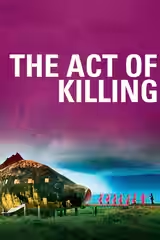
After They Shall Not Grow Old, try The World at War (1973, Fi1m 90): A broader account of another war, with testimony given time to accumulate. Then Waltz with Bashir (2008, Fi1m 83): Animation gives another unsettling form to veterans’ memories and their uncertainties; and The Act of Killing (2012, Fi1m 88): A disturbing examination of how men remember, rehearse and justify their violence.

Cast

Awards

IFFR audience award, 2019

Nominated
IFFR audience award

If you liked this, try…

  1. The Battle of the Somme (1916) · not reviewed yetWartime footage invites a useful comparison with the choices behind modern restoration.

  2. The Unknown Soldier (1955) · not reviewed yetA Finnish view of soldiers whose humour survives alongside exhaustion and fear.

  3. The World at War (1973, Fi1m 90)A broader account of another war, with testimony given time to accumulate.

  4. Waltz with Bashir (2008, Fi1m 83)Animation gives another unsettling form to veterans’ memories and their uncertainties.

  5. The Act of Killing (2012, Fi1m 88)A disturbing examination of how men remember, rehearse and justify their violence.