Film review

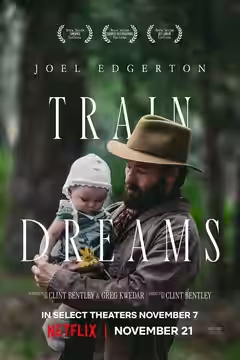
Train Dreams

2025 · Directed by Clint Bentley · 1h 42m · MPA PG-13

In a sentenceEdgerton barely says forty words in a lifetime; Will Patton, off screen, says all the rest

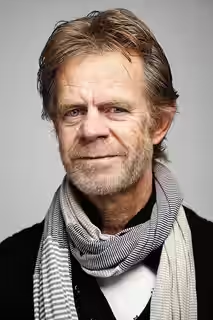
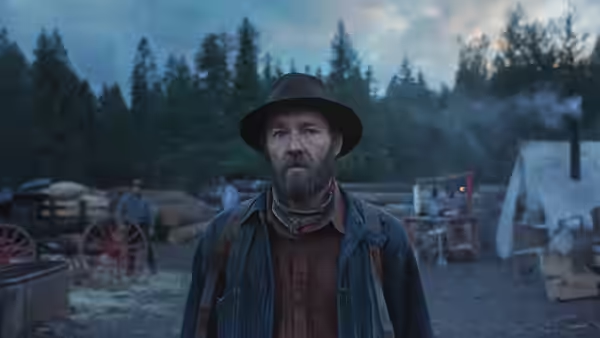
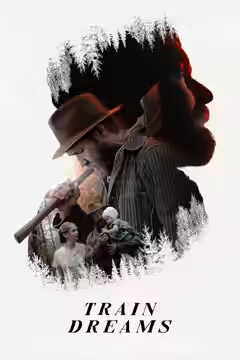
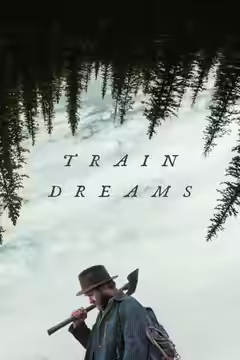
The Idaho panhandle, early in the twentieth century. Robert Grainier (Joel Edgerton) works the railway and logging crews cutting through the forest, and speaks as little as a man can and still hold a job. On a bridge gang he sees what the crew does to a labourer named Fu Sheng (Alfred Hsing), and the moment stays with him. He meets Gladys (Felicity Jones), marries her and makes a home with her in the woods. Each summer he leaves for the camps, where Arn Peeples (William H. Macy) does most of the talking, and a neighbour, Ignatius Jack (Nathaniel Arcand), trades with him. Will Patton narrates.

Plays from YouTube when you press play; nothing loads from them until then.

Fi1m review

Clint Bentley’s film of Denis Johnson’s novella is patient, beautifully shot and carried by a Joel Edgerton performance built almost entirely out of watching. It loses a little every time Will Patton’s narration tells us what a silence meant.

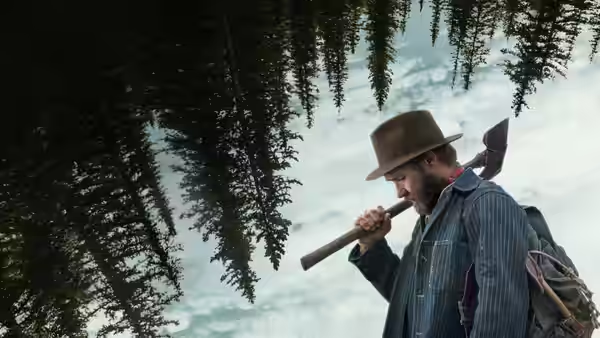
Robert Grainier (Joel Edgerton) is a day labourer in the Idaho panhandle in the early years of the twentieth century. He fells trees, hauls timber and lays track for the railways pushing through the forest, and he does nearly all of it without speaking. Clint Bentley’s film, written with Greg Kwedar from Denis Johnson’s short novel, follows him from boyhood to old age, and takes 102 minutes to do it. It is a good film and we recommend it, with one reservation that got larger as it went along.

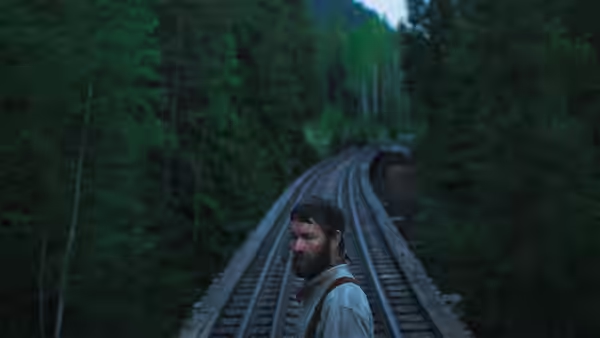
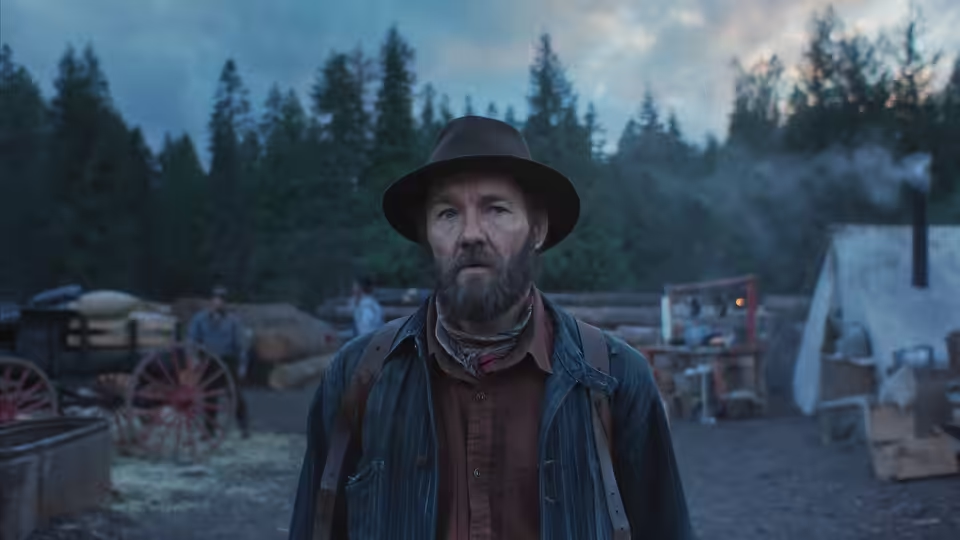
Edgerton is the reason to go. Grainier has a few dozen lines, and Edgerton plays him as a man who listens harder than anyone around him and never knows what to do with what he hears. The scene that sets the terms comes early, on a railway bridge gang, and we will not describe what the crew does to a labourer named Fu Sheng (Alfred Hsing), except that Grainier is part of it. We were horrified, and more horrified by what follows, which is lunch. Edgerton keeps that moment in his face for the rest of the film; it comes back in dreams and in the way he looks at strangers.

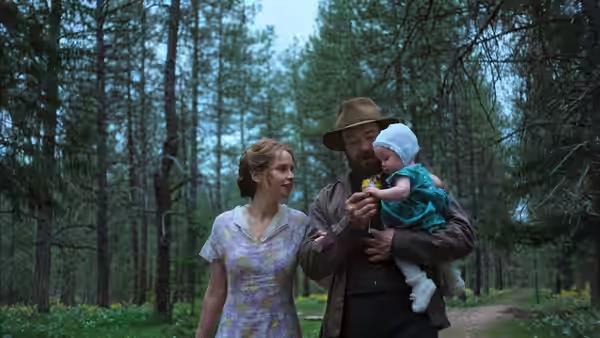
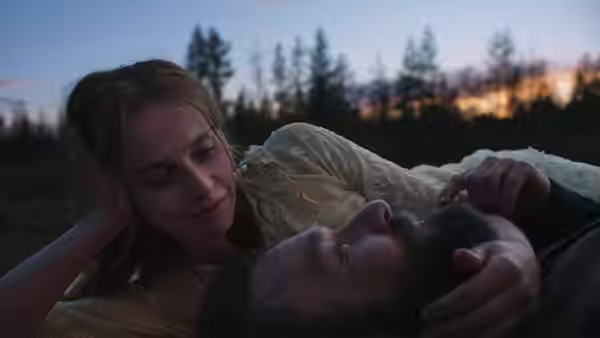
Then he meets Gladys (Felicity Jones) and the film slows to the pace of a marriage. Their home is a cabin in the woods, and Alexandra Schaller’s production design makes it a real one: a single room, unfinished planks, a stove, a bed you could believe took a week to make. Malgosia Turzanska dresses them in wool and canvas that darkens over the years without ever looking like costume. Jones is light here; Gladys teases, reads aloud, laughs at her husband’s silences rather than waiting them out. These scenes moved us more than the grander ones later. A daughter arrives. Grainier goes off to the logging camps each summer to pay for it all.

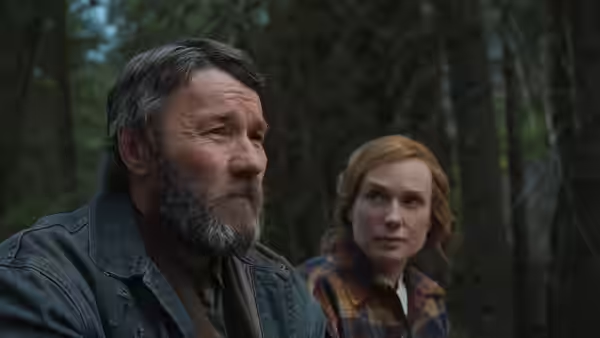
The logging camps are the film’s other half. William H. Macy’s Arn Peeples talks more than the rest of the crew put together, and Macy plays him without a wink, which is why he lands. Clifton Collins Jr. and John Diehl fill out the crew as men who have never done anything else. Nathaniel Arcand’s Ignatius Jack, a neighbour who trades with Grainier, gets little screen time and makes it count. Adolpho Veloso shoots all of it in low natural light, the sun coming sideways through cedars, and when a tree comes down he holds the shot long enough for us to feel the size of it. Parker Laramie cuts between camp, cabin and memory with dissolves rather than hard cuts, so the years slide.

Our reservation is Will Patton. His narration is drawn from Johnson’s prose and he reads it well, in the voice of a man telling a story by a stove. The trouble is how much of it there is. Johnson’s book is short and flat and lets terrible things sit on the page unremarked; Bentley keeps the events and adds a voice to tell us what Grainier felt about them, sometimes while Edgerton is already showing us. Bryce Dessner’s score does the same, strings rising under moments that were full to begin with. Twice we caught ourselves resenting being told, and both times Edgerton had the scene in hand without help. Most critics have reached for Terrence Malick, and we see the resemblance in the light. But this narration explains.

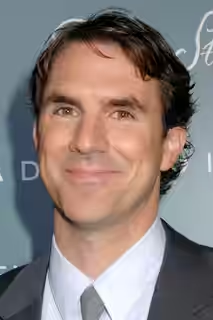
The second half moves in ways we will not describe. Kerry Condon appears in it as Claire Thompson, a stranger kinder to Grainier than he knows what to do with, and their one long conversation is the best late scene in the film. Paul Schneider’s Apostle Frank passes through as a preacher of a familiar American kind, all promise and no patience. The country being built around Grainier arrives on schedule: railways, mills, thinning forest. The narration notes each one in the tone of someone reading out the weather.

It is a 12A, and a slow one, and the two of you should agree before the lights go down that nothing here is going to happen fast. See it on the largest screen you can, for the trees. Then read the book, in one sitting, and notice how much it gets said without a narrator.

Critical consensus AI synthesised

85
Positive
24
Mixed
0
Negative
0

The reviews are unanimous: all twenty-four are positive, and most are a good deal warmer than that. The praise clusters around Joel Edgerton as the logger Robert Grainier, whose restraint several critics call the best work of his career, and around Adolpho Veloso’s cinematography, which is described as painterly more often than not. Will Patton’s narration and Bryce Dessner’s score come up nearly as often. The Malick comparison is made so often it amounts to a consensus of its own.

Where they part is on how much of this lyricism the material can bear. The Financial Times finds a strain of preciousness, Eye for Film a drift towards sentimentality, and Slant a gap between the film’s visual lushness and the terseness of Denis Johnson’s novella. These are gentle complaints; the spread runs from admiring to rapturous, with nothing beneath it. Even the most reserved critics, mostly in the British broadsheets, end up recommending it.

The Times
5 November 2025 · ★★★★★ · Kevin Maher
100

This stunner is hailed as an unforgettable frontier drama and the greatest Terrence Malick movie Malick never made. Superb performances from Edgerton and Jones lead a fable-like tale pulsing with awards potential.

Read the full review →
Time Out
6 November 2025 · ★★★★★ · Ian Freer
100

The critic hails it as a peach of a picture that is at once miniaturist yet epic and exquisite, touching every human emotion without contrivance or strain. They single out its elegiac character study of an ordinary life made rich and complex.

Read the full review →
Vulture
21 November 2025 · festival review
95*

The critic hails the film as a staggering work of art and one of the year’s best, a trancelike adaptation that ruminates on the interconnectedness of life through Joel Edgerton’s performance, Will Patton’s narration, rapturous cinematography, and Bryce Dessner’s score. It praises the epic spirit and mythic grandeur lent to an ordinary man’s longing for peace and purpose.

Read the full review →
Los Angeles Times
6 November 2025 · Mark Olsen
90*

The film is told with unassuming, gentle simplicity that grows into accumulating emotional power, feeling small yet vast while exploring life's meaning in a lyrical way. It features a standout, fully realized performance from Joel Edgerton as the quiet logger Robert Grainier, supported by fine cinematography and period details.

Read the full review →
Sight and Sound
5 November 2025
90*

The critic describes the film as an extraordinary epic ballad of a railroad man that captures the dawning of a new America. They single out Joel Edgerton's career-best performance and America itself as the film's real star, noting its ambivalent view of progress.

Read the full review →
The AV Club
5 November 2025 · A- · Jacob Oller
90

The critic calls the film a thoroughly engrossing period piece of dreamy details, quietly told and expertly performed, that captures persistence through change in an awestruck, ethereal drama. It singles out the golden-hour nature photography, production design, and Joel Edgerton’s portrayal of a man haunted by universal regrets amid historical cruelties.

Read the full review →

Cast

Awards

Independent Spirit Awards, 2026

Won
Best Film

If you liked this, try…

Days of Heaven poster85

Days of Heaven

1978 · Malick’s Texas panhandle; the film most critics reached for, and rightly

The Tree of Wooden Clogs poster

The Tree of Wooden Clogs

1978 · Olmi’s Lombardy peasants; a year of ordinary lives told with the same patience

First Cow poster

First Cow

2019 · Reichardt’s Oregon; two men, a cow, and a frontier with no use for gentleness

Sunset Song poster

Sunset Song

2015 · Terence Davies’s Scottish farm girl; a life measured in seasons and losses

Jockey poster

Jockey

2021 · Bentley’s first film; Clifton Collins Jr. as an ageing rider, small and exact