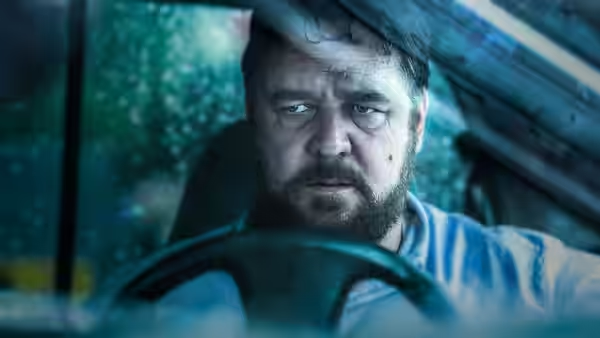
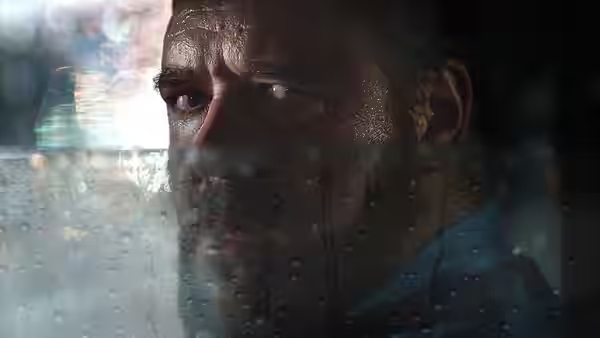
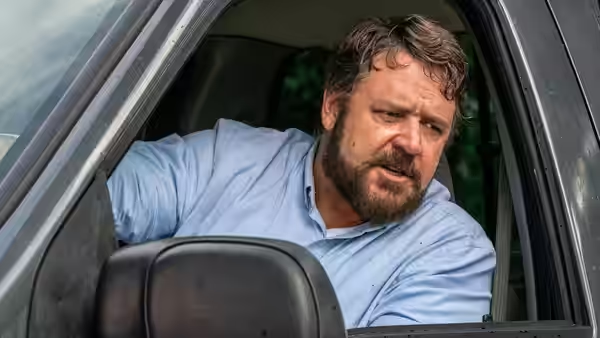
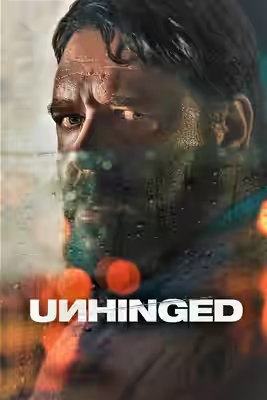
Russell Crowe makes the driver frightening, and the chases have some bite. But Unhinged struggles to turn its violence into sustained suspense, leaving its capable cast with an increasingly implausible script.
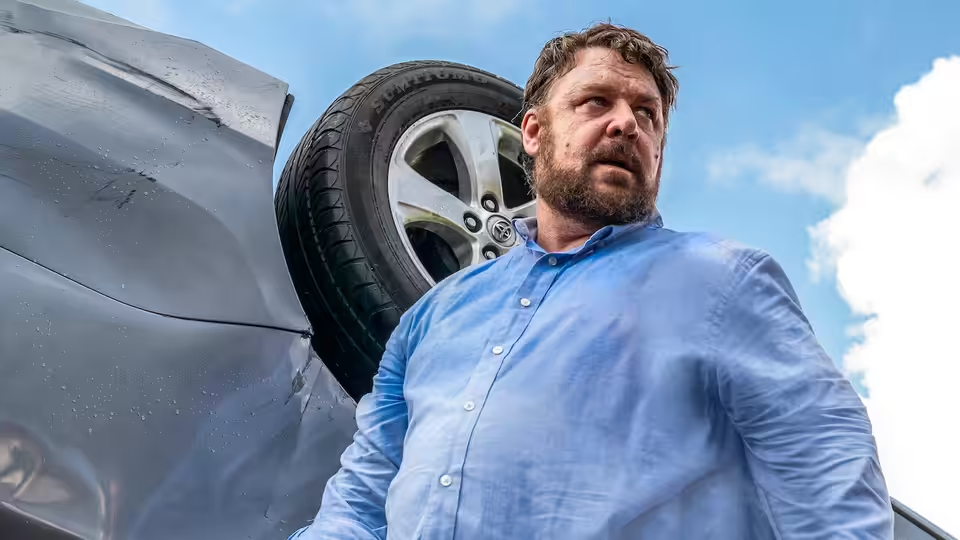
Unhinged has a frightening driver and too little suspense to keep him interesting for 90 minutes. Derrick Borte makes a road-rage thriller that wants an everyday encounter to feel capable of turning murderous at any moment. Russell Crowe supplies the necessary threat, and the driving sequences have enough force and clarity to hold our attention. The trouble is Carl Ellsworth’s screenplay, which repeatedly asks escalating violence to compensate for increasingly unlikely behaviour.
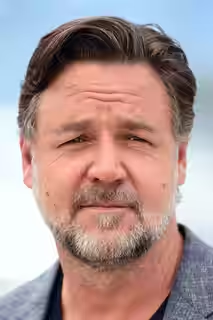
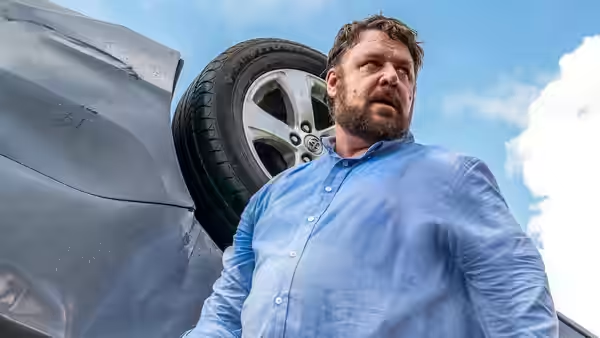
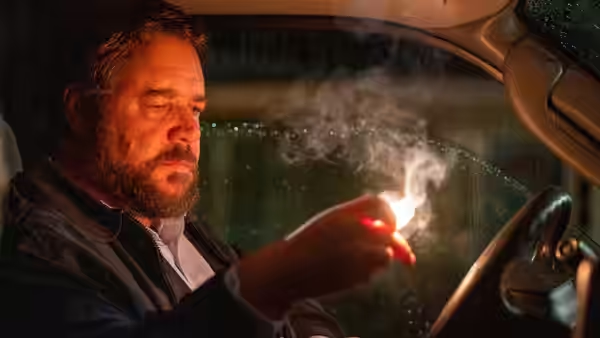
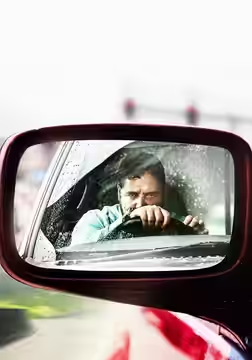
Crowe understands how unpleasant it is to be confronted by a man who believes his anger gives him authority. His physical bulk matters, but so does the conviction that everyone else ought to accommodate him. We felt properly uneasy during the traffic-side encounter, because Crowe makes a commonplace exchange feel impossible to end safely. Borte gives that discomfort enough time to register. For a short stretch, the situation is frightening without needing much explanation.
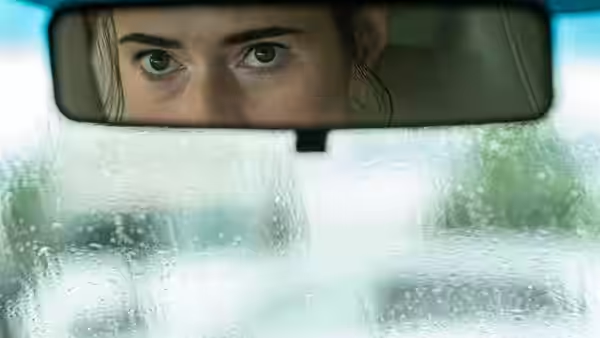
Caren Pistorius has the less rewarding task of playing Rachel Flynn opposite a villain allowed to dominate almost everything. We need to care about her choices for the pursuit to remain gripping, but the writing is too busy arranging the next threat. Gabriel Bateman’s Kyle Flynn and Jimmi Simpson’s Andy add people to worry about without giving the drama much room to develop. Ellsworth keeps the danger coming, yet too often the people inside it feel useful chiefly because they can be endangered.
The action is more convincing than the plotting. Brendan Galvin’s cinematography and the editing by Michael McCusker, Steve Mirkovich and Tim Mirkovich keep the driving sequences readable and make the impacts register. Borte can organise a pursuit, and those passages briefly restore the tension that the script has let slip. There is considerable skill involved in making this kind of action clear, even when the reasons for another chase are wearing thin.
David Buckley’s score has little room to build anticipation when the film is always hurrying towards another eruption. Freddy Waff’s production design never gives the surroundings much character of their own; we remember the driving more clearly than the places it passes through. Neither contribution provides much relief from the increasingly repetitive pursuit. By this point, we were tired of the threats, because each escalation made the driver’s behaviour harder to believe.
A road thriller does not need a complicated villain, and unpleasantness is hardly a fault in itself. It does need to make us believe that the people being pursued might escape, and that the person pursuing them has limits. Here, the growing implausibility makes it harder to worry. The film raises the subject of male resentment without having much to say about it. Crowe suggests a man who has made other people responsible for his disappointments, but the screenplay is content to keep finding outlets for his rage.
There is enough craft here to see why some critics have enjoyed the film as rough, quick entertainment. We cannot quite join them: the initial unease gives way to repetition, and the violence stops making the danger feel real. Crowe remains a reason to be curious, though not enough of one for us to recommend the film. Go in for him, if at all, and do not expect the script to keep up.