Voicemails for Isabelle is affecting about sisterhood and well served by Zoey Deutch and Nick Robinson. But the private messages that bring its romance together also make that romance harder to accept, despite the actors’ considerable charm.
Leah McKendrick has written and directed a romantic comedy that makes room for grief and sexual frankness without treating either as an interruption. Voicemails for Isabelle is an appealing, uneven film, worth considering for its performances and its attention to the relationship between sisters. Its central romantic device is harder to forgive. The redirected messages give a stranger access to a woman’s unguarded thoughts, and the film asks us to find this more reassuring than we do.
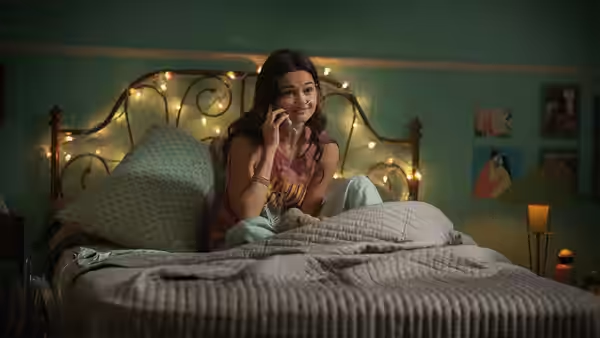
Zoey Deutch gives Jill a comic life alongside the sadness, which stops grief from becoming the character’s only quality. Ciara Bravo’s Isabelle matters because the sisterly bond feels substantial enough to justify the film’s attention to it. We were moved by the sisters’ voicemail exchanges. The messages let us hear the closeness between them, so Jill’s sadness feels specific. The comedy helps too, allowing her to be funny and interested in sex without suggesting that she has somehow finished grieving.
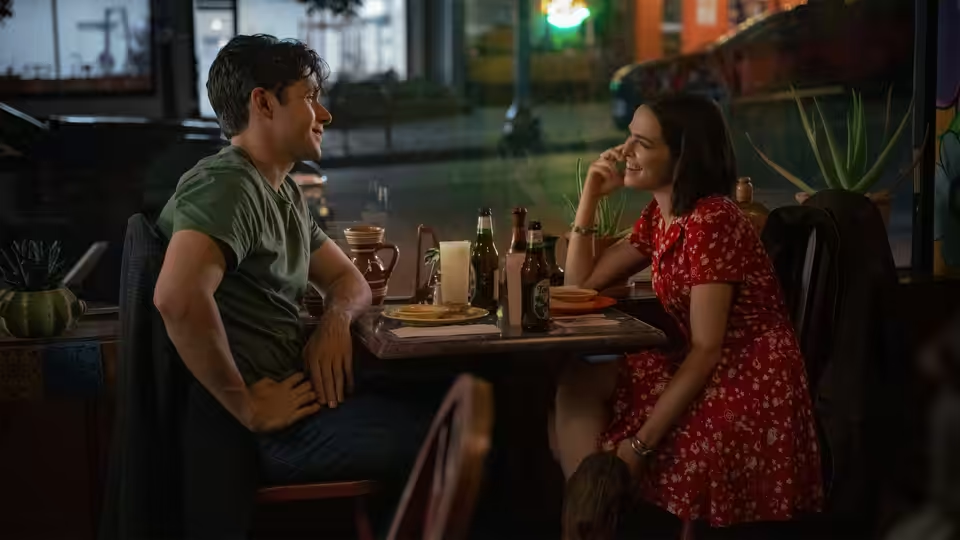
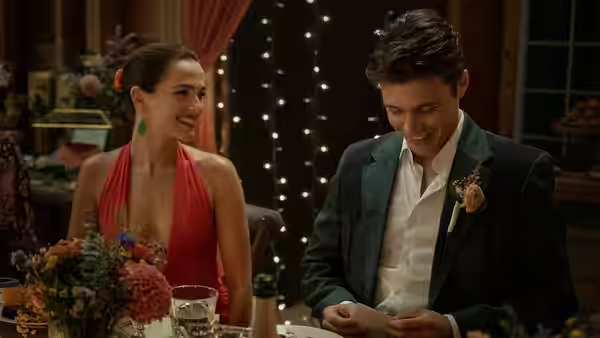
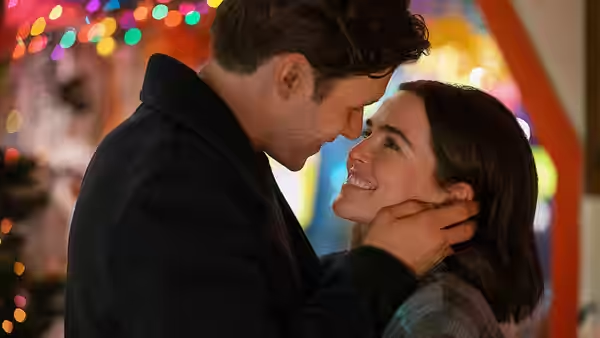
Nick Robinson gives Wes the warmth the romance needs, and the attraction between the leads is persuasive enough to make us want their relationship to work. That is a considerable advantage for a screenplay with this particular obstacle. Listening to private messages creates an intimacy that one person has not agreed to, however sympathetically the listener is played. The performances make the situation easier to enjoy, but they cannot settle our doubts about it. We kept wanting the writing to examine that imbalance with the same care it brings to the sisters.
Julia Swain’s cinematography and Celine Diano’s production design give the romance an inviting look. We preferred the intimacy of the messages to the more general pleasure of the surroundings. The music by Este Haim and Amanda Yamate helps maintain the film’s tenderness, although the strongest emotional detail comes from the words the sisters leave one another. Those exchanges give the film people we can care about before it asks us to endorse the courtship.
Lee Haxall and Ryan C. Fill edit the change from tearjerker to romantic comedy, and the transition is not entirely comfortable. At 119 minutes, the film gives grief room, although its unevenness is not simply a matter of length. Leah McKendrick’s screenplay can be observant about how someone lives with sadness and less searching about what a prospective lover owes them. Spending more time with Jill does not, by itself, answer the questions raised by Wes’s access to her messages.
Romantic comedy asks for a certain willingness to overlook contrivance, and we are usually happy to oblige. Here the objection is to the intimacy obtained through those messages, not to the odds of a chance encounter. There is enough humour and affection to make the film worth considering for viewers drawn to stories of grief and new love. Anyone already uneasy about that voicemail arrangement should not expect the charm to do all the persuading.