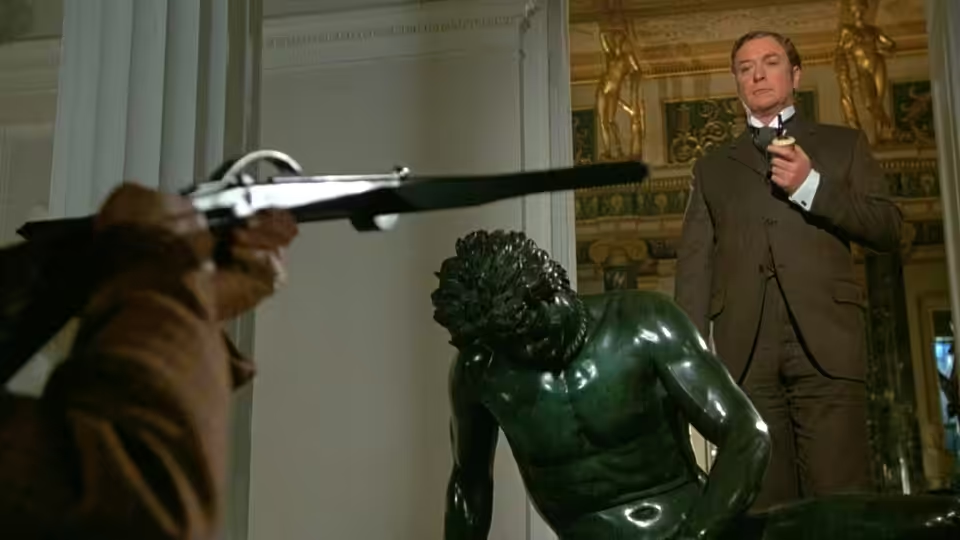
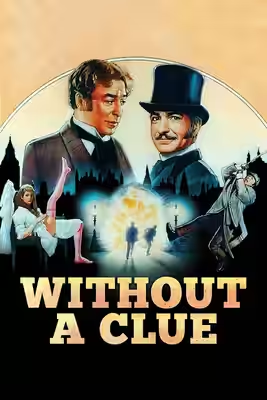
Michael Caine and Ben Kingsley make this detective farce tolerable, sometimes delightful company. The laughs are patchy and the plotting laboured, so the attraction is spending time with the actors rather than following the case.
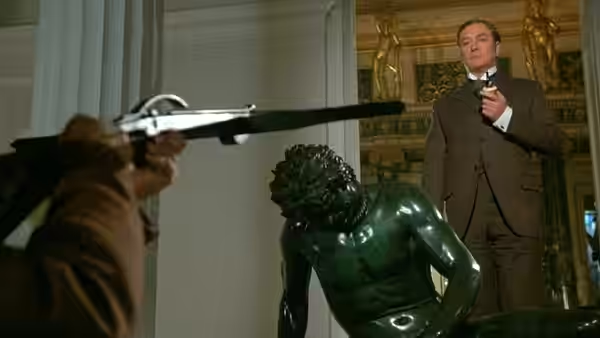
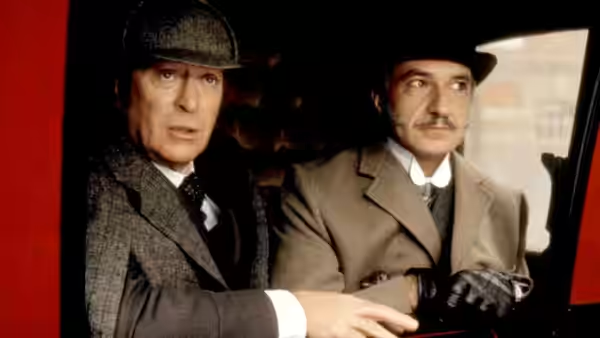
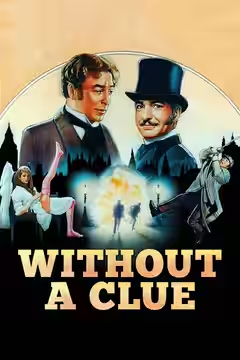
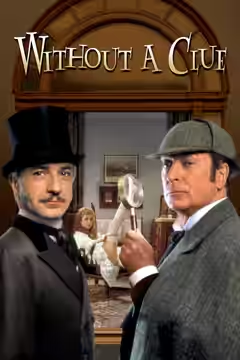
Without a Clue is a passable detective comedy with a better central pairing than its jokes deserve. Michael Caine and Ben Kingsley give it enough life to reward an interest in either actor, though the patience required should not be underestimated. Director Thom Eberhardt allows them plenty of room to play, but does not establish a consistently funny pace around them. At 107 minutes, the film asks those performances to cover quite a lot of weak writing.
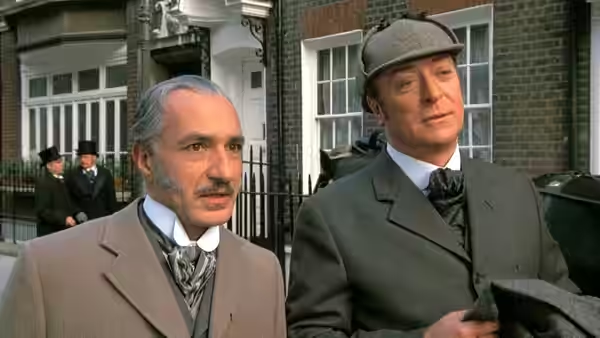
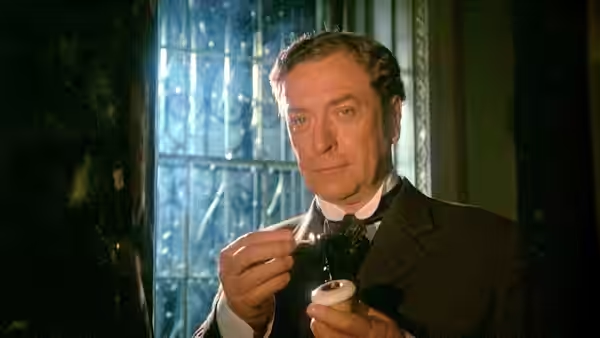
Ben Kingsley is the stronger reason to stay. His Dr. John Watson has an exasperation that remains funny even when the material seems satisfied merely to have established it. We laughed at the effort of that strained composure opposite Michael Caine’s much broader playing: one performance makes the excesses of the other more enjoyable. Both actors occasionally push too hard, but there is pleasure in watching them negotiate how much comic space each can occupy without making the other redundant.
The screenplay by Larry Strawther and Gary Murphy does not keep finding enough for that partnership to do. Too often, an established comic manner is expected to carry a whole stretch of business, and the pleasure of recognising it starts to diminish. The plot takes up time without generating a corresponding number of laughs, making its complications feel like duties. Peter Tanner’s editing allows the performances to register, but cannot make the intervals between good jokes feel shorter than they are.
The cramped production design by Brian Ackland-Snow and Martyn Hebert contributes to that sense of limited movement. Small spaces can be useful in farce, bringing irritating people into unavoidable proximity, but here the surroundings too often feel restrictive. Alan Hume’s cinematography serves the actors adequately without doing much to relieve that confinement. We can appreciate the practical benefit of keeping attention on the performances while still wishing the film offered something more interesting around them.
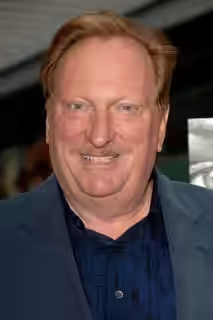
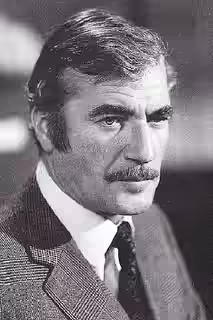
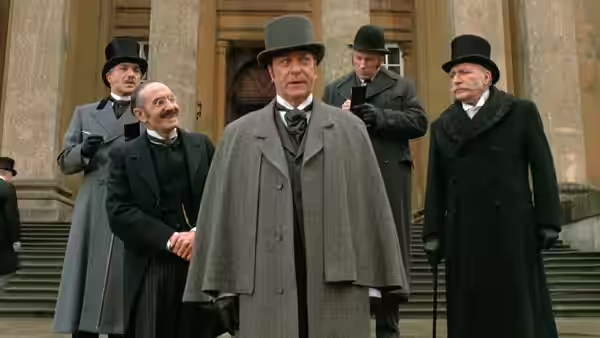
The supporting cast helps. Jeffrey Jones, playing Inspector Lestrade, and Paul Freeman, playing Prof. James Moriarty, supply welcome comic character without requiring the film to stop and congratulate them. Their contributions make the unevenness of the writing less wearing, although neither can repair the stretches in which the story becomes a chore. Henry Mancini’s music supplies an agreeable lightness; it suits the intended good humour, even when the dialogue has not quite earned it.
A detective farce needs its investigation to create opportunities for comedy. The case can be ridiculous, but following it should keep bringing fresh reasons to laugh, and this film too frequently treats the business of detection as something to get through between performances. Thom Eberhardt is more persuasive when letting the cast play than when making those passages cohere. The result remains amiable, which counts for something, but amiability becomes less useful when a joke needs to arrive.
There is enough here for admirers of the leads, provided expectations are kept modest. The broad acting is part of the appeal, and anyone hoping for delicately observed character comedy should look elsewhere. We would choose it for Ben Kingsley’s irritation and Michael Caine’s willingness to make a fool of himself. Just be prepared to supply a little of the good humour the screenplay occasionally forgets to bring.