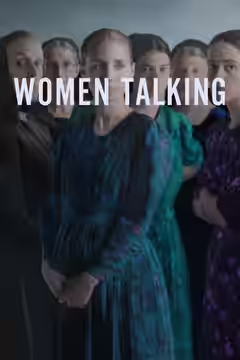
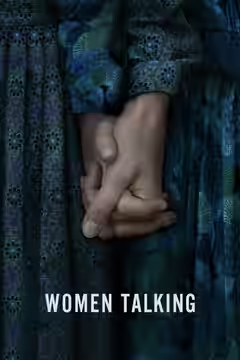
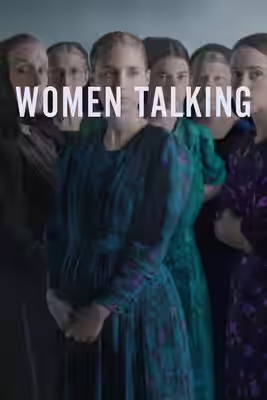
Sarah Polley’s film of Miriam Toews’s novel is a two-day argument in a hayloft, and the arguing is superb. The pictures are less so: Luc Montpellier drains the colour until the whole thing looks left out in the rain. Worth it for the women.
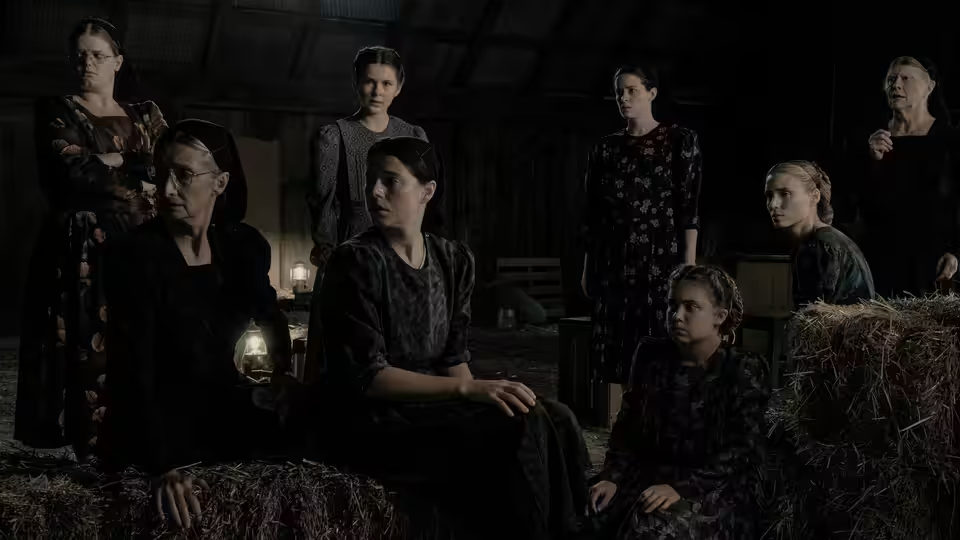
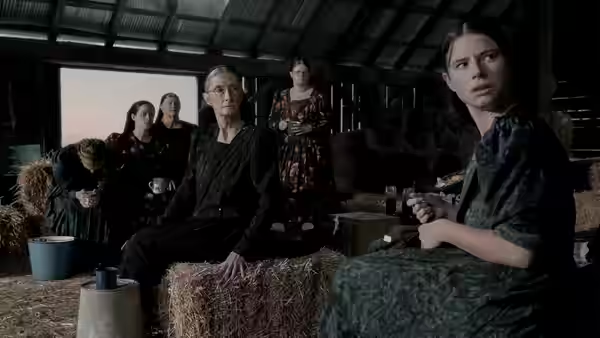
The women of a remote Mennonite colony have been drugged and attacked in their beds for years and told by their elders it was ghosts, or the devil, or their imaginations. Now they know it was men from the colony. Those men are in custody in the city, the rest have gone after them to arrange bail, and the women have two days to decide: do nothing, stay and fight, or leave. Sarah Polley’s film of Miriam Toews’s novel spends most of its 104 minutes in a hayloft while eight of them settle it. The talk is good. The pictures are not, and that matters more than it should in a film about talk.
Nobody in the loft can write, so August (Ben Whishaw), the schoolteacher, sits at the edge and takes the minutes. He is the only man on screen for most of the film, and Whishaw plays him as someone trying to take up as little room as a body can. The argument runs between the practical and the theological, and Polley keeps them tangled: if they leave, are they abandoning God or finding him; if they stay, what happens to the boys; if forgiveness is demanded, does it count. It sounds like homework. Mostly it is not, because the women keep interrupting each other.
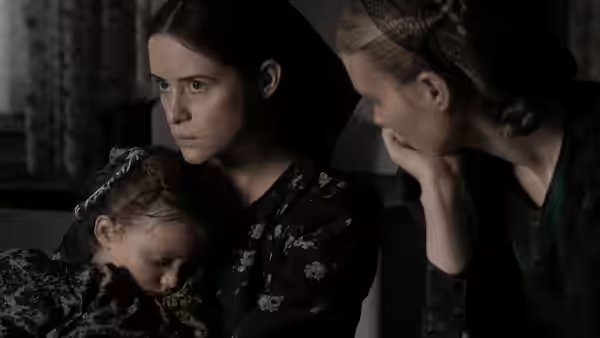
Claire Foy’s Salome has already gone at one of the men with a scythe and comes into every exchange as if she has been holding her breath since. When she says she will kill anyone who touches her child again, we believed her, and it frightened us slightly, which we think Polley intended. Jessie Buckley’s Mariche is the harder case: married to a man who beats her, and angriest at the women who have choices. Buckley plays her tight-mouthed and quick, and the scene where the loft finally turns and asks why she is like this is the best in the film. Rooney Mara’s Ona, pregnant by one of the attackers and strangely calm about it, is the thinker of the group, and Mara has the hardest job, which is making calm interesting next to Foy.
The older women are where the film is funniest. Sheila McCarthy’s Greta explains almost everything by way of her two horses, Ruth and Cheryl, and gets away with it every time. Judith Ivey’s Agata has the authority of someone who has buried people. The teenagers, Autje (Kate Hallett) and Neitje (Liv McNeil), plait their hair together and lie on the floor while the adults decide their lives; it is Autje who narrates, to a child not yet born. We laughed more than we expected to. Then someone would say plainly what had been done to a child, and we stopped.
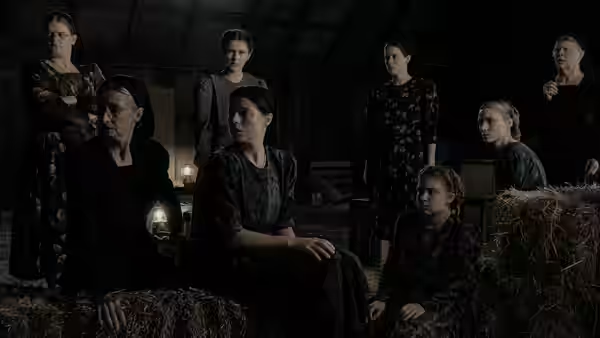
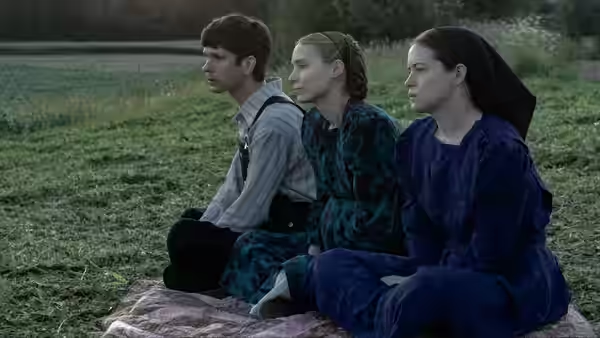
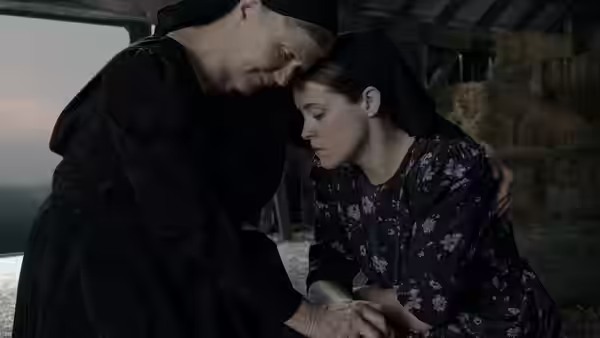
Now the problem. Luc Montpellier has shot it with the colour drained nearly to nothing: white skies, grey-green fields, skin the colour of putty. We take the point, that this is the past being remembered, but the effect is of a film seen through a dirty window, and it flattens faces that are doing fine work. Peter Cosco’s loft is a good space, tall and slatted, with light in bars across the floor, and Quita Alfred’s dresses, dark blue and small florals, are exactly right; neither gets much chance to register. Partway through a census truck drives past the colony playing Daydream Believer out of a loudspeaker, and briefly the film has colour and air. Then the truck goes.
Hildur Guðnadóttir scores it for guitar and low strings, and she uses it sparingly. Christopher Donaldson and Roslyn Kalloo cut the loft so that a reaction across the circle is always to hand, which is how a film of people sitting down manages to move. They are less sure when Polley leaves the loft for quick bleached glimpses of the mornings after, which tell us nothing the women have not already told us.
The script has its own weakness: the women sometimes stop being people and become positions. There is a stretch in the middle, around the third return to whether forgiveness can be required, when we noticed we were being taught, and we minded. Polley’s Away from Her and Stories We Tell were better at letting a scene mean something without saying so.
Which of the three they choose we will not say. The ending is quieter than the argument, and that is right. It is a 15 certificate; the violence is never shown and is talked about constantly, and the second is harder. Watch it with someone you will want to argue with afterwards, because you will.