Learn · How a film gets made · The whole process
Development
Between the option and the first day of shooting, a screenplay is written, read, argued over and rewritten, often by several people, for years. This is development: what actually happens to a script in it, who gets a say, how the credit is decided at the end, and why the version you see is never the one anyone set out to write.
The previous lesson ended with a property: a book or a pitch or a spec that somebody with money has taken an interest in. What they do not yet have is a film they could shoot. A novel is four hundred pages of interior life; a pitch is twenty minutes in a room; a spec is one writer's guess at a film nobody has budgeted. Development turns any of these into a screenplay a financier will commit to, and it takes so long because nobody involved can agree on what that screenplay is until they are holding it.
One idea holds the lesson together. A screenplay is never finished. It is stopped, by a start date, and until then everyone with a stake in the film is entitled to want it to be different. The craft, for writers and producers alike, is reaching the start date with a script still worth shooting.
The steps
In the United States a writer on a studio project is usually hired on a step deal. The Writers Guild's agreement with the studios sets minimum payments for each step of the writing, treatment, first draft, rewrite, polish, and the studio buys the steps one at a time, with the right to stop after any of them. A treatment is the story in prose, a few pages to forty; the first draft is the screenplay itself, around a hundred and ten pages; a rewrite is a substantial reworking; a polish is what it sounds like, though in practice often a rewrite nobody wanted to pay rewrite rates for. The point is that the studio's commitment is small at every stage. It can read the treatment and walk away, having paid for a treatment.
In Britain the Writers' Guild and Pact, the producers' body, set out a similar sequence, with the writer paid in stages: on commission, on delivery of the first draft, on the second, and a final payment when the cameras turn, which on a great many projects is a payment that never comes. In France the writer is paid by the producer in much the same way, but the state's film centre, the CNC, also pays for writing directly, with grants that go to the writer rather than the producer, and French law treats the screenwriter as one of the film's authors, with rights in the finished work that no contract can remove. The same pages are written in all three places. What differs is how many times the writer can be told to stop.
Mank, David Fincher's film about the writing of Citizen Kane, is the best picture there is of the step in its purest form: a writer, a deadline and a producer's man in the next room. Herman Mankiewicz is installed in a desert guesthouse with a broken leg, a secretary to dictate to and a few weeks to deliver a first draft, and the film is about what the pages cost him and who ends up owning them. It comes back into this lesson when the credit is decided.
Notes
The thing that happens to a draft once it is delivered is notes. Everyone who has paid for the script, or may be asked to, is entitled to give them: the executive whose project it is, their boss, the producer, the director once one is attached, the star once one is interested, and the financier's reader if the money is coming from outside. Notes arrive as a document or a meeting, in a dialect of their own: “Can we like him more?” “What is at stake?” “It gets soft in the middle.” An experienced writer learns to hear the note behind the note: the complaint is real, the suggested fix is usually wrong, and the job is to find what the reader actually felt and answer that.
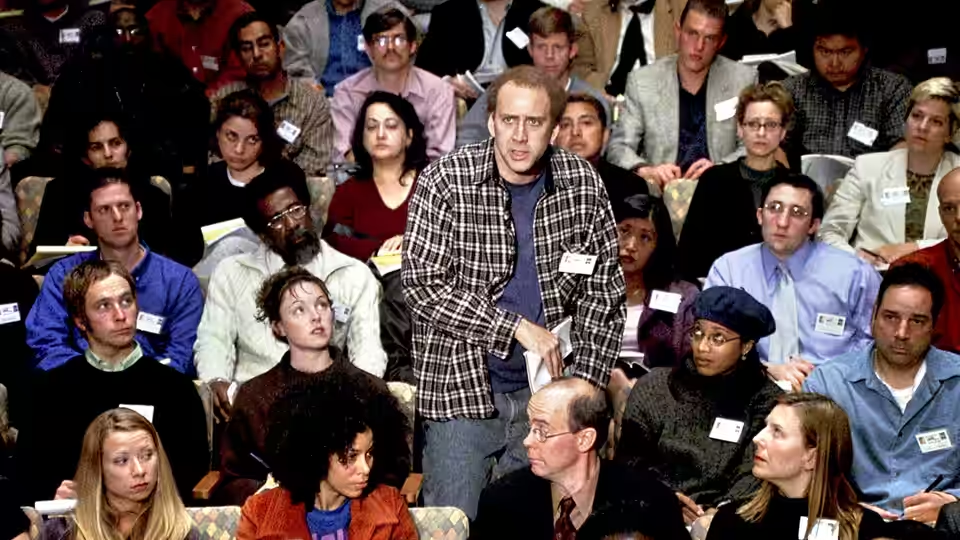
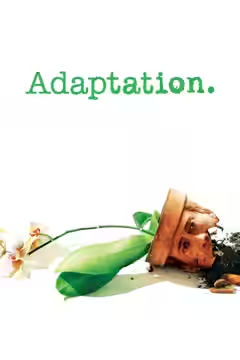
Adaptation is a film made entirely out of this process. Charlie Kaufman, hired to adapt a book about orchids, tells the executive over lunch exactly what he will not do: he will not make it a Hollywood thing, no sex, no guns, no car chases, nobody learning a profound lesson. Every one of those things is in the last half hour. In between, his twin brother Donald attends Robert McKee's screenwriting seminar, where the industry's rules of structure are taught to rooms of hopefuls, and sells a serial-killer spec for a fortune, and Charlie, in despair, goes to McKee himself and is told the one thing every development executive believes: the last act makes a film. The notes were right about the audience and wrong about the film, and the film knows it. That is development, in two hours.
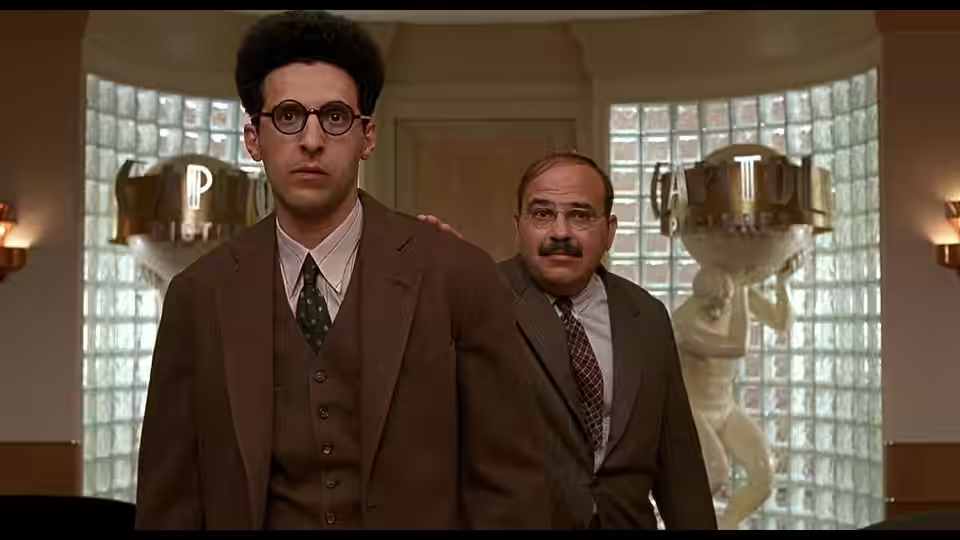
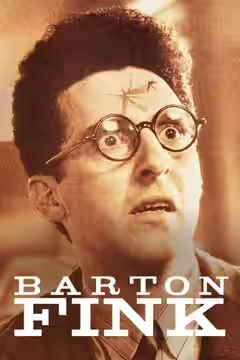
Barton Fink is the same experience from underneath. Fink is given his brief by the head of the studio in a single breath, a wrestling picture, Wallace Beery, big men in tights, and spends the film unable to write it, consulting a fellow writer whose scripts turn out to be his secretary's. When he finally delivers, the note is total. The studio does not want what he wrote, will not make it, and informs him that he was never the only writer who could give it the thing it hired him for. The Coens are describing the 1940s and the scene plays today unchanged, because the structure is: the person giving the notes owns the script, and the writer's leverage is exactly as large as the studio's wish to keep them.
Rewrites, and other people’s
A draft that survives its notes is rewritten by its writer. A draft that does not is often rewritten by someone else, and this is the part of development the public rarely sees. A studio that has lost faith in a writer, or wants a different flavour, brings in a second, for a page-one rewrite that keeps the premise and little else, or for a polish on the dialogue, one character, the jokes. Some writers make a career of it. The script doctor is a real job, highly paid and mostly uncredited, and a great many well-known films carry two names on screen and several more in the payroll records.
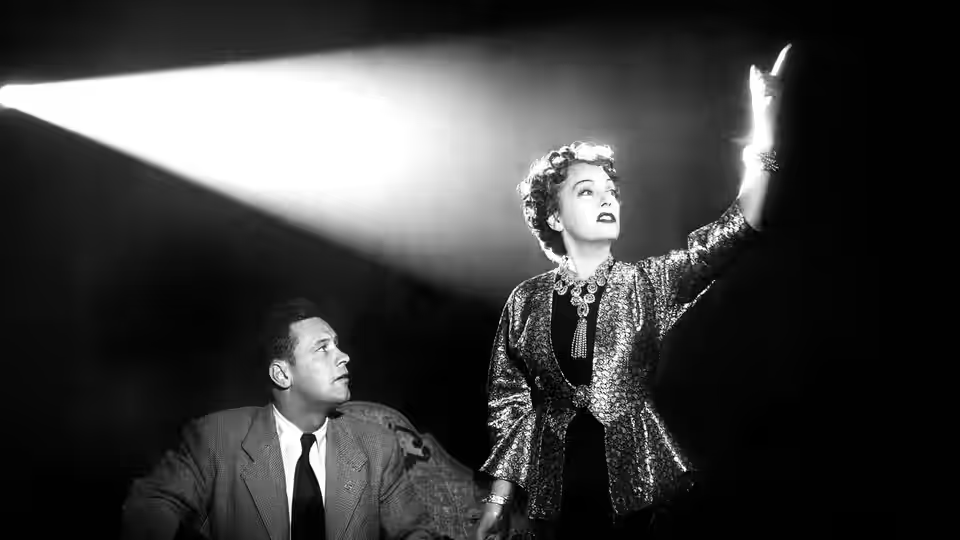
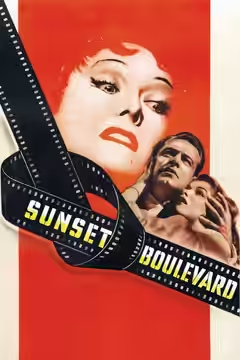
Sunset Boulevard contains the industry's definitive uncredited rewrite. Joe Gillis, broke, is shown Norma Desmond's script for Salome, a vast handwritten thing she means to star in at fifty, and tells her, as a man who needs the work, that it could use some editing. He is hired on the spot. He cuts; she puts the pages back. Nothing he does will make the script shootable, because the problem with the script is its owner, and Joe's job, like most rewrite men's, is to manage the person who owns the pages. Wilder had fixed other people's scripts for money and knew how much of the fee was for writing.
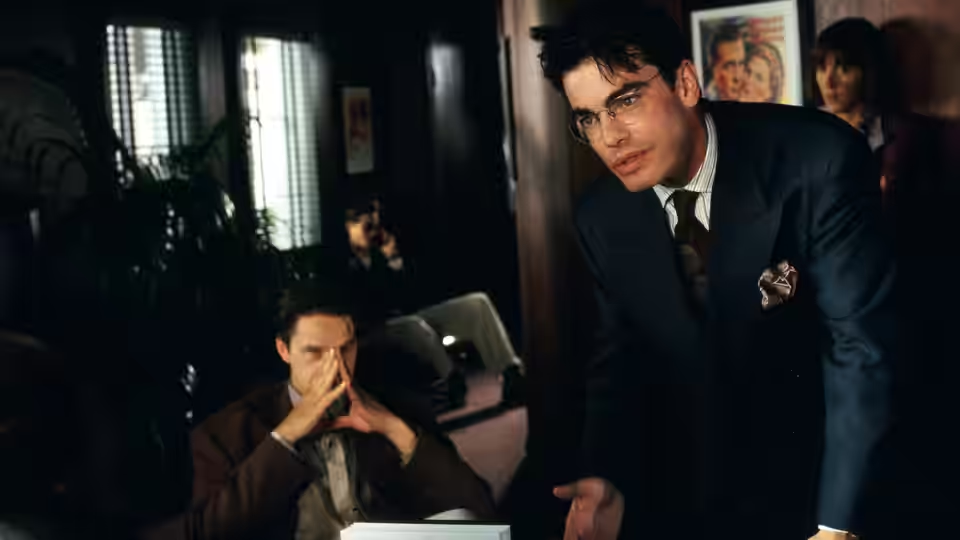
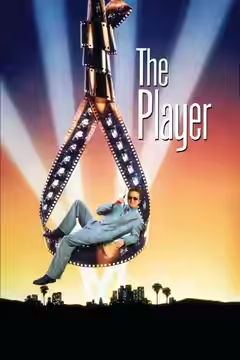
And then there is the rewrite that changes what the film is. The Player stages it in full. Two writers pitch Griffin Mill a prison drama, Habeas Corpus, with the pitch's great flourish: no stars, no happy ending, the innocent woman goes to the gas chamber, because that is the reality. Altman shows us the finished film at the end. A very large star breaks into the chamber and carries a very large star out in his arms, and when the writer is asked what became of the truth, his answer is the box office. Everyone in the sequence is behaving reasonably: the writers wanted their film made, the studio a film it could sell, the test audience wanted her to live. It is the most accurate scene about development ever shot because nobody in it is a villain, and the film still changed completely.
Who gets the credit
When the writing stops, someone has to decide whose names go on screen, and in the United States the decision belongs not to the studio but to the writers' union. Since the early 1940s the Writers Guild has determined screen credits itself: the writers submit their drafts and a panel of other writers, anonymous to them, reads everything and rules. The bar for a later writer is deliberately high, more than half of an original screenplay to share the credit, about a third of an adaptation, so that the writer who started the thing is not pushed off by a polish. The credits themselves are a code. “Written by” means one writer or team did story and screenplay both; “Screenplay by” and “Story by” separate the two; an ampersand between two names means a team who wrote together, and the word “and” means separate writers who may never have met. Once you know this you read credits differently for life.
The rule exists because of fights like the one Mank dramatises. Mankiewicz's contract gave him no credit for Citizen Kane; he wanted one, Welles's camp preferred he take the money, and the film was released with the two names sharing the screenplay credit and, the following spring, the only Oscar it won. Fincher's film takes the view that the script was Mankiewicz's and the credit was wrung from Welles. That view comes from Pauline Kael, and scholars have spent fifty years dismantling it: the surviving drafts show Welles rewriting heavily, and the final shape is as much his. Mank is a very good film and a poor ruling. Arbitration was invented so that questions like this would be settled by people who had read the drafts rather than by whoever had the better lawyer.
In Britain the credit is a matter of contract, the Writers' Guild agreement setting what a writer is entitled to, disputes settled between the parties. In France the question barely arises in that form, because the screenwriter's authorship is a right in law, not a credit granted by a producer: an author of the film cannot be removed from it, however many others are brought in. Three answers to one question, whether the writer is an employee or an author. America says employee and builds a guild procedure to protect them; France says author and lets the law do the work; Britain sits between, as it does in most things.
Where it stops
- Ideafree; anyone’s
- Optiona lease on the property; most lapse unexercised
- Treatmentthe story in prose; the first thing a studio can walk away from having paid for
- Draftsnotes, rewrites, other writers; where most projects spend years and most die
- Packagea director, a cast, a budget; the script as a document for raising money
- Greenlighta start date; the script stops
Most things stop at the drafts. A project has to survive not only its notes but the life of the company developing it: the executive who championed it leaves, a new regime wants its own slate, a similar film is announced elsewhere, the interested star makes something else. None of these is a judgement on the script. A good draft can die for reasons that have nothing to do with it, and a poor one can be made because a star said yes on a Tuesday. Writers who last understand that this is not personal; producers who last keep enough projects moving that one is always ready when a door opens.
Public development money changes the pace rather than the shape. A British or European project funded in stages by the BFI, the CNC or a national fund can be developed draft by draft without a studio's impatience, the writer paid at each stage. The risk is the opposite one: a project always being developed and never quite ready, because the next grant is for the next draft and nobody is asking for a start date. The Union's MEDIA programme funds slates for this reason, so a company can carry several projects and let the ready one go.
The greenlight, when it comes, is not a verdict on the script. It is a decision that the script, with this director and this cast at this budget, is a film someone can sell; the next two lessons are about how that is paid for and who decides. For the writer it means the notes stop, not because everyone is satisfied but because there is a date, and from then on the script is a plan for a shoot rather than a thing being argued about. It will change again on set and in the edit. But the version that gets made is the last draft that was stopped, and nobody set out to write it.
What to take from this
Development is not a stage a script passes through. It is a negotiation over what the film is, conducted in drafts, by everyone with a stake in it, and the writer is one voice in it with varying rights to the last word. Notes are the language, structure is the grammar, credit is the settlement. When a film ends in a way that seems to belong to a different film, it usually does, and the different film is the one someone pitched.
WatchThe films this lesson is drawn from, with our scores
 83
Adaptation.
2002 · Comedy
The notes, the seminar, and the third act the executive asked for.
 83
Barton Fink
1991 · Comedy
The brief, the block, and the note that says no to everything.
 91
Sunset Boulevard
1950 · Drama
The uncredited rewrite, for an owner who puts the pages back.
 85
The Player
1992 · Mystery
The pitch with no happy ending, and the happy ending it got.
TermsThe words this lesson uses, as the trade uses them
- Treatment
- The story told in prose, from a few pages to forty, written before the screenplay. The first paid step on most projects, and the first the studio can stop after.
- Step deal
- The American form of a writer’s contract: treatment, first draft, rewrite and polish bought one step at a time, with the studio free to stop after any.
- First draft
- The first full screenplay, around a hundred and ten pages. What the notes are given on.
- Polish
- A light rewrite, in theory: dialogue, a character, the jokes. Often a rewrite paid at polish rates.
- Notes
- The comments of everyone who has paid for a draft or may be asked to. Delivered as a document or a meeting; the fix suggested is usually not the fix needed.
- The note behind the note
- What the reader actually felt, as opposed to what they said to do about it. The thing a good writer answers.
- Page-one rewrite
- A rewrite that keeps the premise and starts again from the first page, usually by a new writer.
- Script doctor
- A writer hired to fix someone else’s script, well paid and, by the credit rules, usually uncredited.
- Credit arbitration
- The Writers Guild of America’s procedure for deciding whose names go on screen: an anonymous panel of writers reads every draft and rules. The studio does not decide.
- “&” and “and”
- In American writing credits an ampersand joins a team who wrote together; the word “and” separates writers who worked apart, often in sequence.
- Author’s right
- The French and continental principle that the screenwriter is one of a film’s authors in law, with rights in the finished work that no contract removes.
- Greenlight
- The decision to finance a film and give it a start date. Not a verdict on the script: a judgement that the script, director, cast and budget together are a film someone can sell.
SourcesWhere the facts in this lesson come from, and when we last checked them
- Writers Guild of America WestSchedule of Minimums (the writing steps: treatment, first draft, rewrite, polish) and the Screen Credits Manual (credit determination, the thresholds for shared credit, “&” and “and”). Checked 2 October 2026.
- Writers’ Guild of Great BritainThe WGGB and Pact agreement: staged payments on commission, drafts and principal photography; credit provisions. Checked 2 October 2026.
- British Film InstituteBFI Filmmaking Fund: development funding in stages, from National Lottery money. Checked 2 October 2026.
- Centre national du cinéma et de l’image animéeAide à l’écriture, paid to writers directly, and aide au développement. Checked 2 October 2026.
- Légifrance, Code de la propriété intellectuelleArticle L113-7: the presumed co-authors of an audiovisual work, including the writers of the scenario, adaptation and dialogue; moral rights (L121-1). Checked 2 October 2026.
- European Commission, Creative Europe MEDIASlate development funding for independent production companies. Checked 2 October 2026.
Lessons are written in Fi1m’s voice, checked against the sources above and our own reviews before publication, and corrected in the open. If something here is wrong, tell us. How we use AI