Learn · How a film gets made · The whole process
Who pays
A budget is a stack of promises made to people who want their money back. Where it comes from, a studio, investors, distributors buying in advance, governments with conditions, decides a great deal about the film that gets made. This is how the money is assembled, who is repaid first, and why so few films ever show a profit on paper.
Every film has a budget, and every budget is a sum of other people's money. The two previous lessons followed a property through development to a greenlight. The greenlight is a financial event: somebody has agreed to pay for the film, and from that moment the questions that matter are whose money it is and what they expect back. The answer shapes the film more than most audiences realise, and it is the thing the trade talks about when it is not talking about the films.
There are, broadly, two ways to pay for a film: one cheque, or many. A studio writes one cheque. Everyone else assembles many, from sources that each want something different, and the assembly is a craft of its own. Everything else in this lesson is detail on those two sentences.
One cheque: the studio
An American studio finances and distributes its own films, with money that comes, these days, from a parent corporation for whom film is one division among several. The studio's bet is not on a film but on a slate: a dozen or two a year, most of which will lose money or break even, carried by the two or three that do not. This is why the executive in The Player spends his days saying no. The studio's whole discipline is that no single film can be allowed to matter too much, and a greenlight is a decision about where in the portfolio a bet belongs.
Heaven's Gate is what happens when that discipline fails, and it is worth being precise about what failed. Michael Cimino, fresh from an Oscar, was given a Western by United Artists, a studio that had built its reputation on trusting directors. The budget roughly quadrupled during the shoot; a street was rebuilt because it looked a few feet too narrow; the film opened at over three and a half hours, was savaged, withdrawn, re-cut and re-released shorter to an empty room, and returned a small fraction of what it cost. Within a year the parent company had sold United Artists. The studio did not fail because one film lost money. Studios lose money on films every year. It failed because it had given up the right to say no, and the industry drew the lesson so firmly that the era of the director as a studio's unquestioned authority is usually dated to this film's release.

Many cheques: independent money
A film that no studio will pay for whole is financed in pieces, and the pieces have names. Equity is cash from investors who own a share of the film and are paid back last. Pre-sales are advances from distributors in particular territories, who buy the right to release the film in Germany or Japan before it is shot, on the strength of the script and the cast; those contracts can be taken to a bank and borrowed against. Soft money is public: tax credits, rebates and grants, which do not have to be repaid but come with conditions about where and how the film is made. Gap is a bank loan against the territories not yet sold, on the bank's estimate of what they will fetch. And the completion bond is insurance, bought from a guarantor who promises the financiers that the film will be finished and delivered, and who takes control of the production if it is not.
- Equityinvestors’ cash, repaid last
- Pre-salesdistributors buy territories in advance; a bank will lend against the contracts
- Soft moneytax credits, rebates, public funds; no repayment, but conditions
- Gapa bank’s loan against the territories still unsold
- Bonda guarantor’s promise that the film will be delivered
- Productionthe money spent, in the order the schedule needs it
A producer assembling this is building a tower where every piece depends on the others. The bank will not lend without the bond; the bond will not be issued without a finished budget and a schedule the guarantor believes; the pre-sales depend on a cast the distributors recognise; the cast will not commit until there is money. Most independent films are financed in the last weeks before shooting, by people who have spent a year getting each piece to hold still long enough for the next.
Hearts of Darkness shows what the tower looks like from inside when it starts to lean. Francis Ford Coppola financed Apocalypse Now largely outside the studio system, with distributors' advances and his own company's money, and as the shoot in the Philippines ran over by months, a typhoon destroyed sets, the lead was replaced and then had a heart attack, the overruns were his to cover: he had personally guaranteed them, with his house and his vineyard behind the guarantee. The documentary is usually watched as a portrait of a director going mad in the jungle. Watch it instead as a portrait of completion risk, the thing a bond exists to insure against, carried by one man. Nobody in the jungle had a bigger stake in finishing than the man who had signed for the overruns, and that, not the madness, is why the film got made.

Money with a view
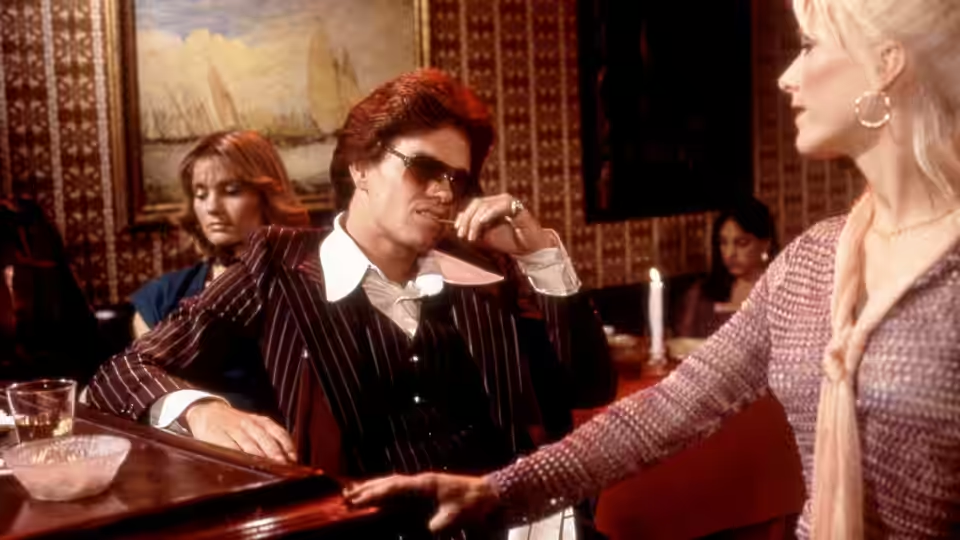
Whoever pays has an opinion, and the opinion is not always about art. Boogie Nights is a film about a small industry's money changing hands. Jack Horner makes his films on celluloid with the backing of the Colonel, a financier who likes the product and asks few questions, until the Colonel is arrested and the money stops. The man who replaces it, Floyd Gondolli, has a view: shoot on video, which is cheaper, and use amateurs, which is cheaper still. Jack's resistance is aesthetic and futile. The film's great sadness is not any one character's fall but the moment an industry's financier decides what the product should be, and the industry discovers it had never been in charge.
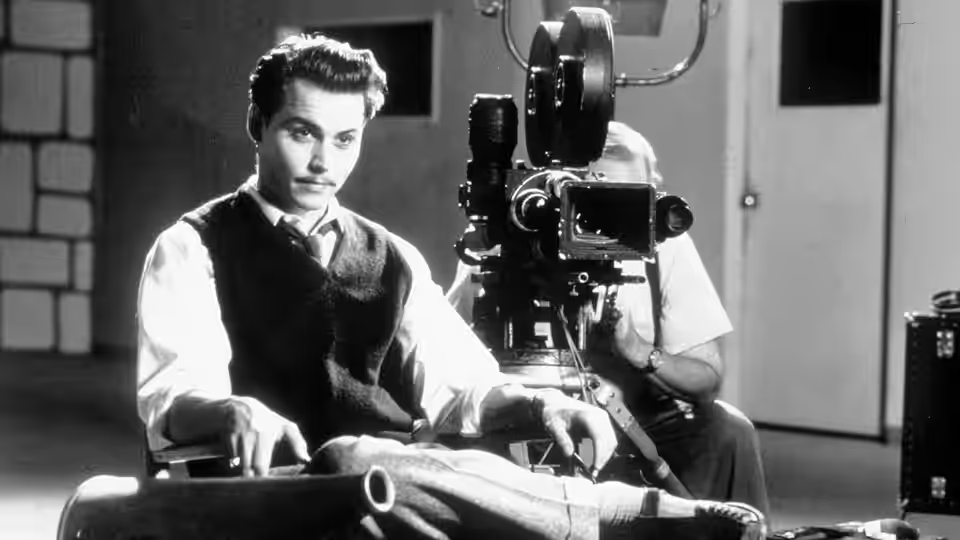
Ed Wood has the purest example in cinema of soft money with conditions. Unable to raise a budget for his flying-saucer picture, Wood is financed by a Baptist congregation, who require the title changed from Grave Robbers from Outer Space to Plan 9, and the cast baptised. Tim Burton plays it as farce and it is also a documentary. Every financier is the Baptist church; the only difference is what they want instead of baptism. A tax credit wants your spend in its country. A distributor wants a star it can sell. An equity investor wants a cameo for a nephew and a premium on exit. A studio wants a slate position. The money is never just money, and the producer's job is to know what each piece of it is really for.
Soft money, by country
In the United States the soft money is the states'. Most now offer a rebate or a transferable tax credit on what a production spends within their borders, administered by a state film office, which is why so many films set in New York are shot in Georgia and so many set anywhere are shot in Louisiana or New Mexico. The federal government offers next to nothing; the studios' trade body, the Motion Picture Association, lobbies the states to keep the incentives and publishes the industry's own account of what they return. A production chooses its state the way it chooses a lens, and the choice is made in the budget before anyone has scouted a location.
In Britain the soft money is national: a rebate from the Treasury on a production's British spend, available to any film that passes the British Film Institute's cultural test or qualifies under a co-production treaty, and paid whether or not the film is any good. It is the single biggest reason large American films shoot in British studios, and the British industry's economy depends on it to a degree that makes the sector nervous whenever the Treasury reviews it. Smaller British films add the BFI's own lottery-funded production money and the broadcasters' film arms on top.
In France and the European Union the pattern is older and stranger to American eyes. The CNC takes a levy on every cinema ticket, every broadcaster and every streaming service operating in France and returns the money to French production, partly automatically, in proportion to what a producer's previous films earned, and partly selectively, by committee, to films a jury thinks worth making. In France the public money is a right, not a gift; in America it is a competition between states. Beyond France, Eurimages, the Council of Europe's fund, backs co-productions between member countries; the Union's MEDIA programme supports development and distribution across borders; and the co-production treaties let a film be legally French and German and Belgian at once, qualifying for each country's support. The European producer's financing plan is a map of Europe with a sum in every country, and this is why so many European films have five flags before the title.
Who gets paid back, and in what order
When the film earns money, the money does not arrive in a heap to be divided. It flows down a waterfall, and the order of the pools is written into the contracts before a frame is shot.
- Distributortakes its fee and recovers what it spent on prints and advertising first
- Bankthe gap loan, with interest
- Defermentsfees that cast, crew or the guarantor agreed to wait for
- Investorsequity repaid, usually with a premium on top
- Profitswhat is left, split between the financiers and the production, where the talent’s points live
Read the waterfall from the top and the industry's most famous grievance explains itself. Profit participations, the “points” actors and directors are given in lieu of fees, sit in the last pool, after a distributor whose fee is a percentage of the gross and whose costs are set by the distributor. A film can take in several times its budget and still show no profit on paper, because the pools above have been defined to fill first. Novelists have been told their best-selling adaptations lost money. Stars who matter negotiate for a share of the gross, from the first pool, precisely because they have read the waterfall. When you hear that a film “made” a sum, ask which pool the speaker is standing in.
What to take from this
A film's money is never one thing. It is a set of promises to people who each want something different back: a slate position, a territory, a spend in their country, a premium, a share of the first pool. The producer's craft is to make those promises compatible and keep them standing until the film is delivered. The next lesson is about that person. When a film looks compromised, look first at who paid for it, and what they were promised; it is nearly always there.
WatchThe films this lesson is drawn from, with our scores
 79
Heaven's Gate
1980 · Drama
One cheque, and what it cost the studio that wrote it.
 84
Hearts of Darkness: A Filmmaker's Apocalypse
1991 · Documentary
Completion risk, carried by the director personally.
 86
Boogie Nights
1997 · Drama
The financier changes, and so does the product.
 84
Ed Wood
1994 · Comedy
Soft money with conditions: baptisms and a new title.
TermsThe words this lesson uses, as the trade uses them
- Slate
- A studio’s or company’s films for a year or so, financed as a portfolio: most lose or break even, a few carry the rest.
- Equity
- Investors’ cash in return for a share of the film. Repaid last, usually with a premium.
- Pre-sale
- A distributor’s advance for the right to release the film in a territory, agreed before it is shot. The contract can be borrowed against.
- Soft money
- Public money that need not be repaid: tax credits, rebates, grants. Comes with conditions about where and how the film is made.
- Gap financing
- A bank loan against the value of territories not yet sold, on the bank’s estimate of what they will fetch.
- Completion bond
- A guarantee, bought from a specialist company, that the film will be finished and delivered. If it goes badly wrong the guarantor takes control of the production.
- Co-production
- A film made by companies in two or more countries under a treaty, so that it counts as national in each and qualifies for each country’s support.
- Cultural test
- The points-based test a film passes to count as British for the UK’s tax relief; other countries have equivalents.
- Recoupment
- Getting the money back. The waterfall is the agreed order in which each party recoups.
- P&A
- Prints and advertising: what the distributor spends to release a film, recovered from the first money in.
- Points
- A share of a film’s profits given to talent in lieu of fees. Net points sit in the last pool and often pay nothing; gross points, from the first pool, are the ones worth having.
- Negative pickup
- A deal in which a distributor agrees to buy the finished film for a fixed price on delivery, which the producer uses to raise the money to make it.
SourcesWhere the facts in this lesson come from, and when we last checked them
- British Film InstituteThe UK’s film tax relief (the Audio-Visual Expenditure Credit) and the cultural test the BFI certifies; BFI production funding. Checked 3 October 2026.
- Centre national du cinéma et de l’image animéeAutomatic and selective support for production (soutien automatique, avance sur recettes), funded by levies on tickets, broadcasters and streaming services. Checked 3 October 2026.
- Council of Europe, EurimagesCo-production support for films between member states. Checked 3 October 2026.
- European Commission, Creative Europe MEDIADevelopment and distribution support across borders. Checked 3 October 2026.
- Georgia Film OfficeA state production incentive: the transferable tax credit on qualified in-state spend, as one example of the American pattern. Checked 3 October 2026.
- Motion Picture AssociationThe studios’ trade body: its account of production incentives and the industry’s economic contribution. Checked 3 October 2026.
- Film FinancesThe completion guarantor: what a bond covers and when the guarantor steps in. Checked 3 October 2026.
Lessons are written in Fi1m’s voice, checked against the sources above and our own reviews before publication, and corrected in the open. If something here is wrong, tell us. How we use AI