Learn · How a film gets made · The whole process
Where films come from
Every film begins as something somebody owns. Before a frame is shot, before a penny of the budget exists, a story has to be found, secured and talked into a shape a studio or a funder will pay for. This is what that part looks like, and why most films never get past it.
Ask where a film came from and you usually get an anecdote: the director saw a photograph, the producer read a book on a plane. The anecdotes are true and beside the point. Films do not come from ideas. They come from ideas that somebody has turned into property, because property is the only thing the rest of the industry knows how to buy.
That is the whole of this lesson. An idea is free. Anyone can make a film about a shark terrorising a seaside town. What nobody else can do is make Jaws, because the novel, the screenplay, the title and the characters belong to someone. Getting a film started is the business of turning the free thing into the owned thing, and then persuading people with money that it is worth developing.
Four ways a film begins
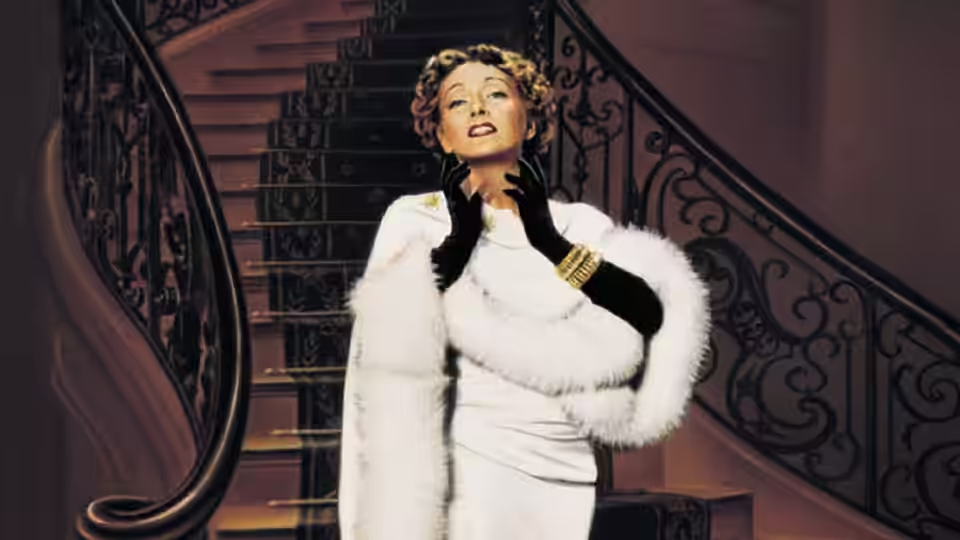
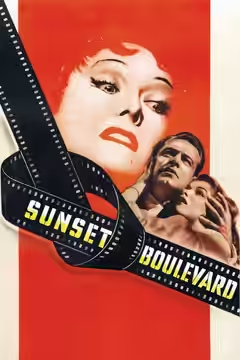
Nearly every film starts in one of four ways. The first is the original: a writer sits down, unpaid, and writes a screenplay in the hope of selling it. The trade calls this a spec script, from speculation, and it is the most romantic route in and the least reliable. Sunset Boulevard opens with one. Joe Gillis is a screenwriter with a baseball picture nobody wants and the repossession men after his car, pitching to a Paramount producer who has already had the script read and summarised by a junior. The summary is not kind. Billy Wilder had been that writer, and the film knows exactly how it feels to be told your spec is “flat and banal” by someone half your age.
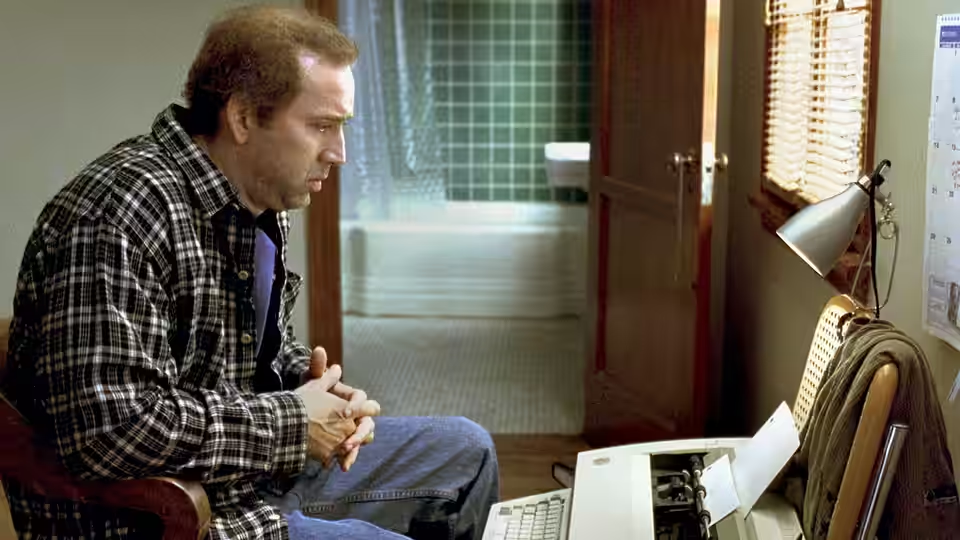
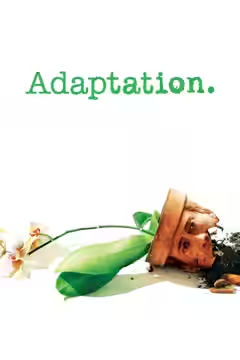
The second way is the adaptation. A book, a play, a magazine article, a true story, a comic, a game, an earlier film: anything with a story in it that someone already owns can be bought and turned into a screenplay. This is where most of the industry's money goes, because an existing story has already proved that people want it. Adaptation is the clearest film ever made about what that feels like from the inside. Charlie Kaufman really was hired to adapt Susan Orlean's The Orchid Thief, a book about a man who steals rare orchids from a Florida swamp, and really could not find a film in it, so he wrote the screenplay about not being able to write the screenplay. The studio had bought a book; what it got was a film about the gap between a book and a film, which is the gap every adaptation has to cross.
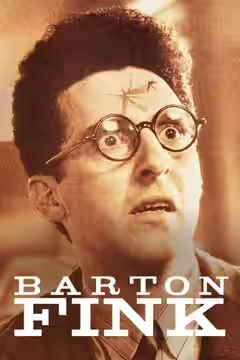
The third way is the assignment. A studio or a producer has a property, or just an appetite, and hires a writer to supply the script. The writer is paid, and in return owns nothing: in the United States this is “work for hire”, and the copyright in what the writer produces belongs to whoever commissioned it. Barton Fink is a horror film about exactly this arrangement. A New York playwright is brought to Hollywood on a contract, told by the head of Capitol Pictures that the writer is king, and assigned a wrestling picture. By the end he has written something he is proud of and been informed that the studio owns it, will not make it, and will keep him under contract so that nobody else can. The Coens are exaggerating. They are not exaggerating much.
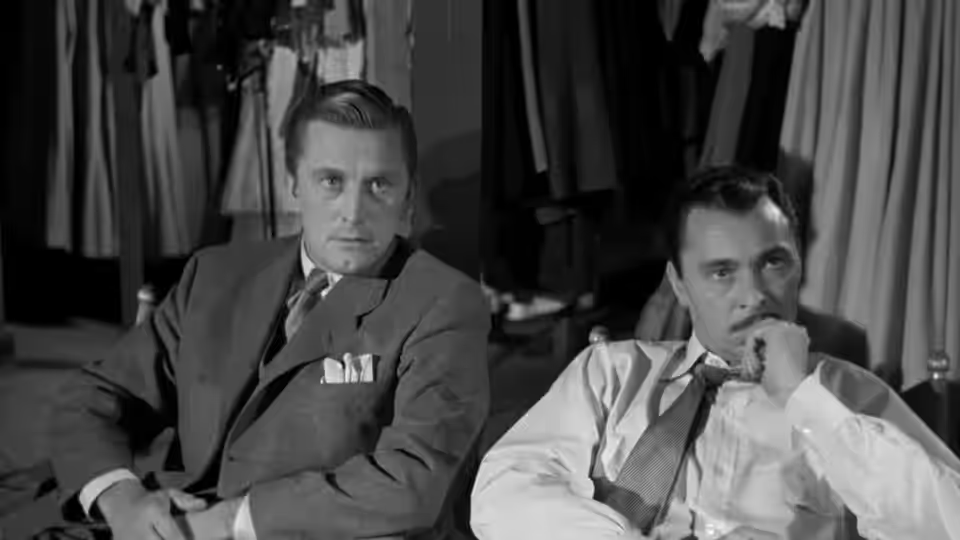
The fourth way is the one the public rarely sees, and the commonest: the producer's idea. A producer sees a gap, a star who wants a certain kind of part, a property that can be had cheaply, and builds a project to fit. In The Bad and the Beautiful, Kirk Douglas's Jonathan Shields is handed a nothing B-picture about cat men and a set of costumes that look absurd under the lights, and realises on the spot that the film will be more frightening if the cat men are never shown. The idea is the producer's; the writer and director execute it. That is how most films come into being, and why the producer, not the director, is the first person on a film and usually the last.
What it means to own a story
What is bought and sold in all four cases is copyright, and a few plain facts about it explain a great deal of the industry's behaviour.
Copyright protects the expression of a story, not the idea. You cannot own “a heist goes wrong”; you can own the particular heist, with its particular people, that you wrote down. That is why two studios can release near-identical films in the same summer and neither can sue, and why a pitch is worth almost nothing until it is on paper.
Copyright expires. In the United States, Britain and the European Union a work now enters the public domain seventy years after its author's death, with older American works on a separate clock. Once a story is in the public domain anyone may film it, which is why there are so many Draculas, so many Pride and Prejudices, and a new Sherlock Holmes every few years: they are free. It is also why the day a famous character enters the public domain is marked by a rush of cheap horror films.
A true story is not owned by anyone. The facts of a life are public, and in principle you may make a film about a living person without their permission. In practice producers buy what are called life rights: not the facts, which cannot be bought, but the person's cooperation, their letters and diaries, their name and likeness in the marketing, and above all their agreement not to sue. When you see “based on the book by” on a true story, that is often the real purchase: the book's author has already done the work of getting the people in it to talk.
The option
A producer who finds a book they want rarely buys it. Buying it outright would cost real money for a film that may never be made. Instead they take an option: for a modest fee they acquire the exclusive right, for a fixed period, to buy the film rights at a price agreed now. The period is typically a year or eighteen months and can usually be extended for a further fee. If the film is financed within the period the option is exercised and the full purchase price is paid, normally out of the budget on the first day of shooting. If it is not, the rights go back to the author, who keeps the fee and is free to option the book to someone else.
The option is the central instrument of this part of the industry. It is why authors can earn a living from films that are never made, why the same novel can be “in development” at three companies over twenty years, and why a producer with no money can control a valuable property: a producer's real asset is often a drawer full of optioned material. When you read that a studio has “acquired” a bestseller, read it as “taken a short lease on”.
Screenplays are optioned the same way; a writer with a finished spec will often option it to a producer for very little rather than sell it, on the theory that someone who has paid something works harder than someone who has paid nothing. In the Writers Guild's agreement with the American studios the sale of a screenplay carries minimum terms, and the Guild's registration service exists so a writer can prove when a script was written if someone later borrows from it.
The pitch
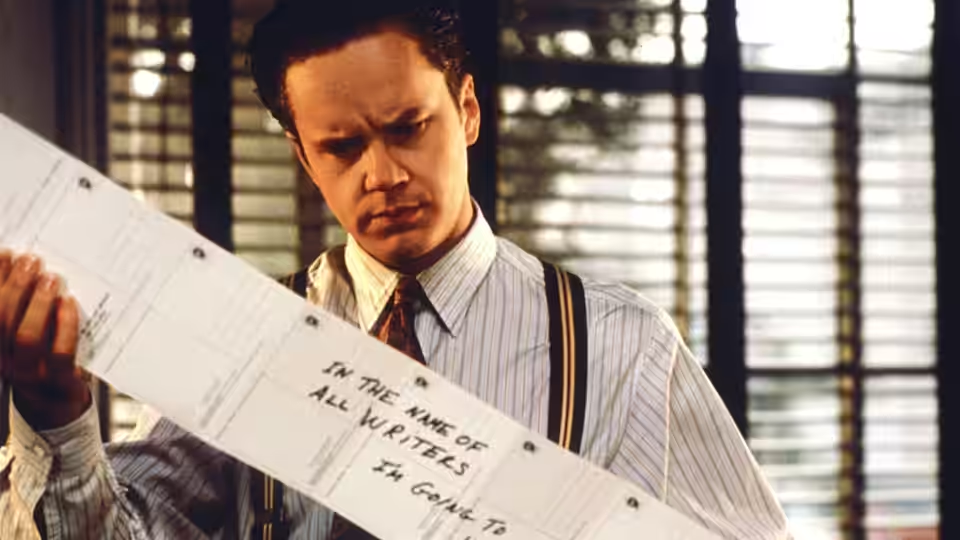
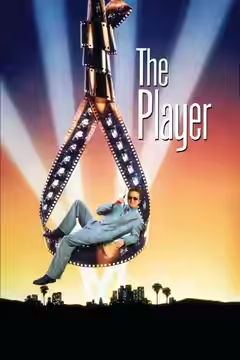
Between the property and the screenplay sits the pitch: a story told out loud, in a room, to someone who can say yes. It is the part of the industry that films most enjoy making fun of, and The Player is the definitive version. Griffin Mill, Tim Robbins's studio executive, listens to stories all day for a studio that makes a dozen films a year. Writers sit across his desk and describe films as sums: this picture meets that one, with a star attached. Altman has Buck Henry, who wrote The Graduate, pitch The Graduate Part II with a straight face, and the joke is that the pitches are not bad. They are exactly the pitches that get made.
The pitch exists because nobody has time to read. A studio receives far more scripts than anyone can get through, so each is read first by a reader, who writes coverage: a page or two of synopsis and a verdict. The verdict is a word, pass or consider or recommend, and most scripts die there, unread by anyone who could have said yes. Betty Schaefer in Sunset Boulevard is a reader; her coverage of Joe's baseball picture is the first we hear of his work. The pitch is an attempt to go over the reader's head, and when it succeeds the result is not a yes to the film but a yes to the next step: a treatment, a draft, an option, a development deal.
What “in development” means
A project is in development from the moment someone with money takes an interest in it to the moment it is financed and given a start date. During that time the property is secured, a writer is hired or a draft bought, the draft is given notes and rewritten, a director is attached and brings notes of their own, actors are approached, a budget is estimated, and the package is taken round to the people who might pay for it. The next lesson is about what happens inside that process. This one is about the fact that most projects never leave it.
Development is cheap by the industry's standards: a few option fees, a few writers' fees, some executive time. Production is ruinously expensive. So a studio or producer keeps far more projects in development than it could ever make, knowing most will fall away, and the longer a project sits the more people it accumulates who each have a view. The industry's name for a project that has been in this state for years, through several writers and regime changes, is development hell. It is not an exception. It is the normal condition of most things that are ever optioned.
When a studio finally gives up on a project, the producer can usually take it elsewhere, provided the new home repays what the old one spent. This is turnaround, and some very famous films were made by a second studio after a first had paid to develop them and passed. “The studio passed” is not the end of a story, and who owns a project at any given moment is often more complicated than the credits suggest.
Who pays for this part
In the United States development is paid for by the people who hope to profit from it: studios, the larger independent companies and individual producers, who often fund options and early drafts from their own pockets or from a first-look deal with a studio that pays their overheads in return for seeing their projects first. The Producers Guild describes the job as running “from inception to completion”, and it means it: the American producer is the person who finds the property and carries it until there is a film.
In Britain the same work is done by producers, but the money behind it is more often public or broadcast. The British Film Institute funds the development of screenplays from the National Lottery, in sums that pay for an option and a draft rather than a film, and the broadcasters' film arms develop slates of their own. The writer's terms are set by the agreement between the Writers' Guild of Great Britain and Pact, the producers' trade body. A British project can be in development for years on public money without a studio in sight, which is both the strength and the weakness of the system.
In the European Union the pattern is the British one taken further. France's national film centre, the CNC, funds writing and development directly; Germany, Italy, Spain and the Nordic countries have national and regional equivalents; and the Union's MEDIA programme supports the development of slates across borders. A European producer's first job is often not to find a studio but to assemble a sequence of grants, each carrying the project one step closer to a financing it can take to market.
The difference is who pays. What is paid for is the same everywhere: the right to a story, and the time to find out whether there is a film in it.
What to take from this
A film is a property before it is anything else, and whoever controls the property controls the film. The idea is the free part. Everything the industry does from here, the money, the crew, the shoot, the sale, is done to something somebody owns. The next lesson follows that property into the room where it is argued over.
WatchThe films this lesson is drawn from, with our scores
 91
Sunset Boulevard
1950 · Drama
The spec script, the reader’s coverage and the writer who takes the job he should not.
 85
The Player
1992 · Mystery
The pitch meeting, filmed by someone who had sat through thousands.
 83
Adaptation.
2002 · Comedy
The option exercised: a real book, a real writer, and the gap between them.
 83
Barton Fink
1991 · Comedy
The writer on assignment, and what the studio owns at the end of it.
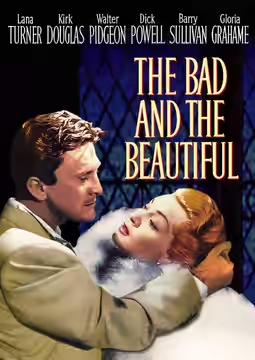 84
The Bad and the Beautiful
1952 · Drama
The producer’s idea, found on a B-picture whose cat costumes could not be shown.
TermsThe words this lesson uses, as the trade uses them
- Spec script
- A screenplay written on speculation, unpaid, in the hope of selling it. From “speculative”.
- Adaptation
- A screenplay drawn from an existing work: a book, play, article, game, true story or earlier film.
- Work for hire
- Writing commissioned and paid for by a studio or producer, who then owns the copyright in it. The American term; British and European contracts assign the rights to the same effect.
- Public domain
- Works whose copyright has expired and which anyone may adapt. In the US, UK and EU, generally seventy years after the author’s death.
- Life rights
- What a producer buys from the subject of a true story: cooperation, access, use of name and likeness, and an agreement not to sue. The facts themselves cannot be owned.
- Option
- The exclusive right, bought for a fee and a fixed period, to purchase a property’s film rights at a price agreed in advance. Exercised when the film is financed; lapses if it is not.
- Pitch
- A story told aloud to someone who can say yes, in the hope of a development deal rather than a film.
- Coverage
- A reader’s written summary and verdict on a script, typically pass, consider or recommend. Most scripts are read by nobody else.
- Development
- The period between someone with money taking an interest in a project and the project being financed with a start date.
- Development hell
- A project that has been in development for years, through several writers and regimes, without being made. The normal fate of optioned material.
- Turnaround
- A project a studio has developed and dropped, which the producer may take elsewhere if the new home repays the development costs.
- First-look deal
- An arrangement in which a studio pays a producer’s overheads in return for the first right to develop whatever the producer finds.
SourcesWhere the facts in this lesson come from, and when we last checked them
- Writers Guild of America WestScript registration; the Minimum Basic Agreement and its schedule of minimums for the sale and option of literary material. Checked 1 October 2026.
- Producers Guild of AmericaThe Producers Code of Credits: what a producer does, from inception to completion. Checked 1 October 2026.
- British Film InstituteBFI Filmmaking Fund: National Lottery development funding for screenplays. Checked 1 October 2026.
- Writers’ Guild of Great BritainThe WGGB and Pact agreement on screenwriting terms. Checked 1 October 2026.
- Centre national du cinéma et de l’image animéeAid to writing and development (aide à l’écriture, aide au développement). Checked 1 October 2026.
- European Commission, Creative Europe MEDIADevelopment support for European audiovisual works and slates. Checked 1 October 2026.
Lessons are written in Fi1m’s voice, checked against the sources above and our own reviews before publication, and corrected in the open. If something here is wrong, tell us. How we use AI