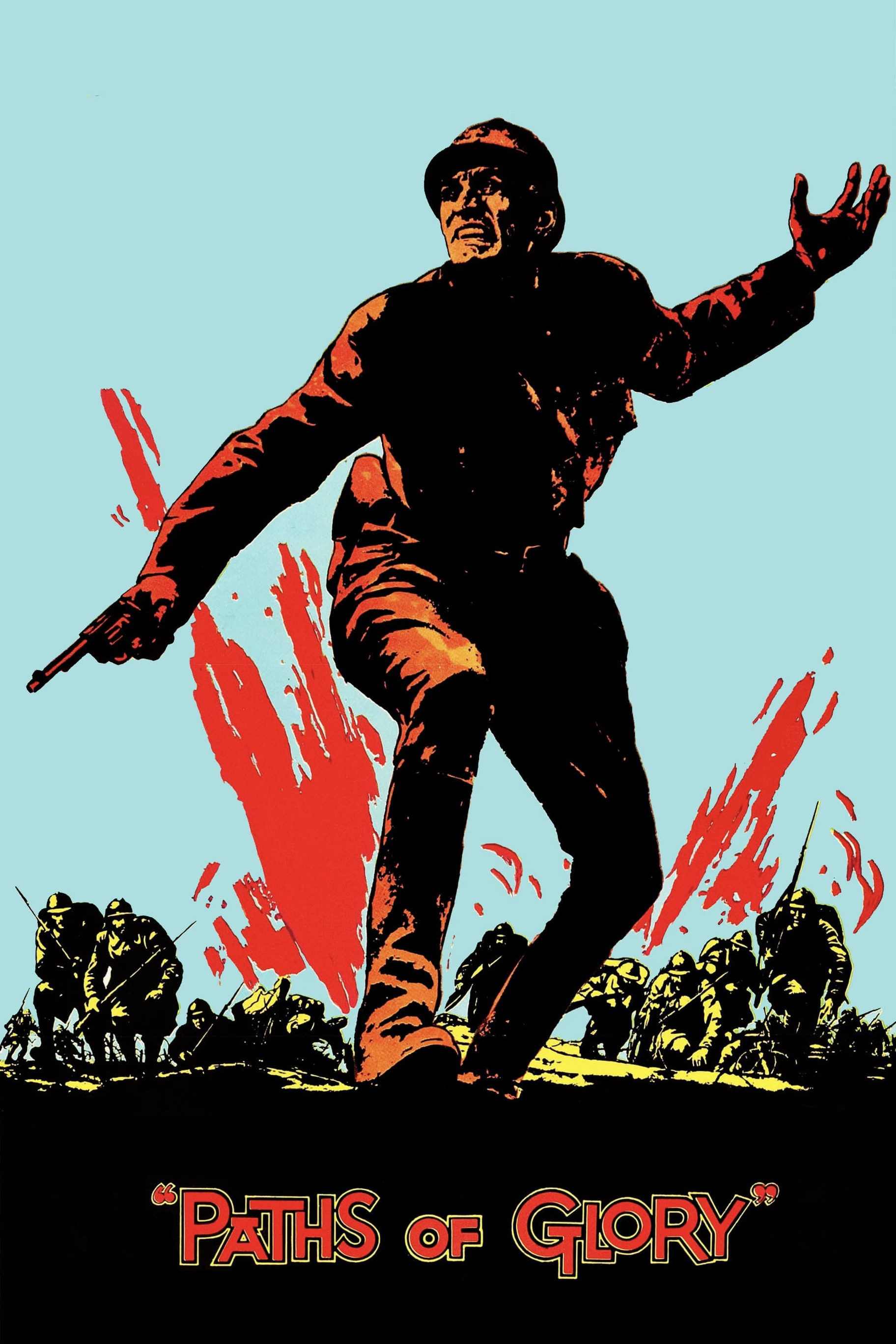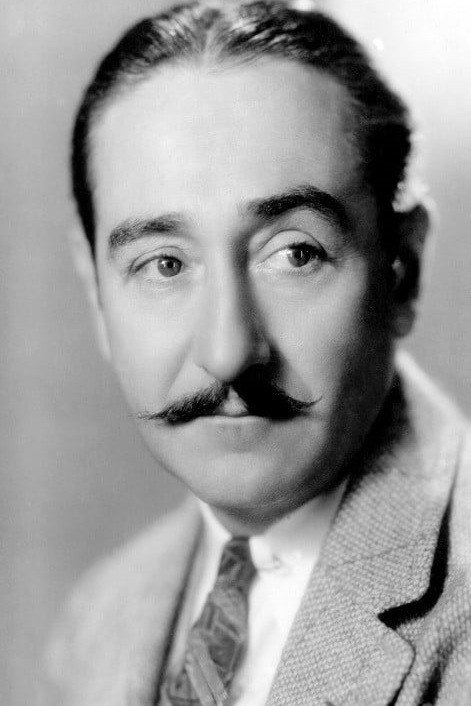
We value Adolphe Menjou for the ease with which he makes a calculating man seem ordinary. His polished manners can become predictable; in Paths of Glory, they make his general harder to dismiss.
Fi1m perspective
In Paths of Glory (1957), Adolphe Menjou's General George Broulard treats decisions affecting other men's lives as opportunities to protect his position. His calculation has the pettiness of an office dispute. Menjou is excellent at making it seem ordinary, giving us little comfort in the idea that such behaviour belongs only to exceptional villains. He does not need to make the general conspicuously sinister. We recognise the self-interest, which makes the performance harder to shrug off.
Charles Chaplin directed his breakthrough, A Woman of Paris (1923), which established him as the elegant man-about-town. Small gestures and an arched eyebrow suited the silents; sharp verbal timing made the move to sound a useful one. As the cynical editor Walter Burns in The Front Page (1931), he had dialogue to put that timing to work. Leading roles in sophisticated silents and early talkies gave way to more supporting work from the 1940s.
The limitation was the repeated casting as a slick charmer, with the waxed moustache and impeccable tailoring doing some of the recognition for us. There is pleasure in knowing what an actor can do, but a familiar entrance can settle our expectations too quickly. We would not mistake every raised eyebrow for a complicated character. Menjou's restraint needs a part with enough going on beneath the manners to make those small choices worth watching.
Stanley Kubrick gives him that in Paths of Glory, where George Macready's General Paul Mireau supplies another officer busy with his own interests. We laughed at their manoeuvring, then felt uncomfortable because other men would have to act on their decisions. Kirk Douglas makes Colonel Dax's decency convincing under pressure, and Menjou gives that decency something recognisably petty to contend with. The film's speeches sometimes press too hard, but Menjou leaves us to notice the calculation. Start here, then try The Front Page for the comic timing.
Biography
Adolphe Jean Menjou was an American actor whose career spanned silent films and talkies. Born in Pittsburgh, Pennsylvania, on 18 February 1890, he trained at Cornell University before making his screen debut in the mid-1910s. He became known for his suave, debonair screen presence and appeared in more than 200 films.
Menjou received an Academy Award nomination for Best Actor for his performance in The Front Page (1931). His notable roles include Pierre Revel in A Woman of Paris (1923), Monsieur La Bessiere in Morocco (1930), Major Rinaldi in A Farewell to Arms (1932), Oliver Niles in A Star Is Born (1937), Walter Burns in The Front Page (1931), and Gen. George Broulard in Paths of Glory (1957). His final film role was Mr Pendergast in Pollyanna (1960). He received a star on the Hollywood Walk of Fame in 1960. He was married to actress Verree Teasdale from 1934 until his death on 29 October 1963 in Beverly Hills, California.