Film review

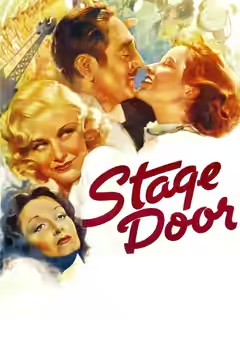
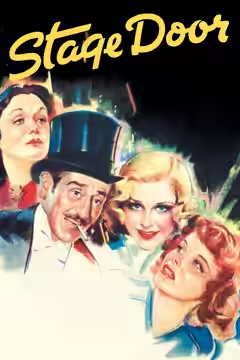
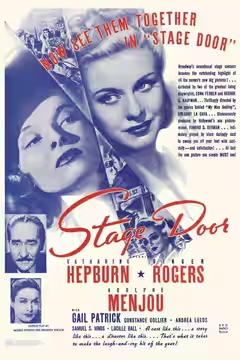
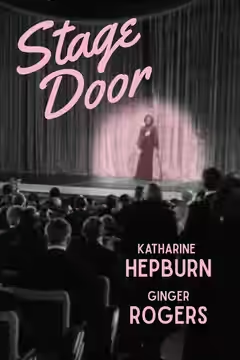
Stage Door

1937 · Directed by Gregory La Cava · 1h 32m · MPA NR

In a sentenceA houseful of hungry actresses, and not one of them will let another finish a sentence

ComedyDrama

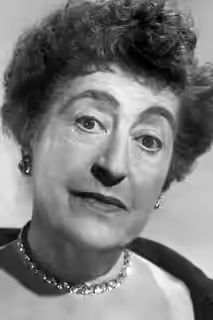
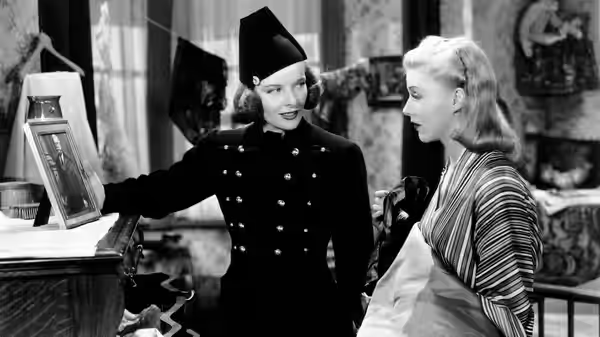
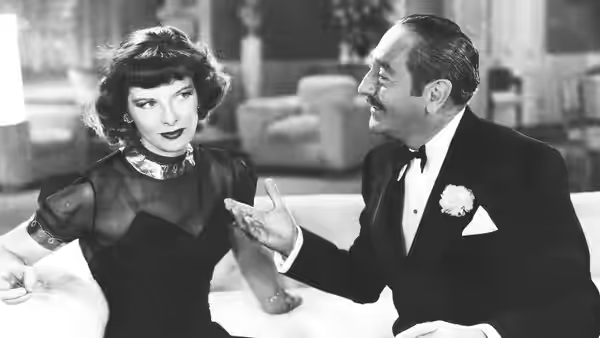
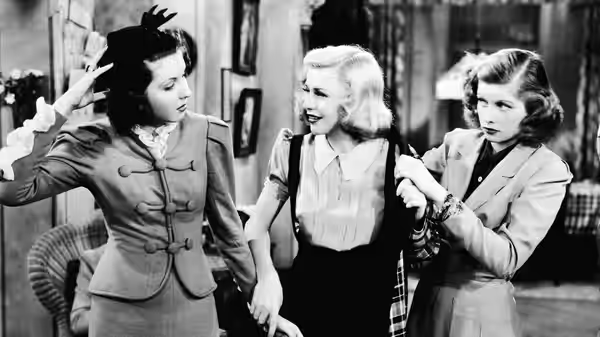
New York, the 1930s. Terry Randall (Katharine Hepburn), a rich young woman who has decided to become an actress, takes a room in a theatrical boarding house full of women waiting for the same telephone to ring. Her roommate is Jean Maitland (Ginger Rogers), a dancer who dislikes her on sight and says so. Down the hall, Kay Hamilton (Andrea Leeds) had a success last season and now skips meals; Linda Shaw (Gail Patrick) is being kept by Anthony Powell (Adolphe Menjou), a producer whose office is never short of hopeful girls; Judith (Lucille Ball) goes on dates with visiting lumbermen; and Miss Luther (Constance Collier), who acted once, gives notes nobody asked for. Terry wants a part. So does everyone else in the house.

Fi1m review

Gregory La Cava turns a stage play about out-of-work actresses into ninety minutes of women talking over one another, with Katharine Hepburn and Ginger Rogers sharing a room and a grudge. The second half goes somewhere sadder, and mostly earns it.

Gregory La Cava’s Stage Door is adapted from a stage play and behaves like nothing of the kind. Anthony Veiller and Morrie Ryskind’s screenplay keeps the setting, a boarding house full of actresses who cannot get work, throws out most of what happened there, and fills the space with talk: fast, overlapping, unkind and funny. It reached British cinemas on 31 December 1937 and it is still one of the quickest comedies of its decade. We recommend it without much hesitation, with one caveat about the second half that we will come to.

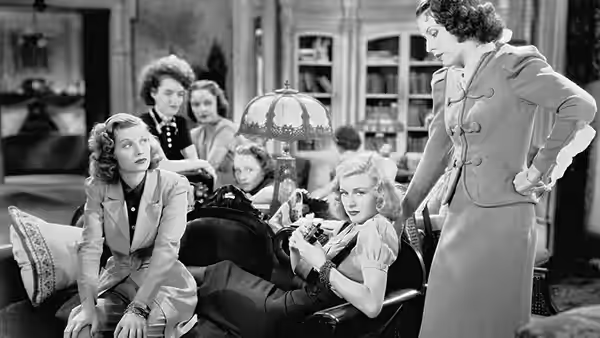
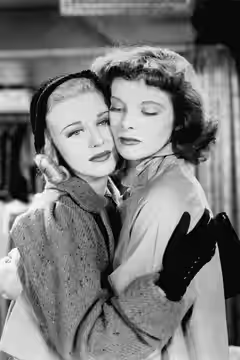
Hepburn is Terry Randall, the rich girl who arrives with a trunk, a fur and a set of opinions about the theatre, and Rogers is Jean Maitland, the dancer who has to share a room with her. The film is at its best when the two of them are in it together. Hepburn plays Terry stiff, clever and slightly ridiculous, and the house treats her exactly as it should. Rogers has the lines. She delivers them lying on a bed, filing her nails, and never seems to be trying, which is the hardest thing in comedy to do. We laughed a great deal, and we laughed most at the insults nobody on screen laughs at.

La Cava let his actresses improvise, and you can hear it. The dining-room scenes run six or seven conversations at once, and William Hamilton cuts them so that you catch the end of a joke at one end of the table while another is being set up at the other. Robert De Grasse shoots the house deep, through doorways and down the staircase, so there is nearly always a woman in the background listening and about to interrupt. Muriel King dresses Hepburn in tailored clothes with shoulders and puts everyone else in dressing gowns and one good frock that seems to get passed round; you can tell who has money in the first frame of any scene.

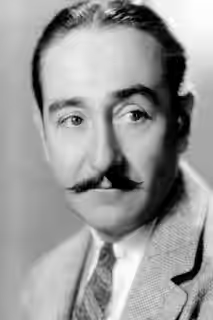
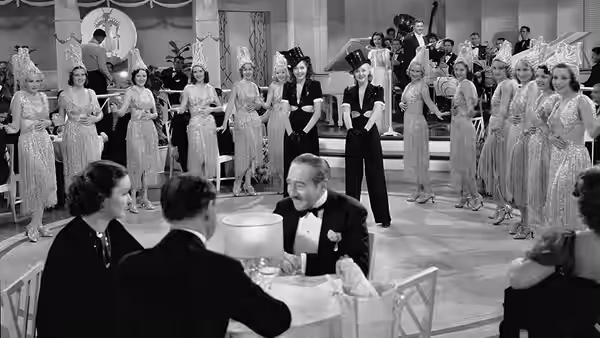
The rest of the house is cast with care. Lucille Ball’s Judith spends the film waiting for a lumberman called Butch (Grady Sutton) and is drier than anyone about it. Gail Patrick’s Linda Shaw does contempt so well that we started looking forward to her entrances. Constance Collier’s Miss Luther has played everything, once, and will tell you. Adolphe Menjou’s Powell is a producer who has seduced so many young actresses that he is bored by his own technique, and Franklin Pangborn, as his fussing man Harcourt, is funny for the length of time it takes to open a door.

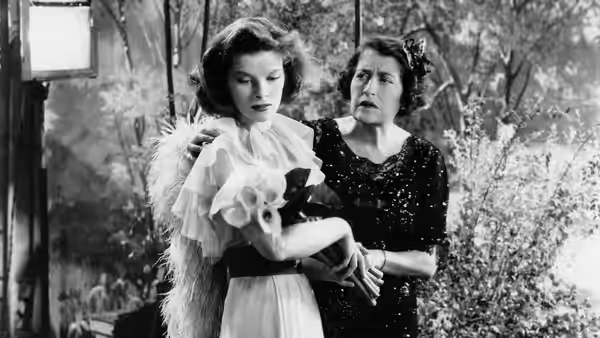
Then there is Andrea Leeds. Kay Hamilton had a hit last season and has not worked since, and Leeds plays her quietly in a film where nobody else is quiet, with the face of someone who has stopped expecting to be fed. There is a look she gives across the dining table, while the others are trading insults, that stopped us laughing outright. The second half takes a turn we will not describe, and it is her turn.

The caveat is what the film does with that turn. When it stops being a comedy it stops all at once, and the last twenty minutes carry a weight the first hour did not prepare us for. One or two speeches are written out in full where a look would have done, and Hepburn, so good at being laughed at, is asked to be taken seriously at short notice. The line about calla lilies that Terry mangles in rehearsal is a fine running joke, and the film asks a good deal of it later. It gets most of the way. We felt the gears change.

Among the comedies of its decade it is unusual in having a house full of women and a handful of men who exist to be the joke, and unusual too in being 92 minutes long and never once slack. Watch it with someone who talks over films. For once it will not matter.

Critical consensus AI synthesised

83
Positive
6
Mixed
0
Negative
0

The reviews are uniformly warm. Nearly everyone lands on the same thing: the fast, overlapping, half-improvised wisecracking among the young actresses in the boarding house, which most critics credit to Gregory La Cava’s loose method with his cast and to the way the film records their chatter. Ginger Rogers is the performance singled out most often, with Adolphe Menjou’s producer, Lucille Ball and Eve Arden also picked out. Several critics note that the film strays a long way from the stage play and think it the better for it, opening the story up and answering the original’s jibes at Hollywood.

The spread is narrow, from good to admiring, and there is no dissent worth the name. The coolest notice comes from Variety, which finds it brisk and funny in patches rather than throughout. Where critics differ at all is on what the film is: the later writers read it as a sharp account of women scraping by in hard times, while the 1937 reviews treat it as a lively entertainment and leave it there.

Slant Magazine
2 March 2004 · Dan Callahan
90*

Praises Gregory La Cava’s improvisational methods and the film’s focus on the witty, overlapping banter among its ensemble of young actresses in a boarding house. Singles out the sound design and democratic wisecracking as the film’s defining strength, calling it the real masterpiece about women and theater.

Read the full review →
Time Out
10 September 2012 · GA
90*

It is one of the great sassy-women comedy-dramas of the 1930s, a bitchy, pacy slice of sociology about aspiring actresses in a theatrical boarding house. The casting is perfect and the crackling ensemble pieces, expertly timed by La Cava's direction and beautifully shot, remain in the memory.

Read the full review →
The New York Times
8 October 1937 · Frank S. Nugent
85*

The Hollywood version of the play is a brilliant picture and a devastating reply to the original's catty remarks about the industry. It succeeds as both entertainment and a clever rebuttal.

Read the full review →
The AV Club
9 May 2018 · Gwen Ihnat
80*

Highlights the film’s transformation from stage play into a showcase for rapid-fire ad-libbed dialogue among the boarding-house ensemble. Praises the electricity of the wisecracks and how the movie captures the era’s economic struggles while spotlighting the talents of Rogers, Ball, and Arden.

Read the full review →
The New Yorker
2 October 1937 · John C. Mosher
80*

The film expands the original play into a lively, varied screen story that avoids claustrophobia. The critic praises the brisk energy, especially Ginger Rogers' delightful comedy turn and Adolphe Menjou's performance as a mischievous producer.

Read the full review →
Variety
· Variety Staff
75*

The film departs from the stage play but delivers a brisk, entertaining look at aspiring actresses in a boarding house, with sharp repartee and occasional emotional impact. It is funny in spots and generally engaging.

Read the full review →

Cast

Awards

Academy Awards, 1938

Nominated
Best Director
Nominated
Best Picture
Nominated
Best Supporting Actress
Nominated
Best Writing, Adapted Screenplay

If you liked this, try…

The Women poster

The Women

1939 · Another room full of women being brilliantly unkind, without a man in sight

All About Eve poster90

All About Eve

1950 · The theatre as a place where ambition eats its young, written to be quoted

Dance, Girl, Dance poster

Dance, Girl, Dance

1940 · Lucille Ball again, in a harder, sharper film about women who need the work

Opening Night poster

Opening Night

1977 · Cassavetes on an actress coming apart before a first night; the sad half, at length

8 Women poster

8 Women

2002 · Ozon locks eight French actresses in a house and lets them go for each other