Biography
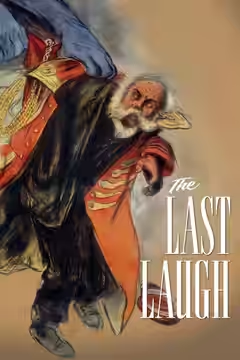
Ernst Kunstmann (1898–1995) was a German cinematographer and special effects technician. Born in Potsdam-Babelsberg, he began working in film after the First World War and collaborated with Eugen Schüfftan on the development of the Schüfftan process, a mirror-based compositing technique first prominently used in Varieté (1925) and Metropolis (1927). He contributed special effects to numerous silent-era productions, including The Last Laugh (1924) and Destiny (1921).
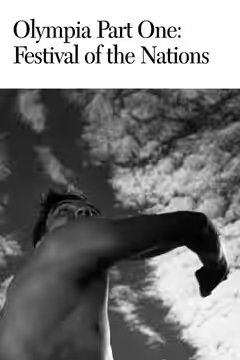
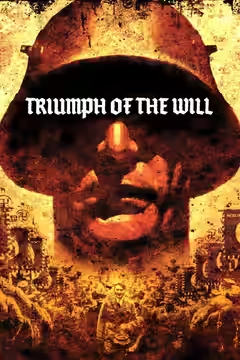
In the 1930s Kunstmann worked on optical effects for films such as The Testament of Dr. Mabuse (1933), Gold (1934) and Triumph of the Will (1935). He served as one of the uncredited cinematographers on Leni Riefenstahl’s Olympia Part One: Festival of the Nations (1938) and Olympia Part Two: Festival of Beauty (1938). After the war he headed the special effects department at DEFA in East Germany until 1963, contributing to nearly one hundred productions including The Singing Ringing Tree (1957).