Leni Riefenstahl makes athletic effort absorbing, but the ceremony surrounding it demands a wary eye. This is a skilful sports documentary whose admiration for bodies and national display can become wearing as well as troubling.
Leni Riefenstahl’s Olympia Part One: Festival of the Nations is worth watching, provided an evening of sport is not all we expect from it. The film takes athletic skill seriously enough to make sustained attention rewarding. It also presents the competitors in company that makes easy admiration difficult. Jack Beresford carries the British flag; IOC official Henri de Baillet-Latour stands with Hitler. The sporting and ceremonial sides of the occasion both deserve scrutiny.
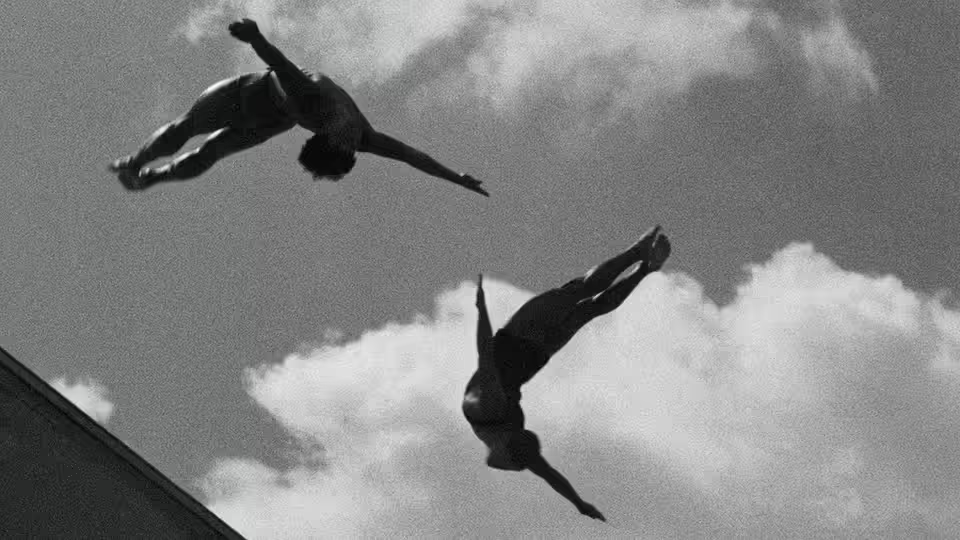
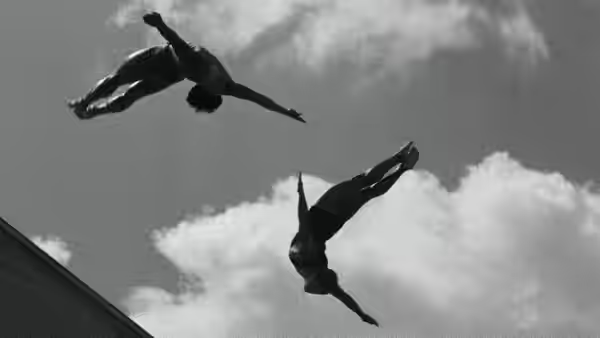
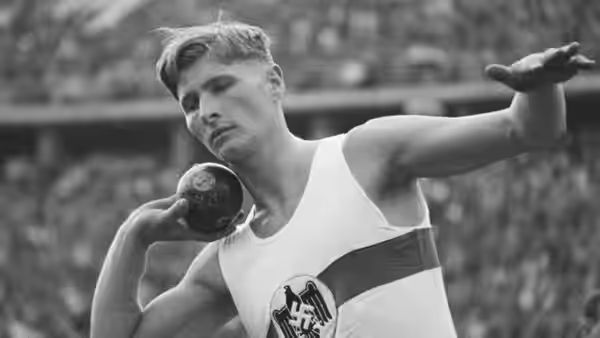
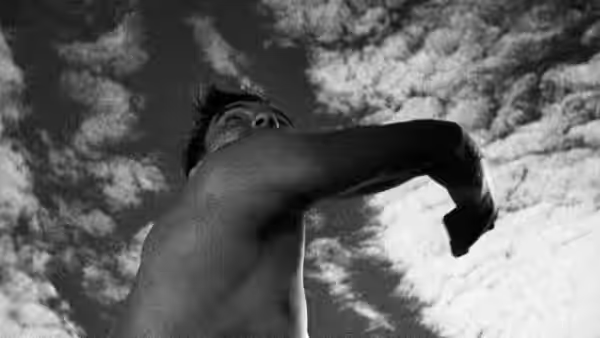
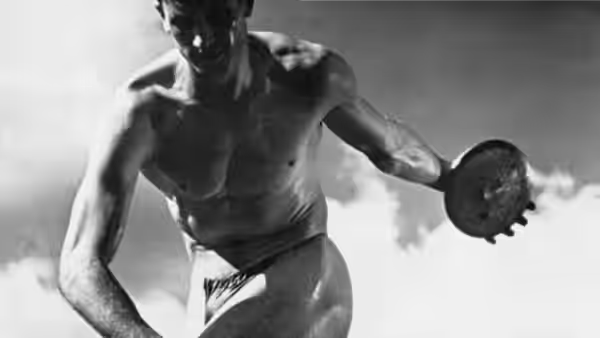
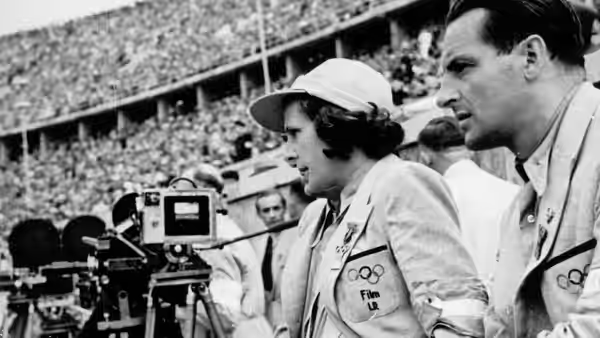
The cinematography, credited to a team including Hans Ertl, Walter Frentz and Guzzi Lantschner, is the strongest reason to see it. Its attention to physical form works because these bodies have demanding things to do. David Albritton’s high jump and Arvo Askola’s 10,000 metres ask us to consider different kinds of effort. We were absorbed by the high jump: getting a body over a bar is a clear enough problem to make explanation unnecessary. The film is persuasive when it allows that skill to hold our attention.
Leni Riefenstahl also edits, and the pacing is less consistently successful. At 127 minutes, the film gives its admiration more time than it needs. The emphasis on event and country can leave us wanting more sense of the people competing, particularly when the ceremonial importance begins to feel overinsistent. A sports documentary need not provide a private sorrow for every participant. Even so, more room for ordinary human awkwardness would make the reverence easier to bear.
Herbert Windt and Walter Gronostay receive the music credits, and the music adds a solemnity that is sometimes oppressive. Athletic effort does not need quite so much ceremonial accompaniment to command respect. The national display has a similar effect: carrying a flag gives an individual an additional, public responsibility. That connection is there in Jack Beresford’s participation. The film seems too comfortable with the assumption that representing a country deserves reverence in itself.
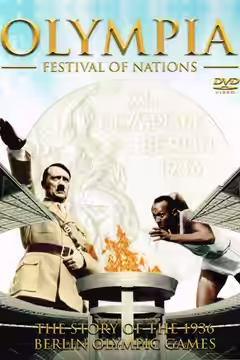
We felt uneasy seeing Henri de Baillet-Latour alongside Hitler, because that official company changes the meaning of the celebration. Wilhelm Frick also appears as a spectator. The athletes’ achievements remain theirs, but admiration can extend towards the occasion and the officials attending it. That needs to be considered alongside the photography. Enjoying the competition should not require us to accept everyone assembled around it as equally deserving of attention or respect.
Showing a political figure does not by itself amount to approval; a documentary can scarcely pretend its guests were absent. The problem here is the film’s fondness for public grandeur, which gives those guests an impressive setting without asking anything of them. A sports documentary capable of making physical effort so absorbing could afford to be less deferential elsewhere. We recommend it to viewers interested in how sport is filmed, with time afterwards to discuss what the ceremony is doing. For uncomplicated sporting pleasure, choose something else.