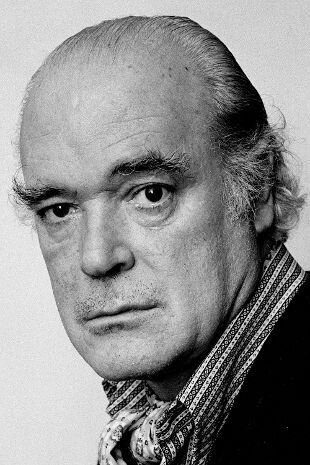
Patrick Magee's cracked Irish voice is unsettling before the words have quite registered. We value the strain audible beneath his authority, with a caveat for films that expect the sound alone to supply a character.
Fi1m perspective
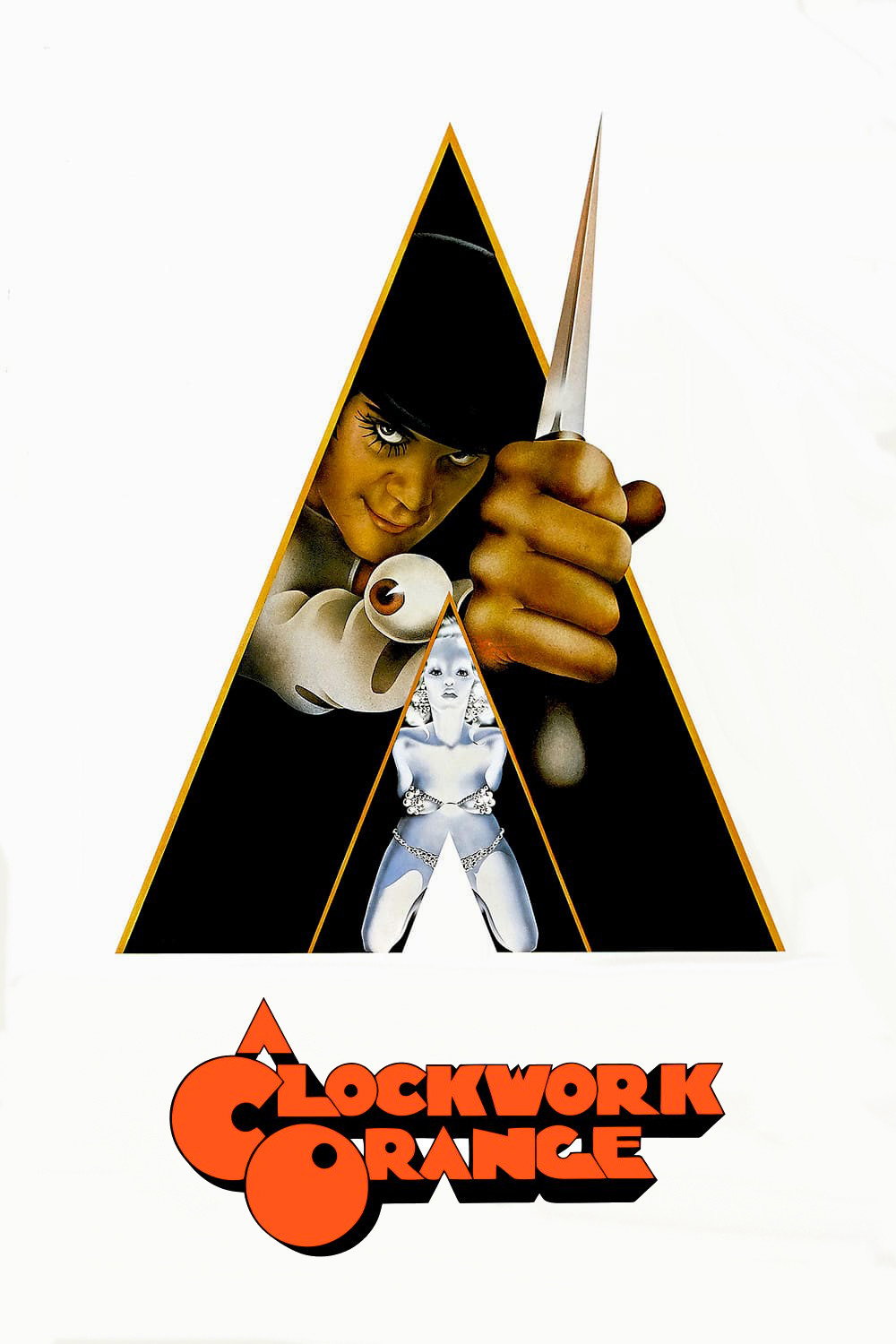
Patrick Magee's gravelly voice makes speaking sound like an effort, even when he is being authoritative. We hear vulnerability in that roughness, which gives the menace something human. In Stanley Kubrick's A Clockwork Orange (1971), he plays the writer Mr Alexander, a useful starting point for an actor frequently cast as threatening or imposing figures. His voice is distinctive enough to hold our attention by itself; the question is how much a film asks us to understand the person using it.
His work with Samuel Beckett offers a clue to why that sound mattered. Beckett wrote Krapp's Last Tape (1958) for him after hearing his radio performances, giving the voice words written specifically for it. Film roles began in 1960, but theatre remained central: Magee originated the Marquis de Sade in Marat/Sade in 1965 and reprised the part in the 1967 film. His McCann in The Birthday Party (1968), adapted from Harold Pinter's play, continued that close connection with theatre. These parts give us good reason to look beyond the horror films in which he frequently appeared.
A Clockwork Orange also requires a distinction between valuing an actor and endorsing everything the film does with its cast. We were unsettled by Malcolm McDowell's Alex, whose appalling charm makes him easy company while the people he hurts receive too little attention. Kubrick's treatment of sexual violence is a particular weakness, and a forceful supporting performance cannot repair that. We find the film gripping and worth the discomfort, but its considerable acting talent does not excuse its neglect of those characters.
Kubrick cast Magee again as the Chevalier du Balibari in Barry Lyndon (1975), while horror remained a frequent part of his screen work. The risk with such recognisable qualities is that casting becomes a shortcut: employ the voice and assume the character will follow. We would be wary of judging Magee solely by how readily he could make someone sound threatening, especially given the writing that Beckett made expressly for him. Start with A Clockwork Orange, keeping its treatment of the victims in mind, then follow the connection to Beckett and Pinter.
Biography
Patrick Magee (born Patrick George McGee; 31 March 1922 – 14 August 1982) was a Northern Irish actor and theatre director. He began his professional career in Irish theatre companies before moving to London, where he worked with directors including Tyrone Guthrie.
Magee was noted for his collaborations with Samuel Beckett, for whom he recorded radio readings and who wrote Krapp's Last Tape (1958) specifically for him, and with Harold Pinter. He created the role of the Marquis de Sade in the original stage production of Marat/Sade (1965) and reprised it in the 1967 film, winning a Tony Award for the Broadway transfer.
On screen he appeared in Zulu (1964), The Servant (1963), The Masque of the Red Death (1964), A Clockwork Orange (1971) as Mr Alexander, Barry Lyndon (1975) as the Chevalier, Tales from the Crypt (1972), Asylum (1972) and Chariots of Fire (1981).