Film review

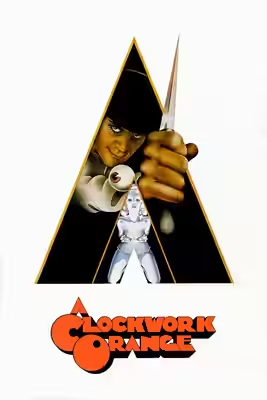
A Clockwork Orange

1971 · Directed by Stanley Kubrick · 2h 17m · 18

In a sentenceBeethoven deserves a better class of admirer

Science FictionCrime

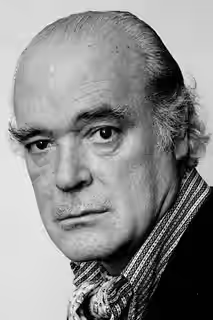
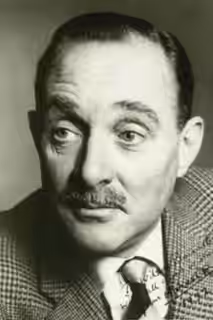
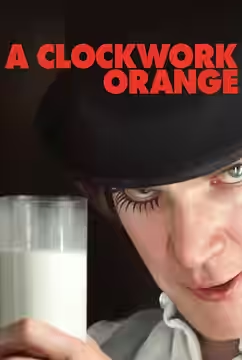
Alex (Malcolm McDowell) is a young man with a taste for Beethoven, rape and extreme violence. In this science-fiction crime story, his appetite for cruelty becomes part of a wider struggle over how a regulated society treats individual freedom. Stanley Kubrick adapts Anthony Burgess’s novel, placing Alex at the centre of questions about punishment, responsibility and the right to choose to do wrong. Patrick Magee plays Mr. Alexander, Carl Duering plays Dr. Brodsky and Michael Bates plays the Chief Guard.

Plays from YouTube when you press play; nothing loads from them until then.

Fi1m review

Stanley Kubrick’s A Clockwork Orange is gripping and worth the discomfort, with Malcolm McDowell making Alex appallingly good company. But it gives too little attention to the people he hurts, especially in its treatment of sexual violence.

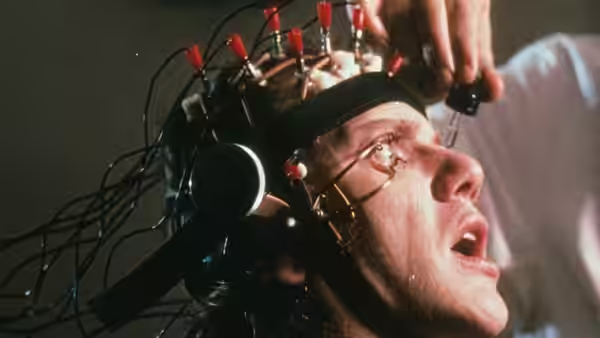
Stanley Kubrick’s A Clockwork Orange asks us to consider the freedom of a young man who uses his freedom to hurt people. It is a gripping, often repellent film, and we think it worth seeing despite a serious failure to give those people their due. Adapting Anthony Burgess’s novel, Kubrick makes Alex’s appeal essential to the problem. The question is how far we will let a charismatic performance take us. Malcolm McDowell takes us an uncomfortable distance.

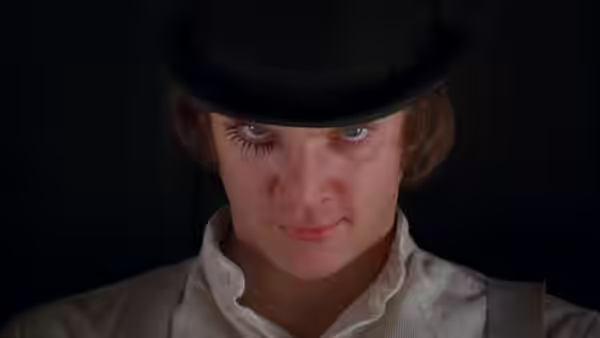
McDowell plays Alex with such pleasure in his own behaviour that the usual signs of screen villainy become unnecessary. We are watching someone enjoy himself, and the ease of the performance keeps drawing our attention back to him. We were sickened by the sexual violence, especially by the delight accompanying it. McDowell’s charm remains active even there, which makes the performance frightening and gives Kubrick a responsibility the film does not always meet.

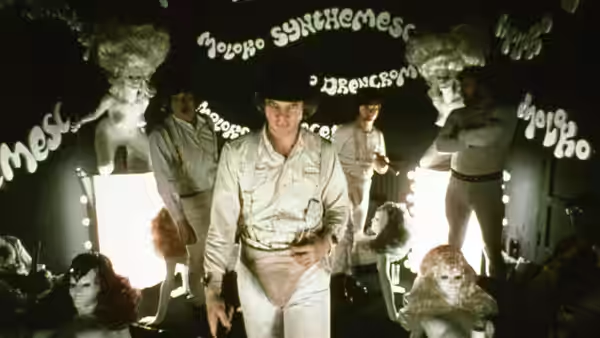
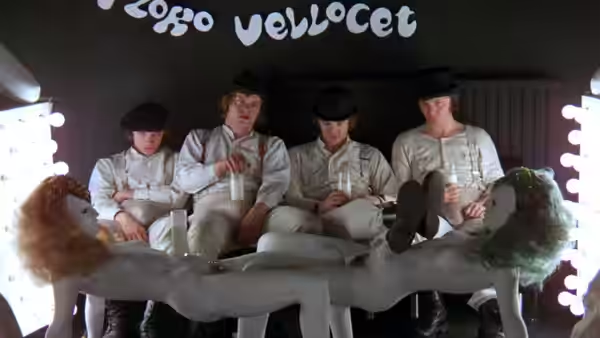
John Alcott’s cinematography makes the violence appallingly watchable. His ordered compositions give us time to inspect what is happening, and there is no reassuring visual mess to suggest that the film itself has lost control. We notice the care given to the framing even when the behaviour inside it is repulsive. Kubrick leaves us conscious of how carefully our attention has been directed.

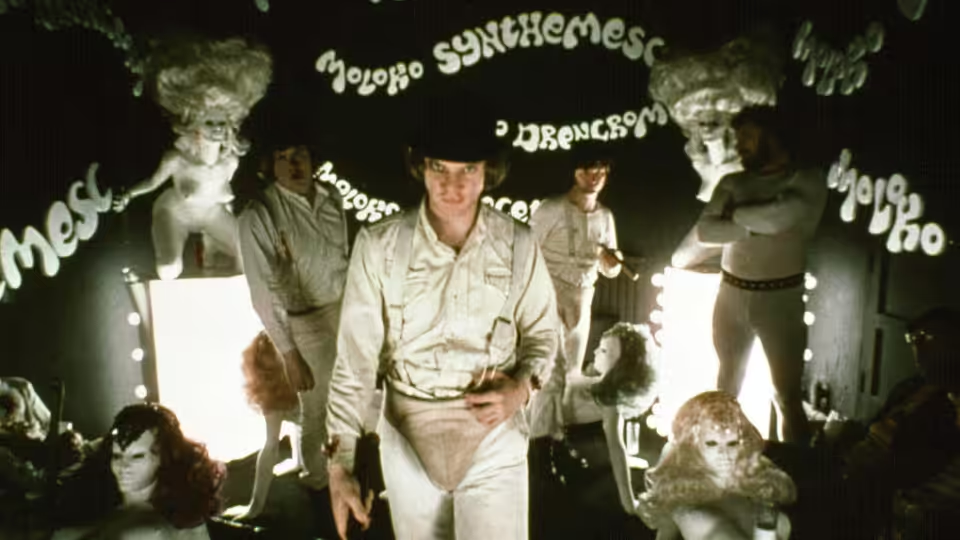
John Barry’s production design makes the surroundings feel as wilfully exaggerated as Alex himself. The places demand attention as insistently as the central performance, and that can be exhausting. It suits Kubrick’s picture of a society in which brutality and sophisticated behaviour are entirely compatible. But it also makes the people around Alex seem like further exhibits, with too little ordinary life to interrupt his hold on the film.

Wendy Carlos’s music helps make the close fit between sound and image unsettling. The musical timing gives the brutality a precision that makes it hard to watch without also noticing the skill involved. Alex’s enthusiasm for Beethoven matters here: enjoying music does nothing to restrain his cruelty. Kubrick does not invite us to mistake that enthusiasm for kindness, though the pleasure he takes in presenting Alex makes the distinction less clear than it ought to be.

Bill Butler’s editing keeps the pace measured enough for repulsion to become fascination. At 137 minutes, the film also gives us time to grow familiar with its provocations. We begin to recognise the repeated invitation to enjoy Alex and then examine that enjoyment, and the repetition weakens the effect. Some passages could be shorter without losing the difficulty of what Kubrick is asking us to consider.

The film meets a useful test for science fiction: its questions stay awkward once its strange society has become familiar. What should a society be allowed to do to prevent someone choosing badly? Kubrick chooses someone whose freedom we have little instinct to defend. McDowell keeps that question alive even when Alex’s behaviour seems to have settled it. Yet the people he hurts receive too little of the attention lavished on him.

Calling the film deliberately disturbing does not settle that objection. Kubrick has made the aggressor fascinating, and the imbalance deserves scrutiny even from those of us persuaded by the defence of free will. There is plenty here for company willing to disagree afterwards. Do not choose it for a relaxed evening, and take the sexual violence seriously before pressing play.

Critical consensus AI synthesised

4 of 6
Positive
3
Mixed
0
Negative
1
Slant Magazine
20 November 2007 · Jeremiah Kipp
85*

The critic views the film as Kubrick's finest masterwork, praising its refusal to judge Alex while forcing viewers to confront their own morality through the director's ironic, distancing aesthetic. McDowell's charismatic, gleeful performance as the ultra-violent protagonist is highlighted as central to the film's human and satirical power.

Read the full review →
The Guardian
13 January 1972
85*

The critic calls the film chilling and mesmeric, predicting it could become one of the seminal movies of the seventies through its density of quality and imaginative use of cinema's first principles. They single out the technical symmetry of sight and sound, along with strong performances especially from Malcolm McDowell as Alex.

Read the full review →
The New Yorker
25 December 1971 · Pauline Kael
40*

Kubrick's film is literal-minded in its sex and brutality and Teutonic in its humor, the work of a strict professor making a pornoviolent sci-fi comedy that turns the novel's meanings around. By making victims more repulsive than the thugs, Kubrick has learned to love the punk sadist and puts the audience on Alex's side.

Read the full review →
The New York Times
9 January 1972 · Vincent Canby

Kubrick's film is a brilliant and dangerous work, an almost perfect example of the disorienting New Movie that remains aloof from the matters it depicts. It fashions the rise and fall of Alex as the most elegantly stylized and classically balanced movie Kubrick has ever made.

Read the full review →
Variety
15 December 1971 · Murf.

Kubrick's film is a brilliant nightmare that runs contemporary social syndromes through a cinematic centrifuge to produce comic horrors of a regulated society. It makes an opaque argument for preserving respect for man's free will, even to do wrong, using vulgarity, brutality and sophisticated comedy.

Read the full review →
Den of Geek
14 June 2011 · Matt Edwards
90*

The critic calls the film one of the best ever made and says hardly any element falls short, praising its visually striking quality from the opening and Malcolm McDowell's magnificent central performance that makes the character compelling despite his actions.

Read the full review →

Cast

Stills

Awards

Academy Awards, 1972

Nominated
Best Film Editing
Nominated
Best Picture

Hugo Awards, 1972

Won
Best Dramatic Presentation

If you liked this, try…

If.... poster82

If....

1968 · Malcolm McDowell supplies another troubling rebel, with British institutions firmly in view.

The Conformist poster

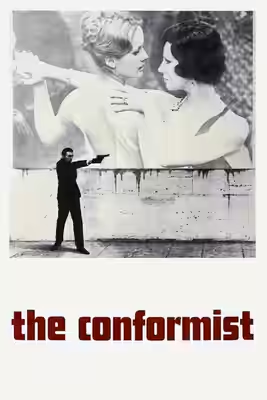
The Conformist

1970 · Political conformity becomes a matter of posture, rooms and carefully managed appearances.

Funny Games poster

Funny Games

1997 · Another director makes watching violence uncomfortable, while denying the aggressors much seductive charm.

RoboCop poster

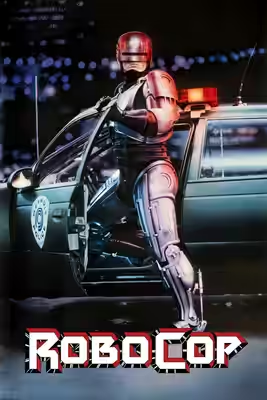
RoboCop

1987 · Corporate control and bodily autonomy get a sharper, bloodier satirical treatment.

Battle Royale poster

Battle Royale

2000 · Young people and organised cruelty meet in a harsher test of social obedience.