Roy Ward Baker's habit was to shut people in somewhere and watch how they behaved: a ship going down, a pit with something at the bottom of it. He never asked for a signature style, and the films are better for it.
Fi1m perspective
When a Roy Ward Baker film is at its most frightening, the camera is usually behaving as if it were giving evidence. He shoots a disaster the way a documentary would, one detail after another in a level voice, and leaves the fear to the people in the frame, who have less time than they think. Ships, pits, rooms nobody can leave: that is where his reputation rests, and it rests there fairly. A Night to Remember (1958) is still the account of the Titanic that other films are measured against, and it gets there by patience rather than spectacle.
He came up as an assistant at Gainsborough, working under Hitchcock on The Lady Vanishes (1938), and the apprenticeship shows: he learned to build a sequence before he learned to sign one. His debut, The October Man (1947), is a tight psychological thriller, and Morning Departure (1950), another study of people shut in together, did well enough to earn him a spell in Hollywood, where he directed Marilyn Monroe in a straight dramatic part in Don't Bother to Knock (1952). He came back to Rank for A Night to Remember, then spent much of the 1960s in television, including The Avengers (1961), before turning in 1967 to Hammer and Amicus with Quatermass and the Pit (1967), The Vampire Lovers (1970) and Asylum (1972). He kept working in television until he retired in 1992.
The complaint, made often, is that there is no Baker style, and it is true in the sense the critics meant. He worked with Eric Ambler as writer and producer three times and with John Mills four, and in each case you notice the writer and the actor before you notice the director. Our own review of The Avengers, which we scored 83, praises Macnee and Rigg and the partnerships and does not mention him at all, and we do not think that is a slight. He was a director who got out of the way of good material and held it steady for as long as it needed holding.
We have watched the ship go down in A Night to Remember more often than we can account for, knowing exactly what is coming, and every time we have found ourselves worried for people whose names we never caught, because Baker films them doing their jobs rather than being brave. That is the documentary habit paying off as feeling. When he added the Ward to his name in 1967 he said, "I didn’t stop to think that the reputation I had held in films five years ago would now go for nothing." It did not go for nothing. It went into the Hammer films, which are steadier and more carefully made than anyone was asking for.
Biography
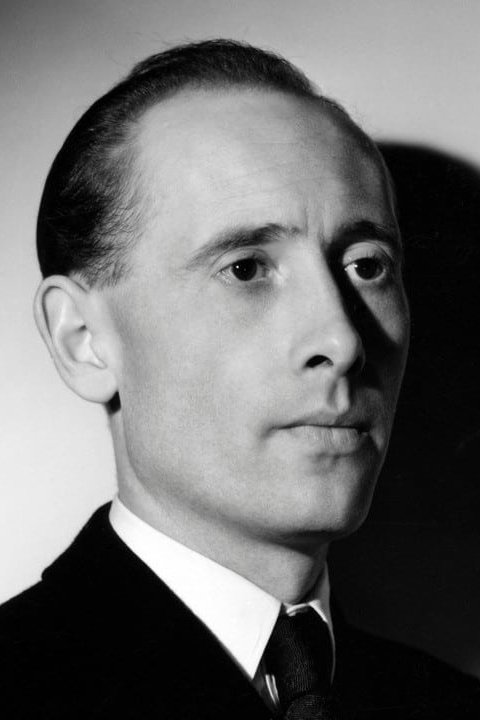
Roy Ward Baker (also credited as Roy Baker) was an English film director. Born in London on 19 December 1916, he died there on 5 October 2010. He directed episodes of the television series The Avengers in the 1960s.
Baker began his career in the 1930s at Gainsborough Pictures, working as an assistant director on Alfred Hitchcock's The Lady Vanishes (1938). After service in the Second World War, he made his directorial debut with The October Man (1947). His best-known film is the Titanic drama A Night to Remember (1958). In the early 1950s he worked in Hollywood, directing Don't Bother to Knock (1952).
From the late 1960s Baker directed several horror films, including Quatermass and the Pit (1967), The Vampire Lovers (1970), Scars of Dracula (1970), Asylum (1972) and The Vault of Horror (1973). He also directed episodes of series such as The Saint and The Champions.