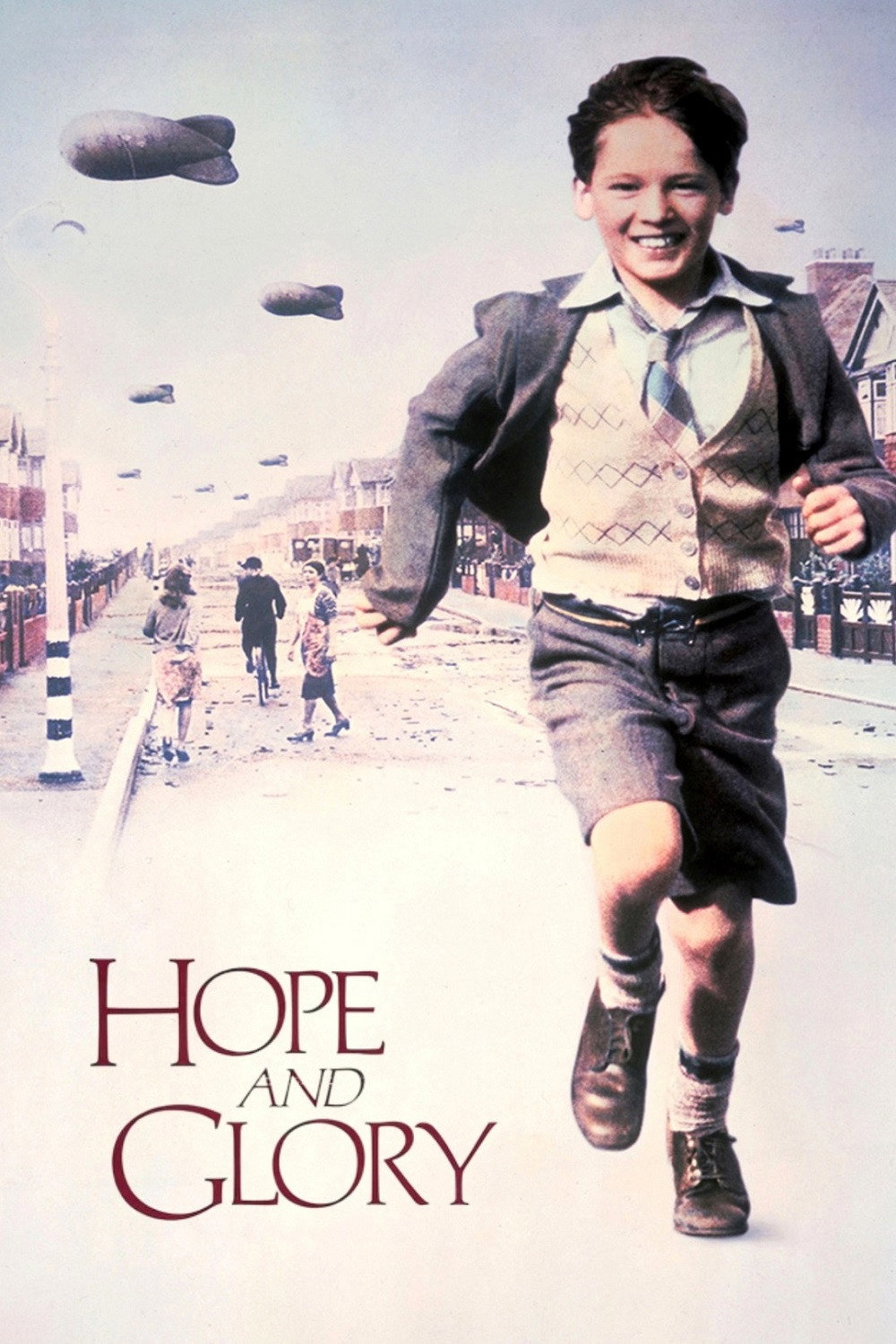
Sammi Davis gives spirited young women a vulnerability that keeps their defiance believable. We value her most in Hope and Glory, where her presence helps a fond account of childhood take the rest of the family seriously.
Fi1m perspective
In Hope and Glory (1987), Sammi Davis's Dawn keeps us interested in the family beyond the boy and his adventures. John Boorman is fond enough of this household to make its troubles look more manageable than they are. Davis helps keep that fondness from settling everything too comfortably. We warmed to Dawn because she gave us someone else to care about when the boy's pleasure in wartime disruption might otherwise have taken all our attention.
Davis's early British work drew on a convincing mixture of vulnerability and spirit, with little apparent strain in getting either across. Her film debut, as May in Neil Jordan's Mona Lisa (1986), belongs to a film carried chiefly by Bob Hoskins and Cathy Tyson's uneasy attachment. The later thriller business is less convincing, but that relationship makes it worth the trouble. For a clearer sense of Davis's own contribution, we would return to Dawn, alongside Sarah Miles's tired, resilient Grace in Hope and Glory.
Ken Russell's The Rainbow (1989), adapted from D. H. Lawrence, gave her the lead as Ursula Brangwen. She worked with Russell twice, an association that took her into period and gothic material. American television then brought another lead, Caroline Hailey in Homefront (1991–1993). Her later screen appearances became sporadic, and her reputation remains concentrated in that short stretch of British films and American television.
We would not make grand claims for every one of those parts on the strength of a few persuasive scenes. What we value is Davis's natural presence, particularly when a film needs us to care about people outside the central story without stopping to make a special case for them. Even then, she cannot entirely undo the softening effect of Boorman's nostalgia. Start with Hope and Glory, allowing for its nostalgia, and give the family as much attention as the children.
Biography
Sammi Davis is a British actress. She was born Samantha Davis on 21 June 1964 in Kidderminster, Worcestershire, England.
Davis made her screen debut in 1986 as May, a teenage prostitute, in Neil Jordan's Mona Lisa. She followed this with the role of Dawn in John Boorman's Hope and Glory (1987) and appeared as Anna in Mike Hodges' A Prayer for the Dying (1987). She gained praise for her performance as Ursula Brangwen in Ken Russell's The Rainbow (1989) and played Mary Trent in his The Lair of the White Worm (1988).
Davis had a leading role as Caroline Hailey in the American television series Homefront (1991–1993). She later appeared in Four Rooms (1995) and had a cameo in the series Lost (2006). She was married to director Kurt Voss from 1990 to 1993.