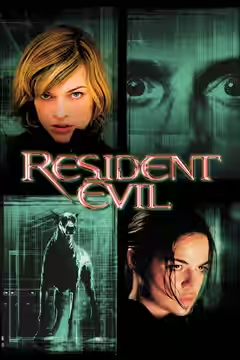
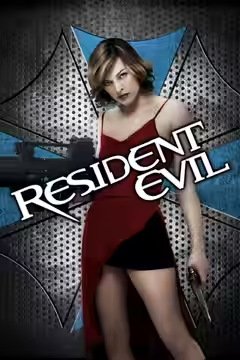
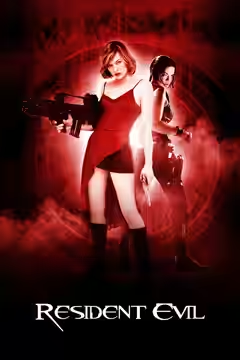
Paul W. S. Anderson turns a haunted-house video game into a hundred minutes of soldiers walking down corridors. One corridor is superb, Jovovich and Rodriguez are better than their lines, and the zombies are the least frightening thing in the building.
Paul W. S. Anderson wrote, directed and produced this adaptation of Capcom’s video game. The game was a haunted house: a mansion, a few survivors, slow dead things behind locked doors. Anderson keeps the mansion for ten minutes and then sends a squad of soldiers into an underground laboratory called the Hive, where the Umbrella Corporation has been making a virus and the computer has killed everyone to keep it in. It is closer to Aliens than to anything in the game, and it is competent, quick and, apart from one sequence, not frightening at all.
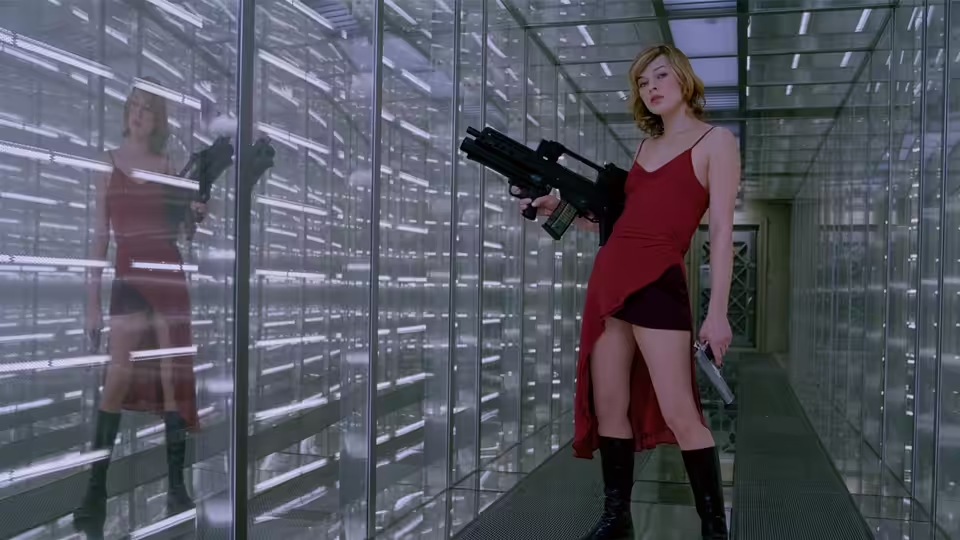
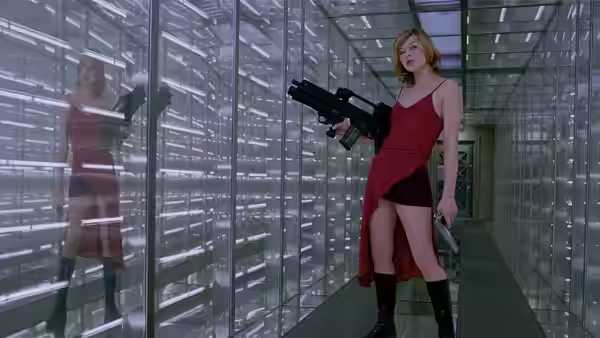
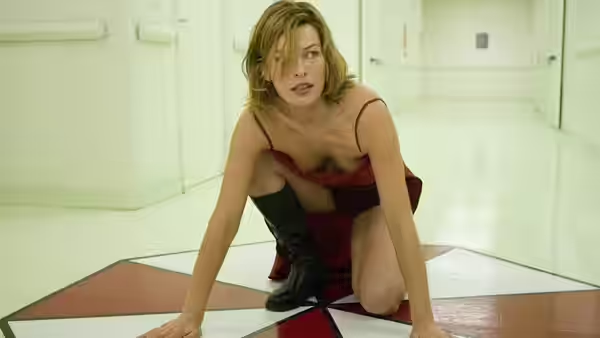
The opening is the best stretch of ordinary filmmaking here. Alice (Milla Jovovich) comes round on a shower floor in a red dress with no idea who she is, and David Johnson follows her through an enormous, empty house in cool grey light, letting her open doors we would rather she left shut. When the team comes through the windows the film changes gear. Richard Bridgland’s laboratory is steel, glass and blue fluorescent tubes, with flooded rooms and passages that seem to run for a mile, and it looks like somewhere people worked.
Then there is the corridor. The Red Queen, the computer that runs the place and appears as a small girl, defends her control room with a laser that sweeps the passage at ankle height, then chest height, then in a pattern. Alexander Berner cuts it slowly and lets us see the beam coming before anyone does. We sat up. It is the one moment when we did not know what would happen next and were afraid of it, and what the laser does to the people in the corridor we will leave to the film. It is a good idea, cleanly staged, and over quickly.
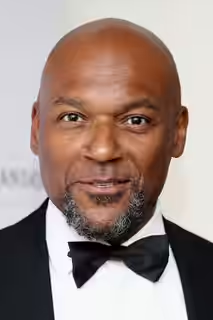
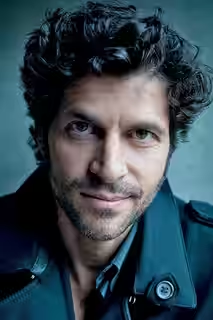
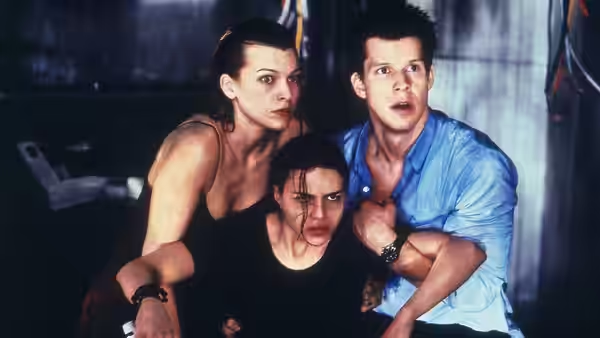
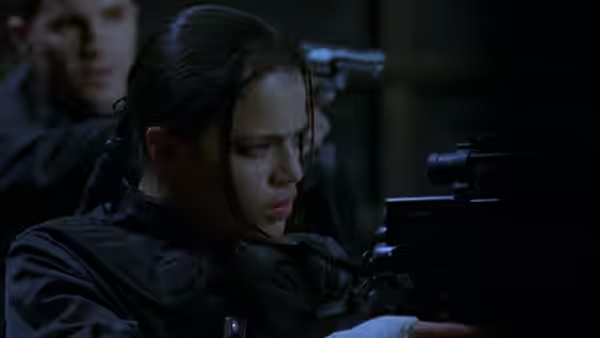
The performers are better than the lines. Jovovich says almost nothing for the first quarter of an hour; she plays the amnesia as wariness, and when the film lets her fight she moves like someone who has done it before. Michelle Rodriguez’s Rain gets the swearing and the bites and is the only person who seems to find the situation as stupid as we do. Colin Salmon’s One is calm, exact and plainly in charge. Eric Mabius’s Matt is there to ask questions, and James Purefoy’s Spence has a secret, about which the script is not subtle.
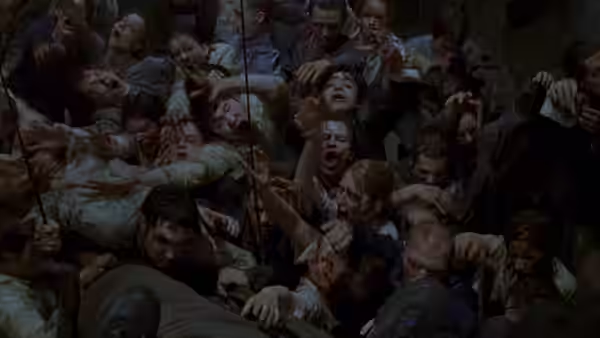
Once the dead arrive, the film stops trying to scare us and starts trying to keep up. Anderson lights them flat under the strip lights and Berner cuts them fast, so we never get a long look at a face, and they come in waves, like a level. Marco Beltrami and Marilyn Manson’s score is a low industrial grind of synth and clanking metal that ruins the shocks: it rises every time something is about to happen, so nothing ever does. We were bored through the middle forty minutes. Nobody in this film is ever alone. The game’s fear was a locked door with only you on the wrong side; here there is a squad with rifles, and a rifle makes a zombie a target rather than a threat.
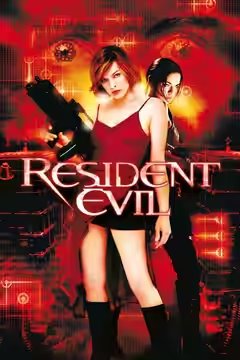
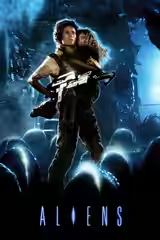
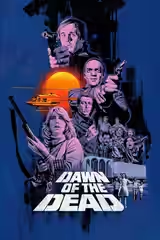
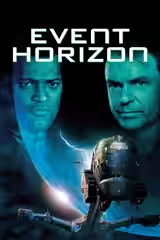
Anderson has done this better. Event Horizon, from 1997, put a small crew inside a place that had gone wrong and let the place do the work. Here he has a bigger set and less patience. Against the Romero pictures it borrows from, chiefly Dawn of the Dead, it is faster and has nothing on its mind. Against Aliens, which it copies in outline, it lacks people we minded losing. Bridgland’s costumes tell you the problem in a glance: Rain’s black kit and Alice’s red dress are the two outfits you remember, and they belong to the two people the film bothers to write.
It runs 100 minutes, which is about right for what it has, and the 15 certificate is earned by the corridor and a few bites. Most critics have landed within a few points of us, split between those who enjoyed the pace and those who missed the fear. Watch it with the lights off, if you want to give the zombies a chance. They need the help.