Auf Wiedersehen, Pet is a funny, warm comedy-drama about men who need wages more than adventure. Its ensemble makes the cramped company a pleasure, though some of the sexual and national stereotyping is hard work.
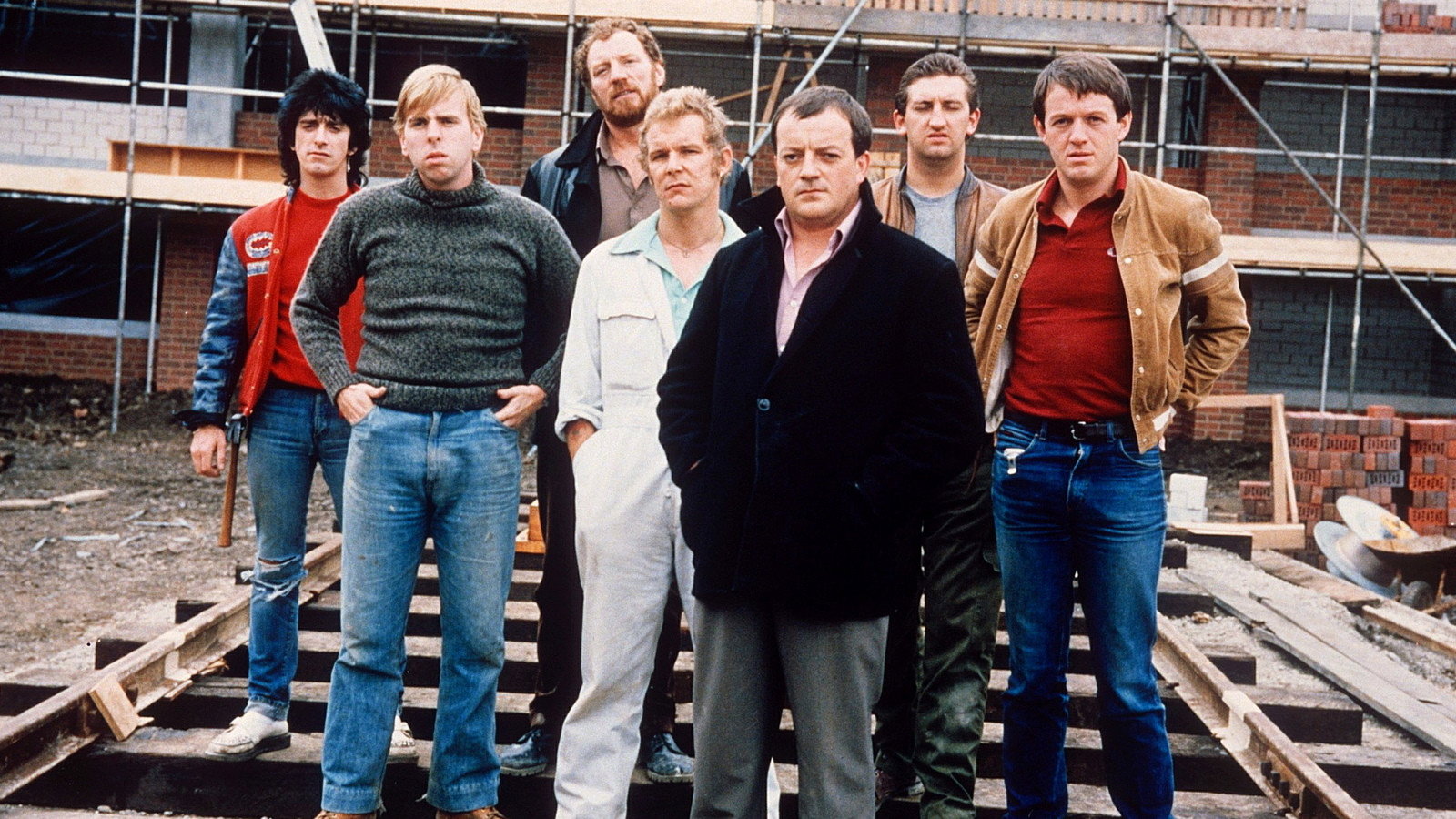
The original series of Auf Wiedersehen, Pet understands that going abroad for work is not much of an adventure when the alternative is having no work at all. Created by Franc Roddam and written by Dick Clement and Ian La Frenais, it finds its comedy in the daily business of getting along with people under those conditions. It is warm, funny and unusually patient with men who can be difficult company. The strongest reason to watch is the cast, though some of the jokes about women and foreigners have worn badly.
The building-site hut in Düsseldorf does a great deal of useful work. These men cannot finish an argument and retreat to a comfortable home; they have to keep sharing the same cramped accommodation. The writing gives them different ways of coping with that, so the quarrels come from more than a need to fill the next scene. The shortage of privacy makes the endless talking both understandable and occasionally exhausting, and the programme allows us to feel both.
Tim Healy gives Dennis Patterson the weary authority of someone who would prefer not to be in charge. Kevin Whately makes Neville Hope’s homesickness awkward and credible, without asking for sympathy each time he looks unhappy. We were more touched by Neville’s longing for home than we expected. Among the noisy exchanges in the hut, his difficulty settling becomes something the jokes cannot quite dismiss. Jimmy Nail, meanwhile, makes Leonard ‘Oz’ Osborne’s belligerence funny without making him easy to spend time with.
Timothy Spall’s Barry Taylor is funny because he talks as though a little more explanation might finally make everyone understand him. Gary Holton gives Wayne Norris a restless self-confidence, while Pat Roach makes Brian ‘Bomber’ Busbridge a reassuring presence without turning him into the group’s appointed saint. Christopher Fairbank’s Albert Moxey supplies another kind of awkwardness, distinct from Neville’s unhappiness or Barry’s earnestness. These are recognisable comic types, but the actors listen and react to one another closely enough to keep them from becoming merely predictable.
Directors Roger Bamford and Paul Seed generally know how much to leave to those performances. Conversations have enough room for an interruption or a stubborn pause to matter, rather than being hurried towards the next laugh. At 50 minutes an episode, the programme can let somebody be irritating for longer than a shorter comedy would risk. That patience helps the friendships feel credible, although it occasionally keeps an exchange going after we have understood everything it has to offer.
The difficulty is the material that expects recognition to do the work of a joke. Women can be reduced to a man’s complaint or boast, and the German setting sometimes encourages broad national caricatures where the writing elsewhere distinguishes individuals carefully. Occasionally a joke seems to expect us to share a man’s prejudice, which is where our goodwill runs out. Those moments are noticeable because so much care has gone into making the central group particular, contradictory people.
By the standards of ensemble comedy, the willingness to let these men be tiresome is an advantage. Their friendships are more convincing because we can understand why they might prefer to avoid one another. The quiet stretches give the cast opportunities that a constant demand for punchlines would take away. Start with the original series, and bring a little patience for the jokes the actors cannot rescue.