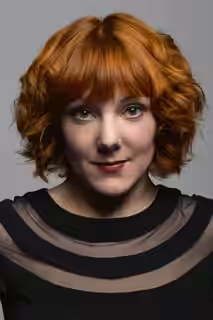
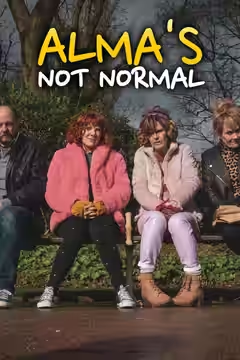
Sophie Willan’s comedy about a Bolton woman with no job, no qualifications and a mother on a psychiatric ward is the rare series that is as funny as it is sad. A few episodes tie up too neatly; the performances never do.
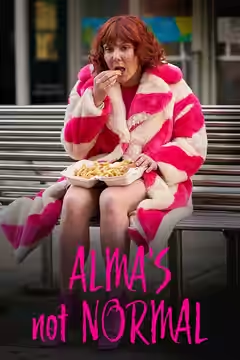
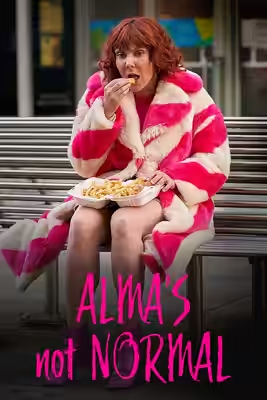
Sophie Willan writes Alma’s Not Normal and plays Alma, a woman in Bolton who wants to be an actress and has nothing she could put on a form to support the idea. Her mother is an addict, her grandmother raised her between fag breaks, and she grew up partly in care. Willan’s bet is that all of this can be the stuff of a half-hour comedy without the comedy being at anyone’s expense, and that the jokes should come from the people rather than from the writer standing behind them. Six episodes of 29 minutes, first shown in 2020; a second series of six followed in 2024.
The bet pays out, and our verdict is a warm one. The reason it works is that nobody in it is pitied. Alma is vain, broke and a liar when it suits her, and she is also the most alive person on screen. Joan swears at the television, at the doctors and at Alma, and loves her granddaughter in a way the series never once has to announce. The humour is the humour of people who have had a bad time and decided to be entertaining about it, which is a different thing from a sitcom about poverty.
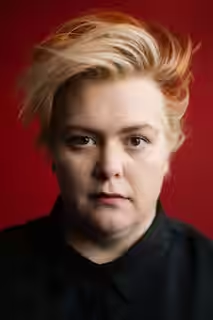
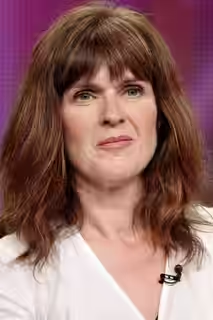
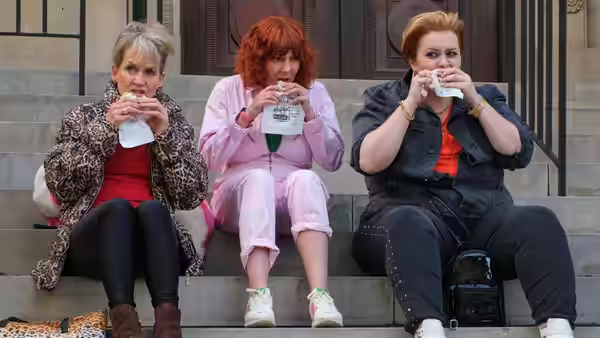
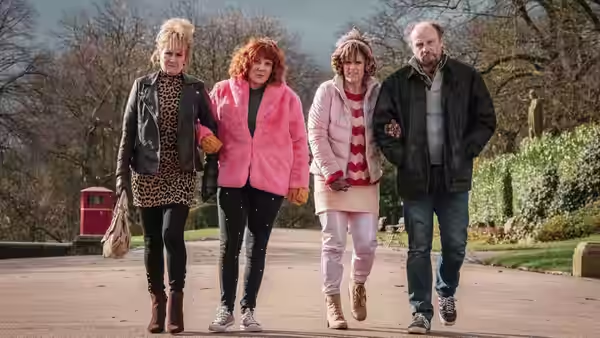
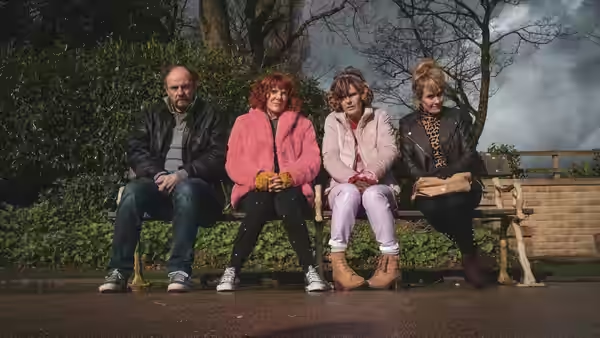
Siobhan Finneran’s Lin is where the series stops being merely good. She plays a woman who has been ill for most of her adult life as somebody still there, still quick, still able to wound and be wounded. There is a scene on the ward, early on, where Alma tries to keep things light and Lin will not let her, and we were caught off guard by how much it hurt: Finneran does nothing with her face and everything with the pauses. Lorraine Ashbourne’s Joan is the opposite, all noise and cardigan and bad advice, and the two of them together make the family feel like one that has existed for forty years. Jayde Adams’s Leanne is quieter and looks, at first, like a sidekick; by the end of the series she has earned her own trouble and her own laughs.
Andrew Chaplin directs plainly, which is the right call. He shoots Bolton as it is, in flat daylight on real streets, and lets the longer conversations run without cutting away to tell us when to laugh. There is no music nudging us toward the sad bits. Gill Isles produces, and the whole thing has the feel of a programme made for little money by people who knew what the money was for.
It has faults, and they are worth naming. Several episodes tidy themselves up in the last five minutes with a reconciliation that the previous twenty-four did not quite build. Alma’s acting ambition, which is supposed to be the engine, goes missing for stretches while the escort work and the family take over, and we sometimes forgot what she was meant to want. James Baxter’s Anthony is a thin part, there to be left. And the swing from a joke to something awful and back inside one scene, which is the series’ signature, occasionally feels like the jokes are covering for the writer as well as for Alma.
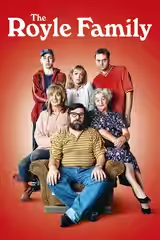
Against the British comedies it will be compared to, it sits well. It is closer to The Royle Family than to Shameless: the characters are poor and the poverty is never the punchline. Where it goes further than either is in putting mental illness at the centre and refusing to make it either tragic or cute. Lin is not a lesson. She is Alma’s mum.
Watch it in order, because the family only makes sense once you have seen each of them lose an argument. Six episodes is an evening and a half, and we would give it both.