Sally Wainwright’s family comedy has a first-rate idea, a cast that plays it straight, and in Amanda Redman a liar we are glad to be in on. The later series run out of secret and reach for incident instead, but the first two are a pleasure.
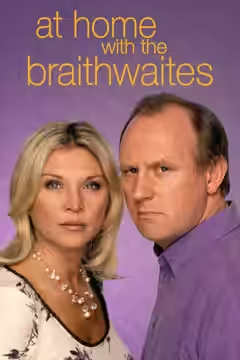
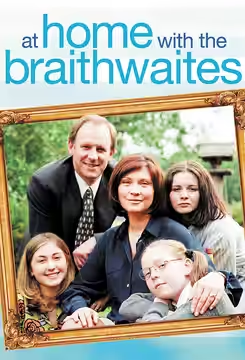
The idea is a good one and Sally Wainwright knows exactly how good. A wife and mother wins a fortune and, looking round the breakfast table at the people she would be sharing it with, decides not to mention it. At Home with the Braithwaites ran on ITV for four series between 2000 and 2003, twenty-six episodes of forty-eight minutes, and the question underneath every one of them is the same: will Alison tell them, and what will the money do to them if she does. It is a comedy about a family, and a drama about whether that family deserves her.
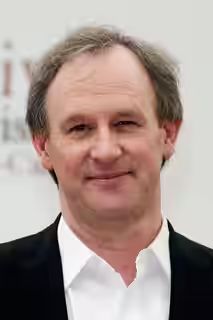
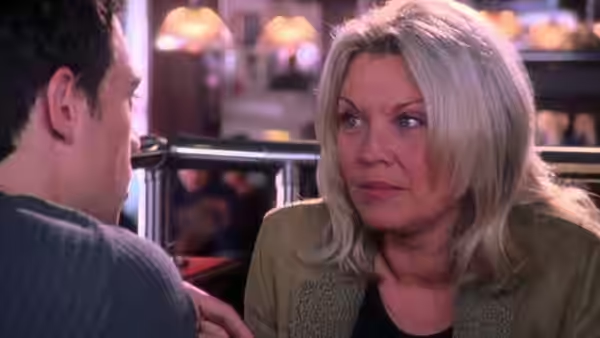
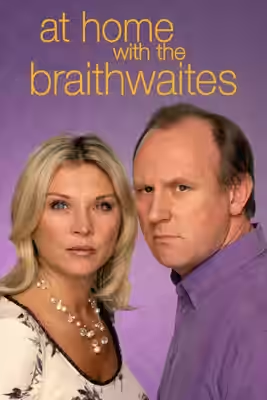
Amanda Redman plays Alison with a face that is doing two things at once, and she lets us see both. In the kitchen she is harried and pleasant and slightly dim, because that is what the Braithwaites expect of her; alone in the car she is sharp, frightened and rather enjoying herself. The laughs come from the gap between what the family think they know and what we know, and Redman never winks at us across it. Peter Davison’s David is a man of small vanities who thinks his affair with Elaine Fishwick (Judy Holt) is a secret, which is funnier because he is married to the one person in the house who actually can keep one.
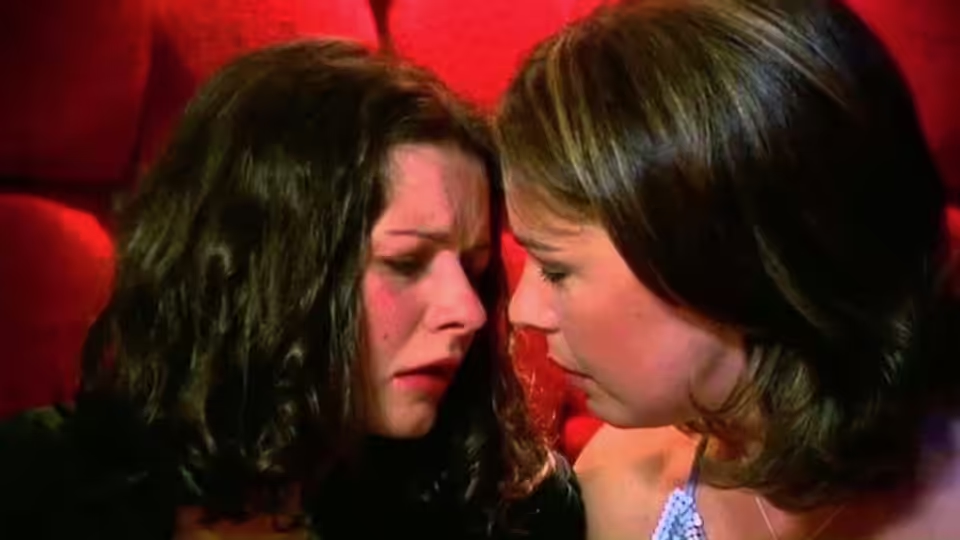
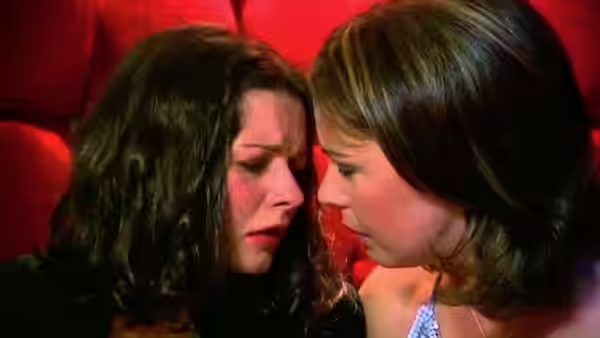
The daughters are where the show finds its heart and, later, loses its footing. Sarah Smart’s Virginia is in love with Megan Hartnoll (Julie Graham) next door and Wainwright writes it as a crush rather than an issue, which in 2000 on ITV was rarer than it should have been. Smart plays the longing in looks and in the way she finds reasons to be in Megan’s garden, and Graham gives Megan a woman’s uncertainty rather than a plot’s convenience. It moved us more than we expected a comedy about a lottery win to manage, and it did so because nobody on screen made a speech about it. Kevin Doyle’s Mike, Megan’s husband and a teacher at the local school, is the quiet best thing in the cast: decent, baffled, and slowly working out that he is the only one not in on something.
It is plain television to look at, and that is not a complaint. Eight directors share the run, from Dan Zeff onwards, and none of them tries to make the kitchen into anything but a kitchen. Paul Laugier’s house is the point: pine, beige, a hall table covered in post, a home that looks exactly as much as David earns, so that every new thing Alison buys has to be explained. Sue Hallas dresses Alison a shade too carefully for a woman who is supposed to be at work in an office, and watching for the moment somebody notices is one of the series’ small running pleasures.
The trouble is arithmetic. A secret can carry six episodes, perhaps fourteen; it cannot carry twenty-six, and once the writers, Wainwright with Katie Baxendale and Jonathan Harvey, have spent it, they go looking for replacements. Sarah Churm’s Sarah inherits most of the soap plotting, and Churm does her best with storylines that arrive by the week and leave the same way. By the fourth series the show is staging a wedding that runs long and tips into farce, with everyone shouting in a marquee, and we found ourselves wishing for the earlier version in which the loudest thing was Alison deciding not to say something.
Wainwright went on to write Last Tango in Halifax and Happy Valley, and the Braithwaites are the prototype: Yorkshire women who are right about everything and too tired to say so. This is lighter than either and less controlled, and it has a kindness about ordinary selfishness the later work sometimes trades for steel. Start with the first series, which is the one worth your evening, and stop when the wedding invitations go out.