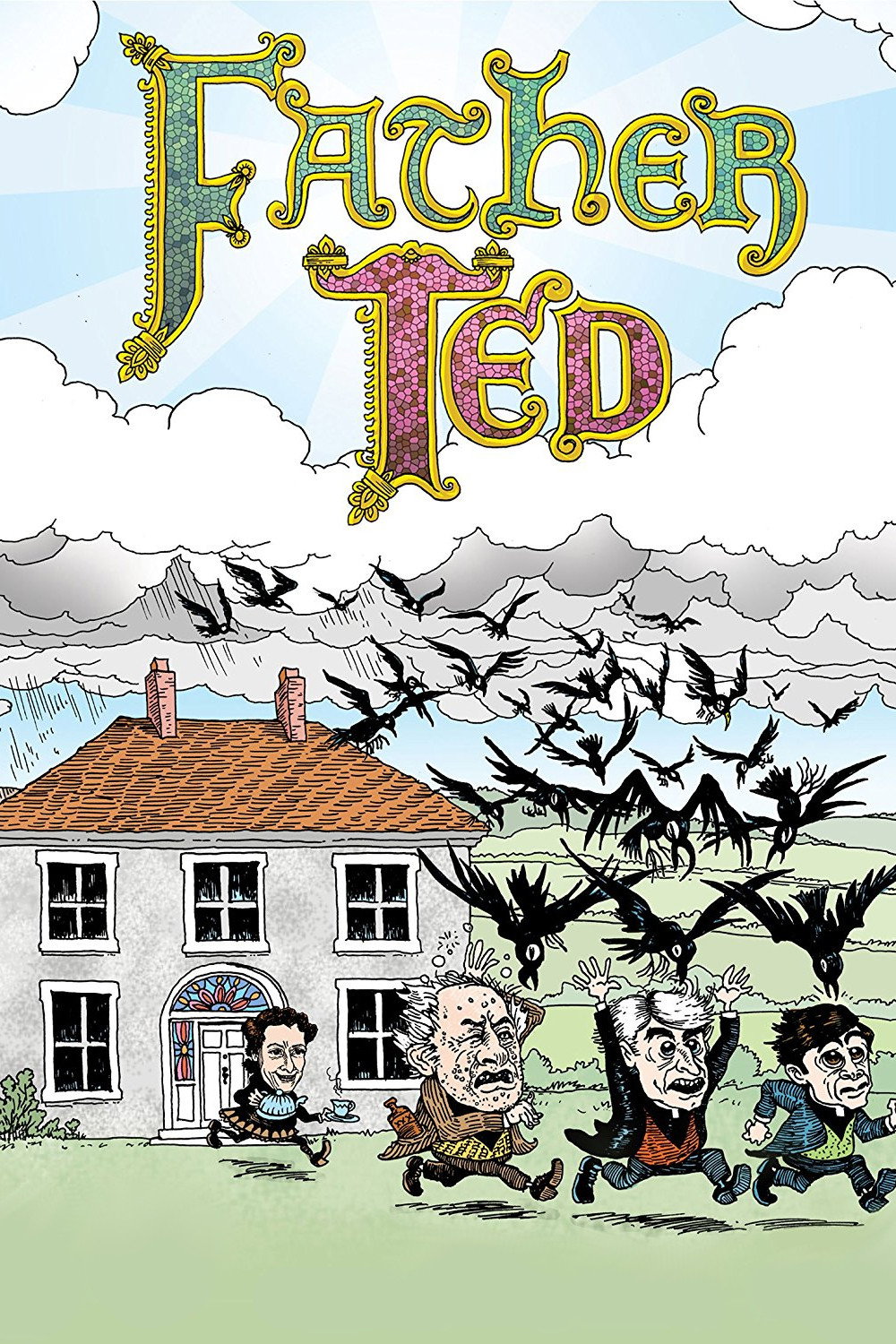
Andy De Emmony gives comic actors time to make foolish answers sound reasonable. We value the patience of his work on Father Ted, though leaving a joke alone also makes its weaknesses harder to hide.
Fi1m perspective
In Father Ted, a conversation can stop making sense long before the people having it notice. Andy De Emmony lets the actors carry on, giving a foolish answer time to sound plausible to the person delivering it, without asking them to announce that they know how absurd it all is. We laughed at their continued seriousness as the exchanges grew more ridiculous. His contribution was as studio director on the third series in 1998, so the programme’s achievement is not his alone. It is nevertheless a persuasive example of how well his patient approach can serve a comic ensemble, making room for the response as well as the line that prompts it.
He came through Spitting Image, moving from sculpture and puppetry into directing, before directing the sixth series of Red Dwarf (1993). The move into drama took in Cutting It (2002), The Canterbury Tales (2003) and God on Trial (2008), with later television work including The Nest (2020), Vigil (2021–2023) and The Larkins (2021–2022). Comedy remained part of the work: his first feature, West is West (2010), was a comedy sequel, and The Wipers Times (2013) called for humour within a wartime setting. The latter’s handling of those shifts is a useful indication of what his comedy experience can offer drama. It requires a director to judge how far a joke can go before it makes the circumstances around it seem trivial.
On Father Ted, the approach shared with Linehan and Declan Lowney gives the four central performers room, without forcing every ridiculous moment on our attention. The cast’s detached delivery benefits: we can hear the foolishness for ourselves without a director underlining it or hurrying us on to the next line. The broadest jokes can become repetitive, though, and the unhurried exchanges can expose a weak line. When an exchange offers little beyond a familiar response, patience alone cannot supply the missing invention. Start with Father Ted for the ensemble, allowing for the occasional exchange that takes longer than the joke deserves.
Biography
Andy De Emmony is a British film and television director. He began his career in the early 1990s directing episodes of the satirical puppet series Spitting Image and went on to direct comedy programmes including Red Dwarf and series 3 of Father Ted (1998).
De Emmony has directed feature films such as West Is West (2010) and Love Bite (2012), as well as later television drama including The Bletchley Circle (2012), Vigil (2021) and The Larkins (2021–2022). He won a BAFTA Television Award for Best Comedy for Father Ted in 1999 and received further BAFTA nominations for work on Spitting Image, Cutting It and Kenneth Williams: Fantabulosa! (2006).