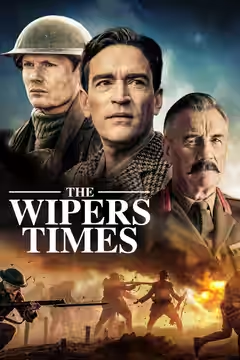
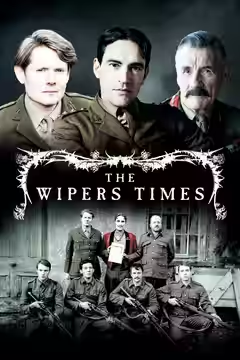
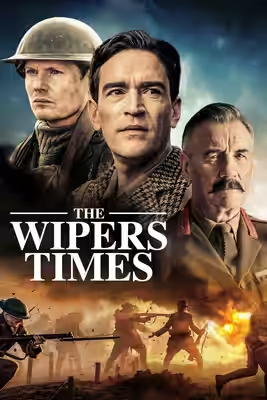
Andy De Emmony’s soldiers’ newspaper comedy is warm, dry and worth an evening. Ben Chaplin and Michael Palin give it welcome ease, though the film’s affection for its characters makes wartime feel rather too tidy.
The Wipers Times is an engaging war comedy whose affection for its characters occasionally blunts its jokes. Andy De Emmony treats the soldiers’ newspaper as something worth taking seriously, without requiring the men producing it to behave solemnly. Making jokes under awful circumstances can be a useful activity, particularly when the alternative is listening to an officer. The film is less persuasive when it seems too pleased with everybody’s pluck.
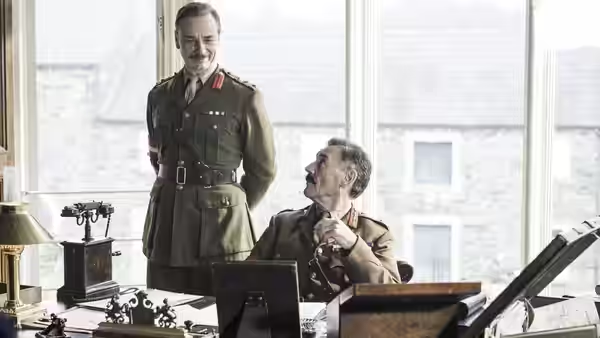
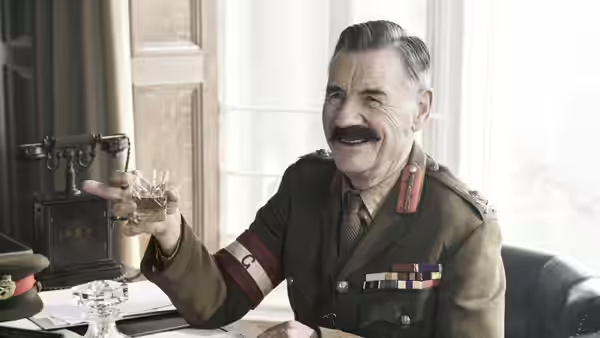
Ian Hislop and Nick Newman understand the satisfaction of hearing an inflated military voice punctured. Their writing is strongest when the joke comes from the difference between an officer’s importance and what he actually has to say. We laughed at General Mitford’s exchange with the pompous officer, because Michael Palin makes the pomposity sound so unnecessary. The humour depends on the officer continuing to take himself seriously.
Ben Chaplin gives Roberts enough ease to stop the humour feeling like a demonstration of admirable courage. We can enjoy his company without being asked to applaud him for finding something funny. Julian Rhind-Tutt brings a welcome dryness to Pearson, and helps keep the writing from sounding too pleased with its own cleverness. Michael Palin is especially valuable because General Mitford need not be solemn to carry authority.
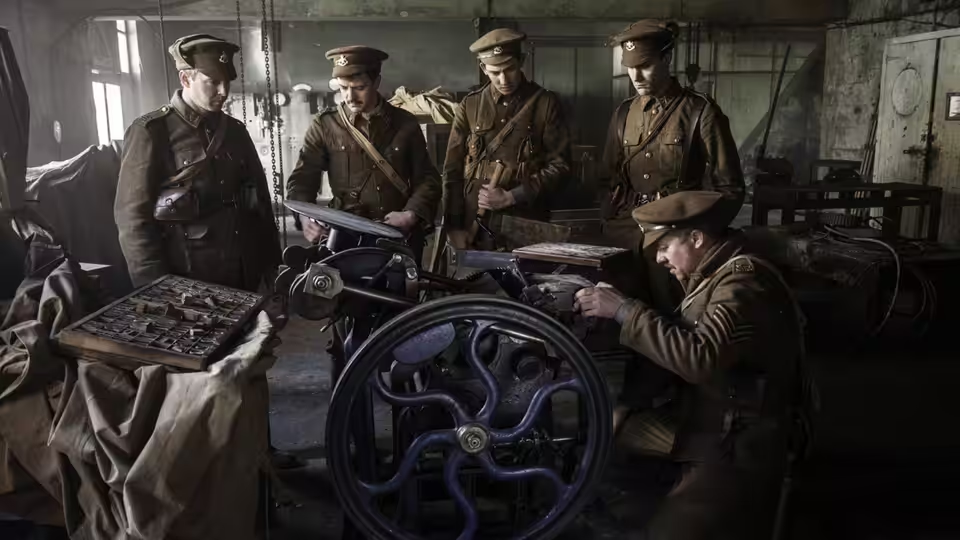
Mark Garrett’s cinematography keeps our attention on the people delivering those jokes, although the sense of danger is less convincing. Stephen O’Connell’s editing gives the exchanges time to settle, which is usually the right decision for this sort of dry comedy. Nick Green’s music encourages the warmth, sometimes rather too helpfully. Together, those choices make the film agreeable company, but they also make its wartime setting feel more manageable than the humour suggests it ought to be.
The reservation concerns the writing as much as the staging. The writers favour a reassuring distinction between people who can take a joke and people who cannot, and the latter are easy to dismiss. That makes for clean comic exchanges, but it also limits how far the film is prepared to trouble us. Andy De Emmony’s gentleness becomes a constraint whenever the jokes ought to leave something unpleasant behind.
A newspaper is a practical thing to make, and that matters here: someone has to turn a passing joke into something other people can read. The film respects that small piece of work, giving its humour a purpose beyond keeping a conversation going. Within war comedy, it belongs at the gentler end, finding much of its pleasure in the company these men offer one another. That modest ambition is worth defending, even when we wish the film would risk a little more unpleasantness.
At 92 minutes, it does not ask an unreasonable amount of time for these pleasures. The performances and the newspaper’s humour make it worth an evening for anyone who likes their war stories told with a dry voice. Go for the company, with some allowance for how neatly the discomfort is tidied away.