Abdullah Saeed’s crime comedy is quick, rude and often funny, with Poorna Jagannathan running away with it as the family’s unflappable killer auntie. It is also thin where it matters, and ten episodes in we still barely know the brothers.
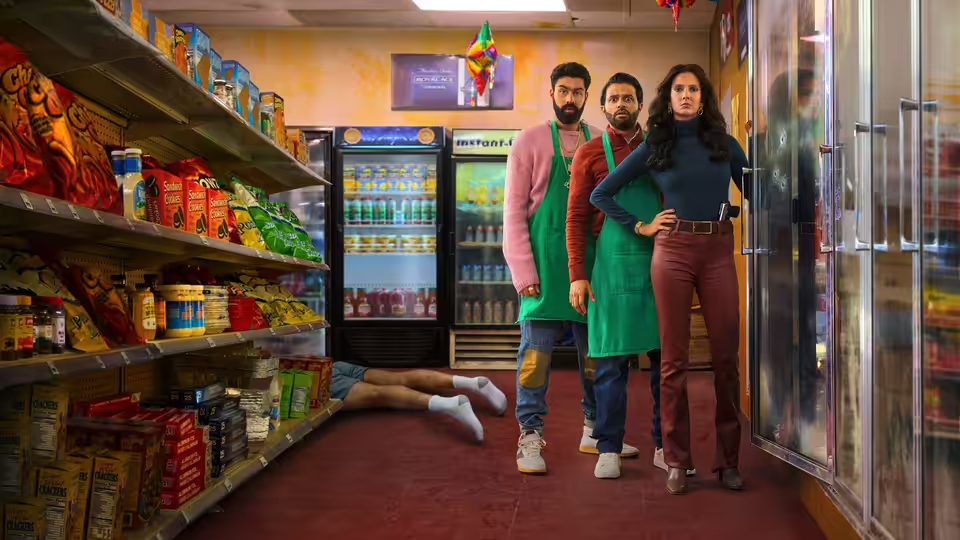
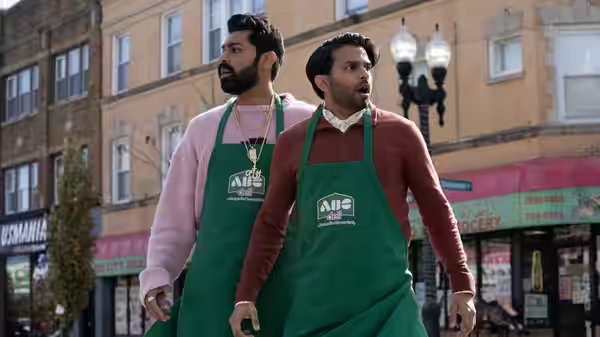
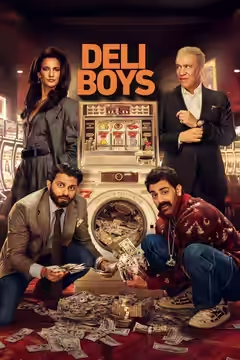
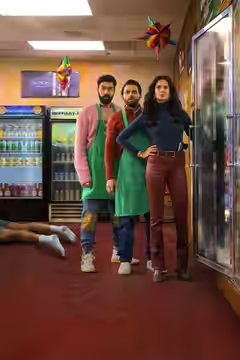
Abdullah Saeed’s series opens on a Pakistani American family that has done everything right. Baba (Iqbal Theba) built a chain of convenience stores from nothing, his elder son Mir (Asif Ali) wears the suits and gives the speeches, and his younger son Raj (Saagar Shaikh) does nothing much in expensive trainers. Then Baba dies, the brothers go looking for the will, and Lucky (Poorna Jagannathan), the family friend they have called Auntie all their lives, opens a door at the back of the deli. Behind it is a great deal of cocaine. Deli Boys is a comedy about two men who inherit the thing their father kept them from, and for most of its ten episodes it is quick, rude and good fun. It is not much more than that.
The pleasure of it is the pace. Saeed and his writing room, Michelle Nader, Mehar Sethi, Sudi Green, Kyle Lau, Nikki Kashani, Feraz Ozel Ellahie and Ekaterina Vladimirova among them, never let a scene hang about once the joke has landed. A body turns up, a plan is made, the plan goes wrong, cut. The violence is lit bright and flat, like the shop floor, and the gore arrives as a punchline rather than a shock. That is the right call for a comedy and the wrong one for anything that wants us to worry.
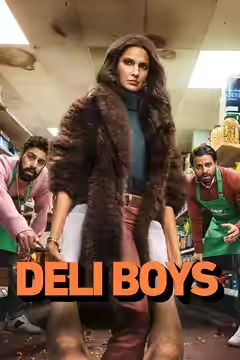
Jagannathan is the reason to watch. Lucky has been running the real business for years, has killed for it and will again, and Jagannathan plays her as a woman faintly bored by how easy it all is. She does the murders the way other aunties do the washing up, briskly and with a running commentary on the boys’ manners. We laughed out loud at her first killing, a proper, surprised laugh, and then we noticed we had been given no idea why this woman had spent her life protecting a dead man and his useless sons. The show never gets round to telling us. It is too busy with the next body.
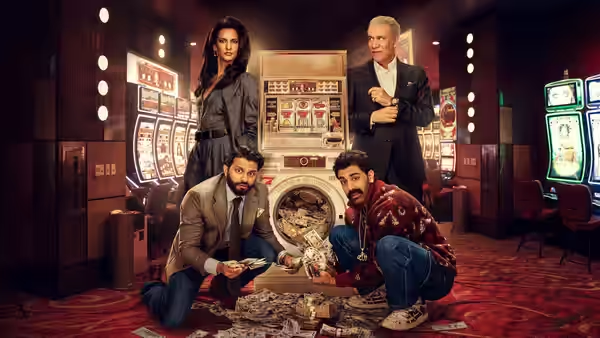
Ali and Shaikh make a good double act. Ali gives Mir the tight, panicked competence of a man who has read the management books and found none of them covered this. Shaikh plays Raj as a stoner whose every bad idea arrives in a tone of total calm, and he has the better lines. Their scenes alone together are the warmest thing here, and the writers know it, which is why they keep interrupting them with a gun. Brian George, as the family fixer Ahmad, gets the best weary reaction shots, and Alfie Fuller’s Prairie, who worked for Baba and takes to the new trade faster than his heirs, is sharp and underused. Fred Armisen appears as Max Sugar in a part we will not describe, because it belongs to the later episodes.
The weak limb is the law. Alexandra Ruddy’s Agent Mercer is on the brothers’ trail from early on, and the FBI thread exists to give each episode a cliffhanger without ever making us believe anyone will be caught. Most critics have said the same and we agree with them. Eight directors share the ten episodes, Maureen Bharoocha, Nisha Ganatra, Oz Rodriguez, Jenni Konner, Andrew Ahn, Jeremy Konner, Fawzia Mirza and Ahmed Ibrahim, and the series looks and moves the same under all of them. That is tidy showrunning. It also means nobody was allowed to slow down and let a scene breathe.
The show is at its sharpest when it is about respectability rather than cocaine. The funeral, the uncles, the mothers who are not fooled for a second, the way Mir corrects his brother’s grammar in front of a corpse: these are observed by people who have been in those rooms, and they are funnier than any of the shootings. Weeds (2005) did the suburban drug trade with a wink and Breaking Bad (2008) did it with dread. Deli Boys wants the wink, reaches now and then for the dread, and cannot hold it for more than a scene.
A second run of six episodes followed on 28 May 2026; this review is of the first ten. Watch them two at a time with a takeaway. You will laugh, you will not be moved, and you will not much mind.