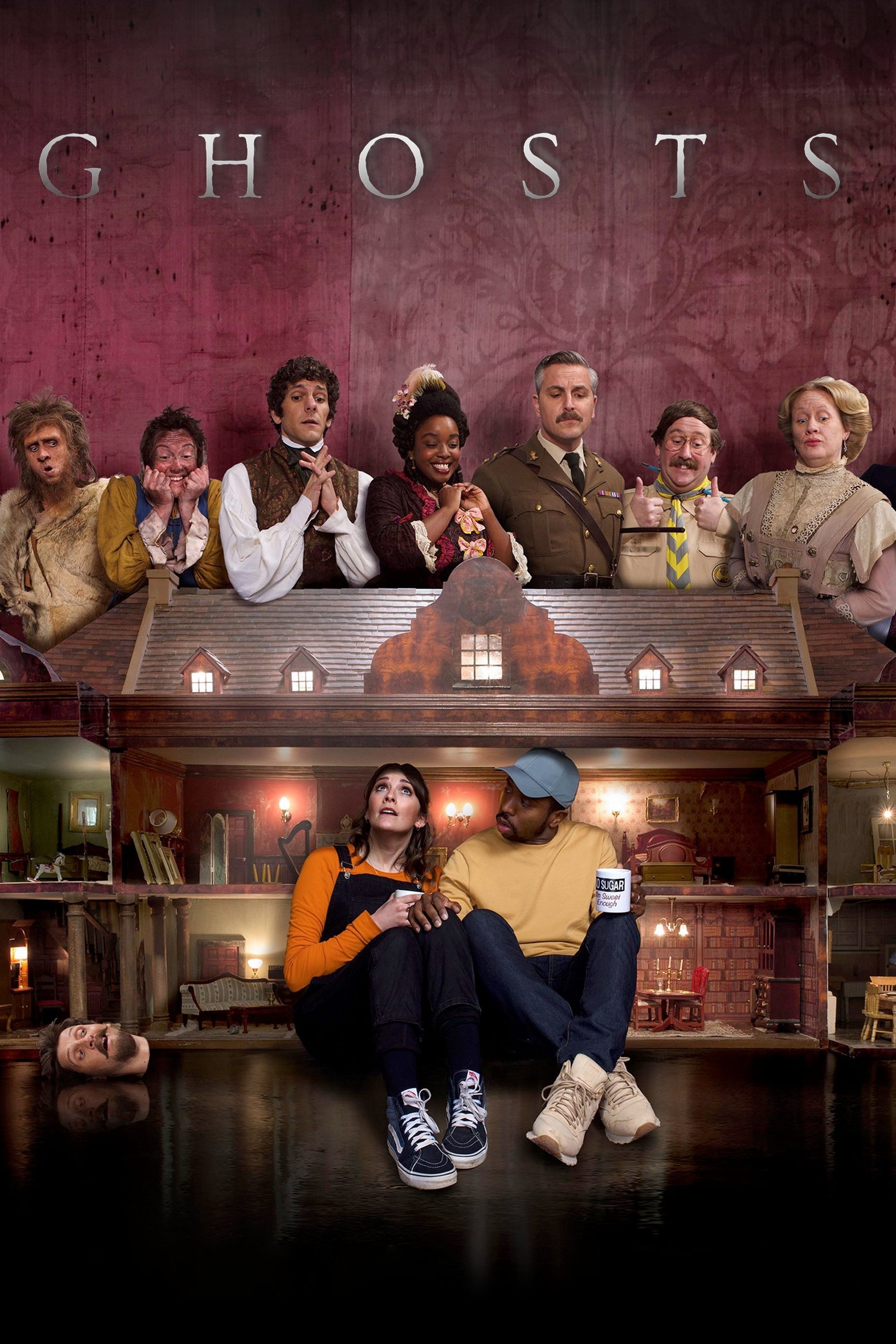
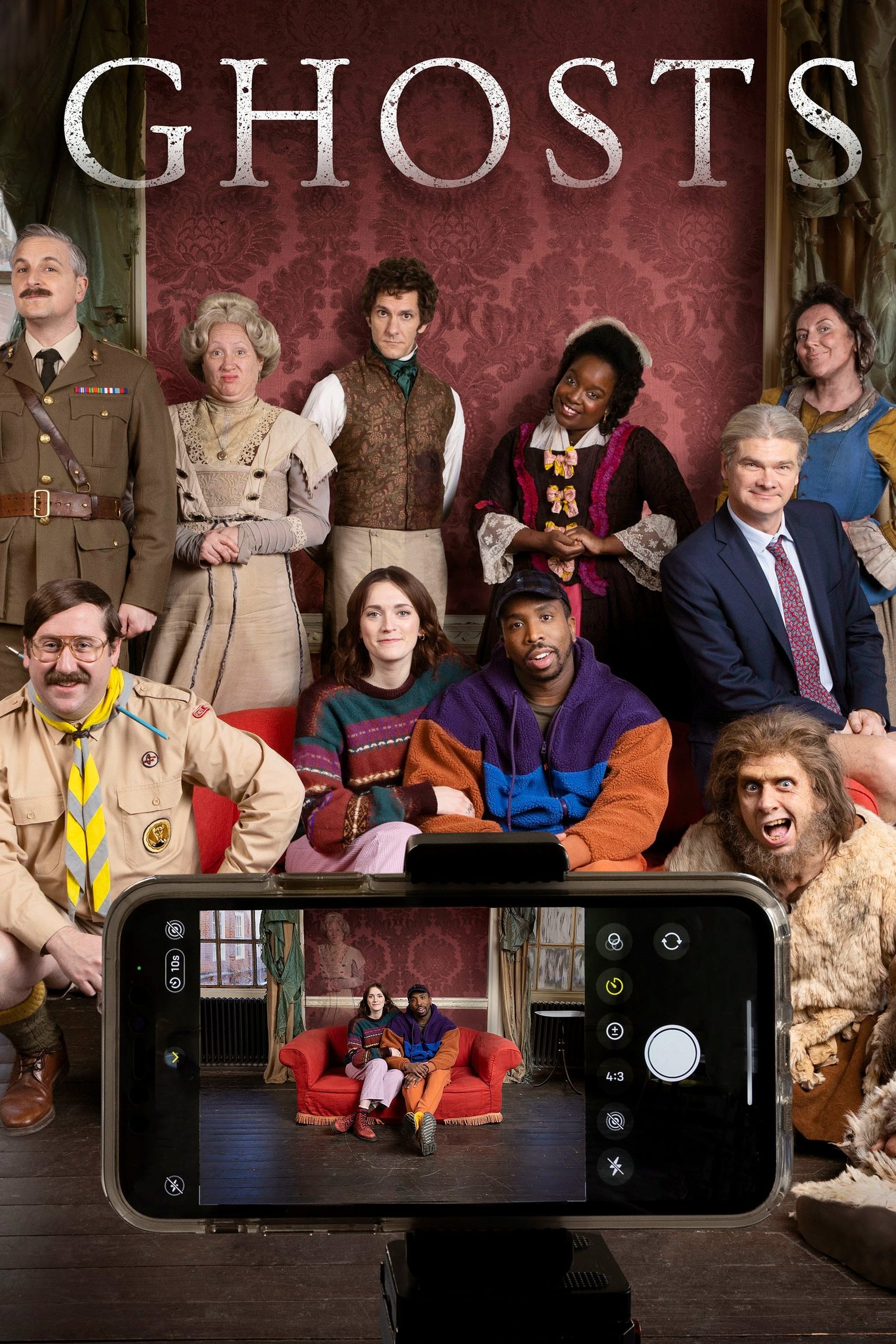
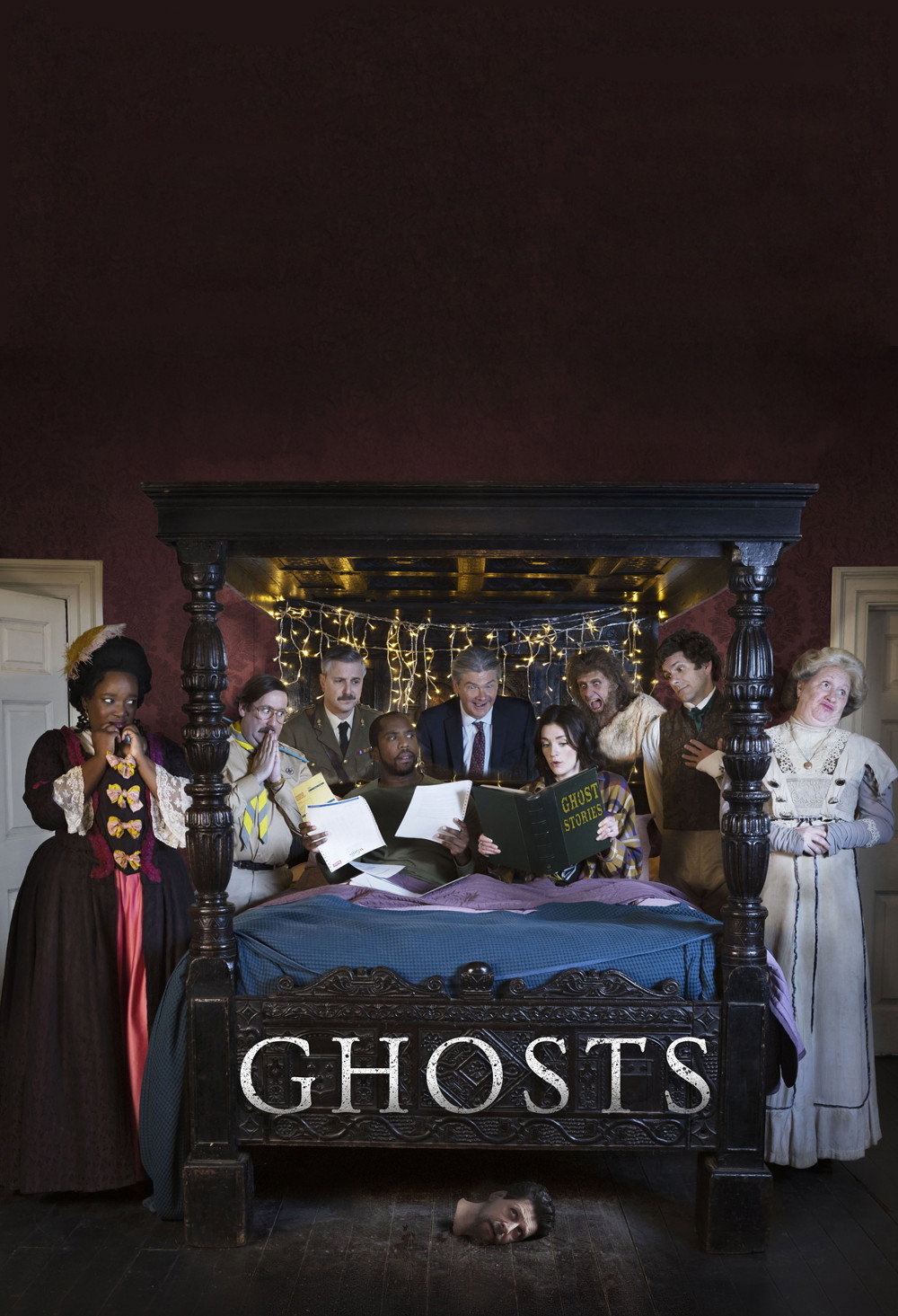
The Horrible Histories team’s haunted-house sitcom is gentle, quick and far better built than its silliness suggests, played by an ensemble who have been making each other laugh for years. The hotel plot goes nowhere, and it hardly matters.
Six writer-performers who came up together on Horrible Histories have made a sitcom about a young couple, Alison (Charlotte Ritchie) and Mike (Kiell Smith-Bynoe), who inherit a country house full of the dead. The premise is as old as Blithe Spirit. The twist, such as it is, is that the ghosts are not frightening. They are bored, petty and stuck with each other, and they have been for centuries. It is a good sitcom, warm without being soft, and it ran for five series of six episodes without wearing out its welcome. We recommend it, with one caveat about the living.
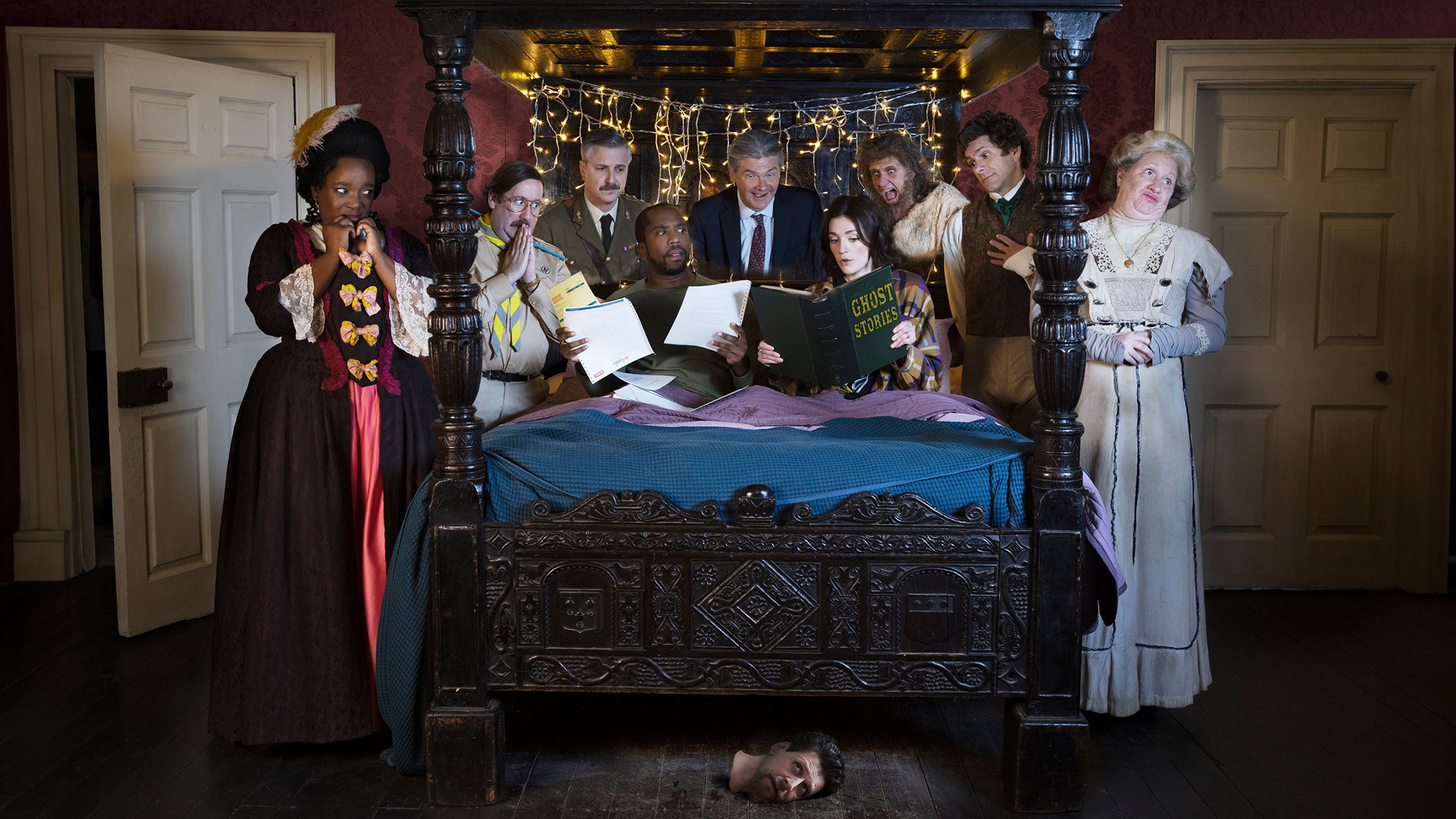
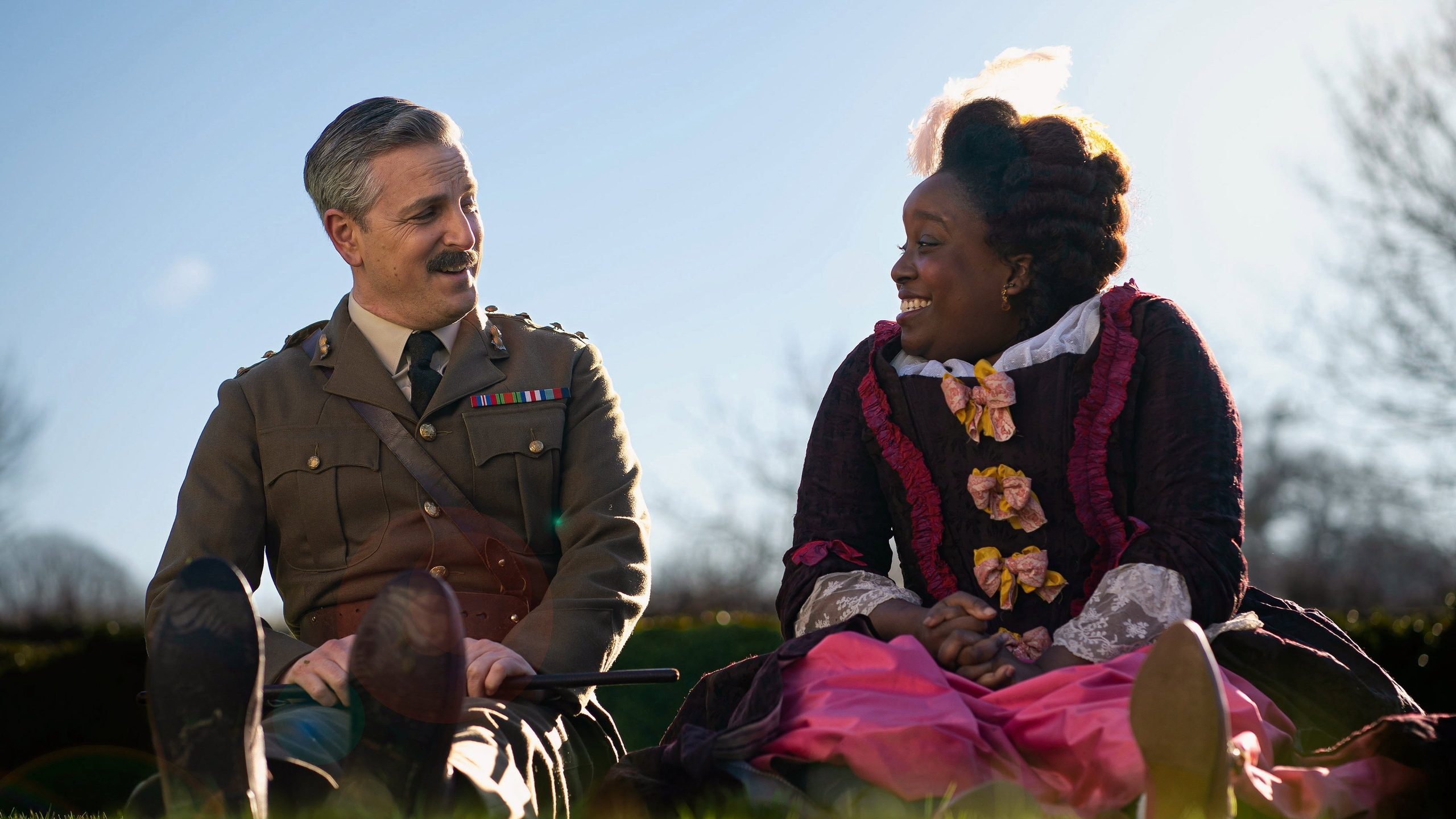
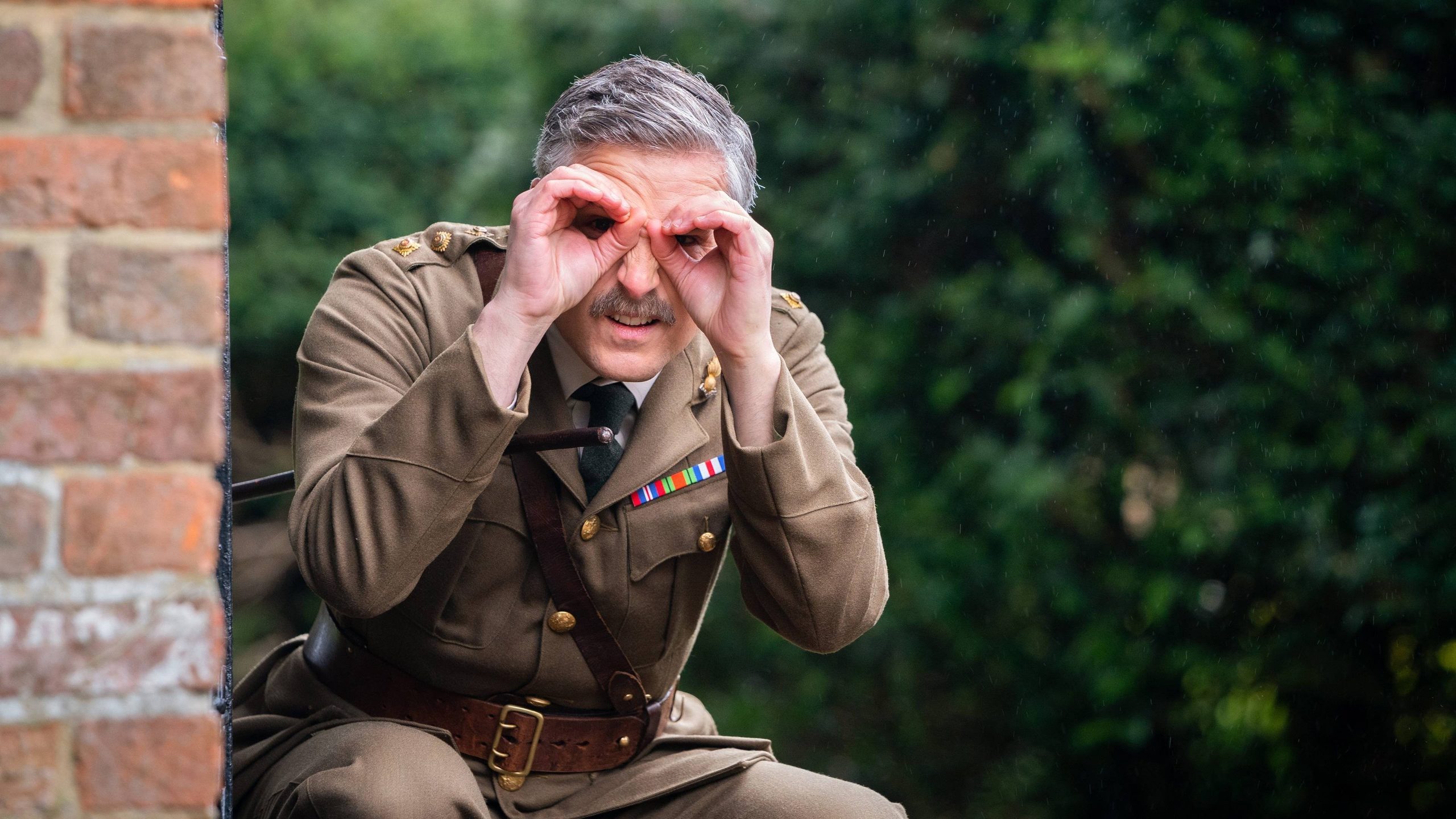
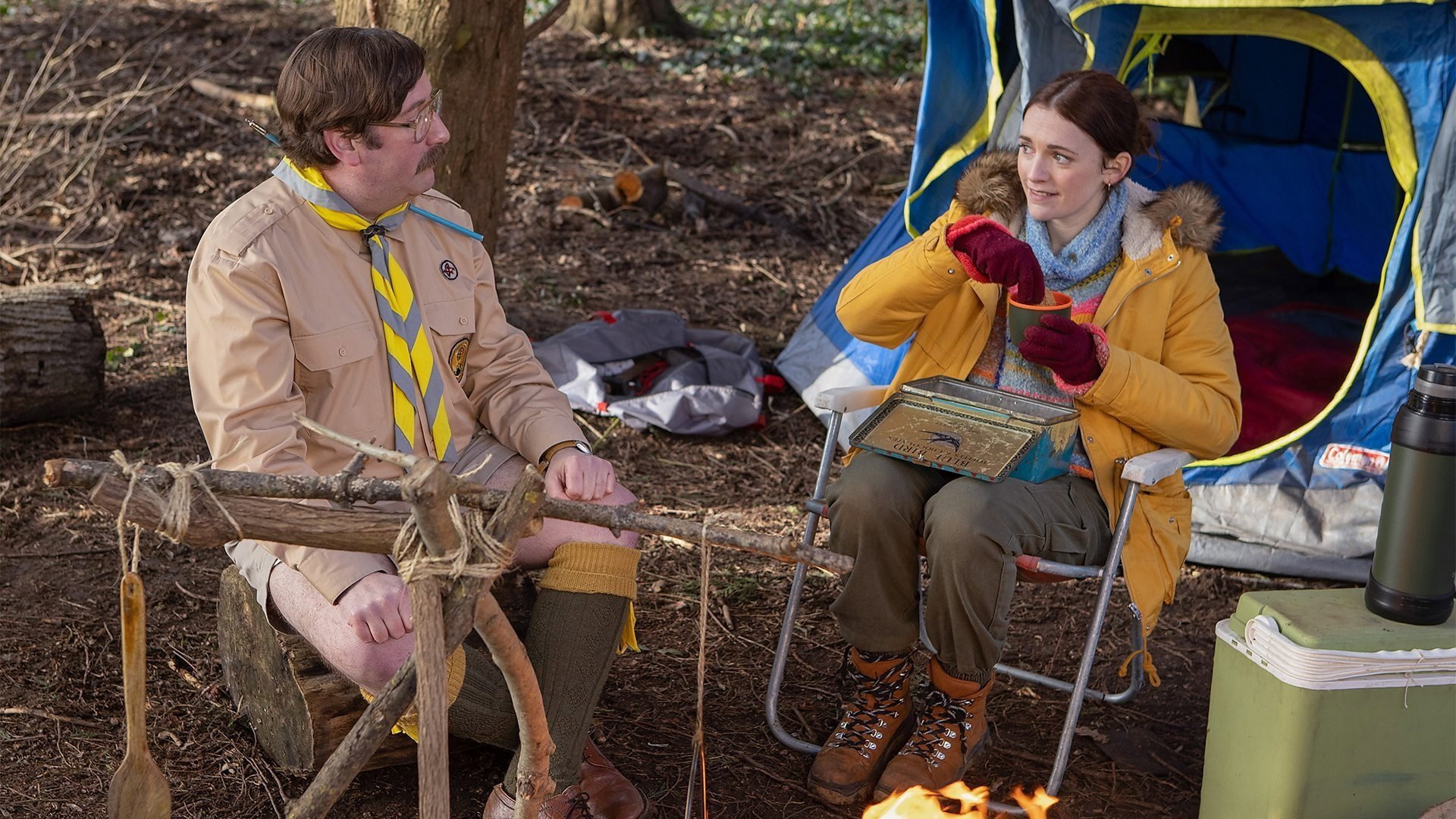
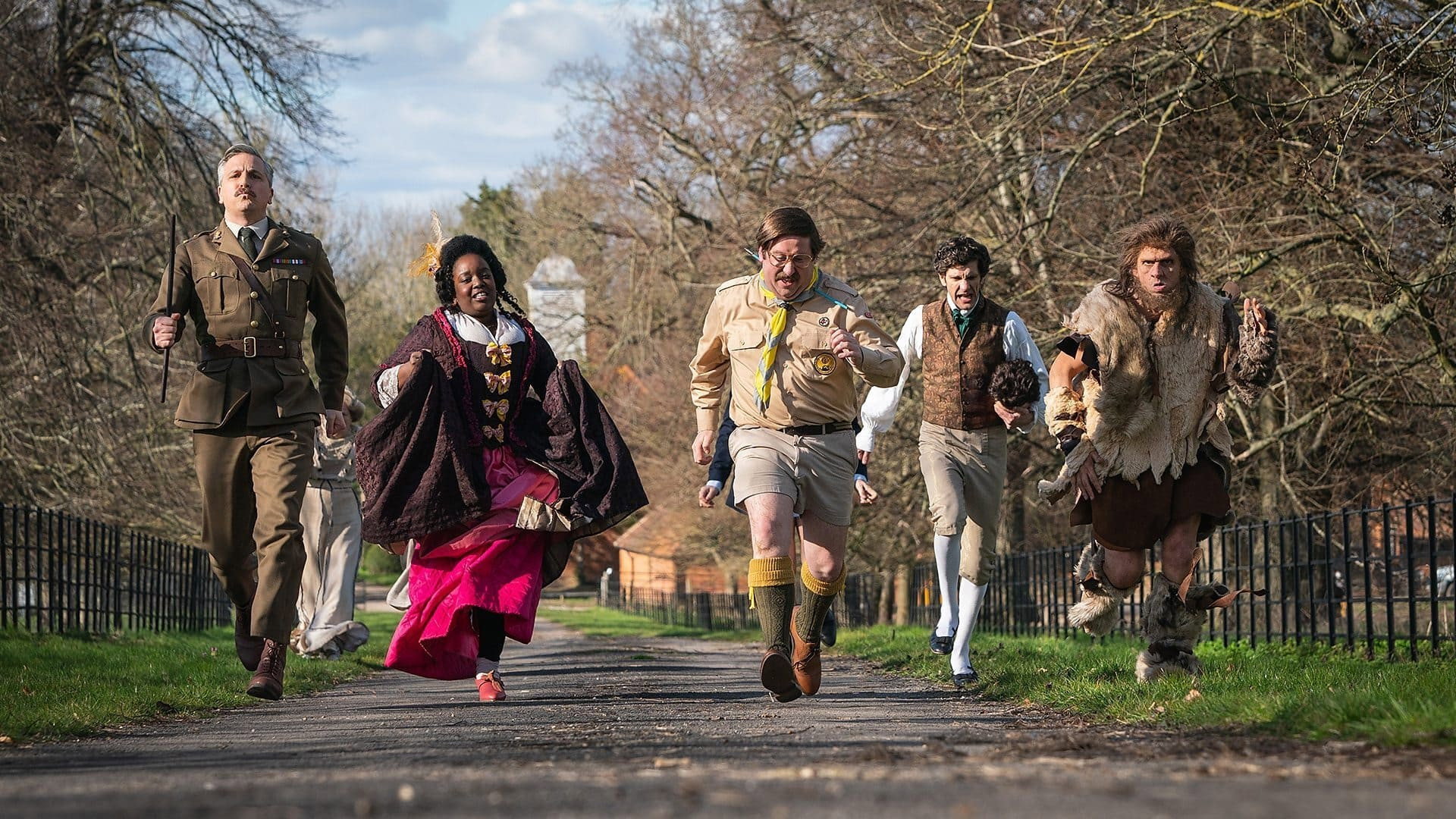
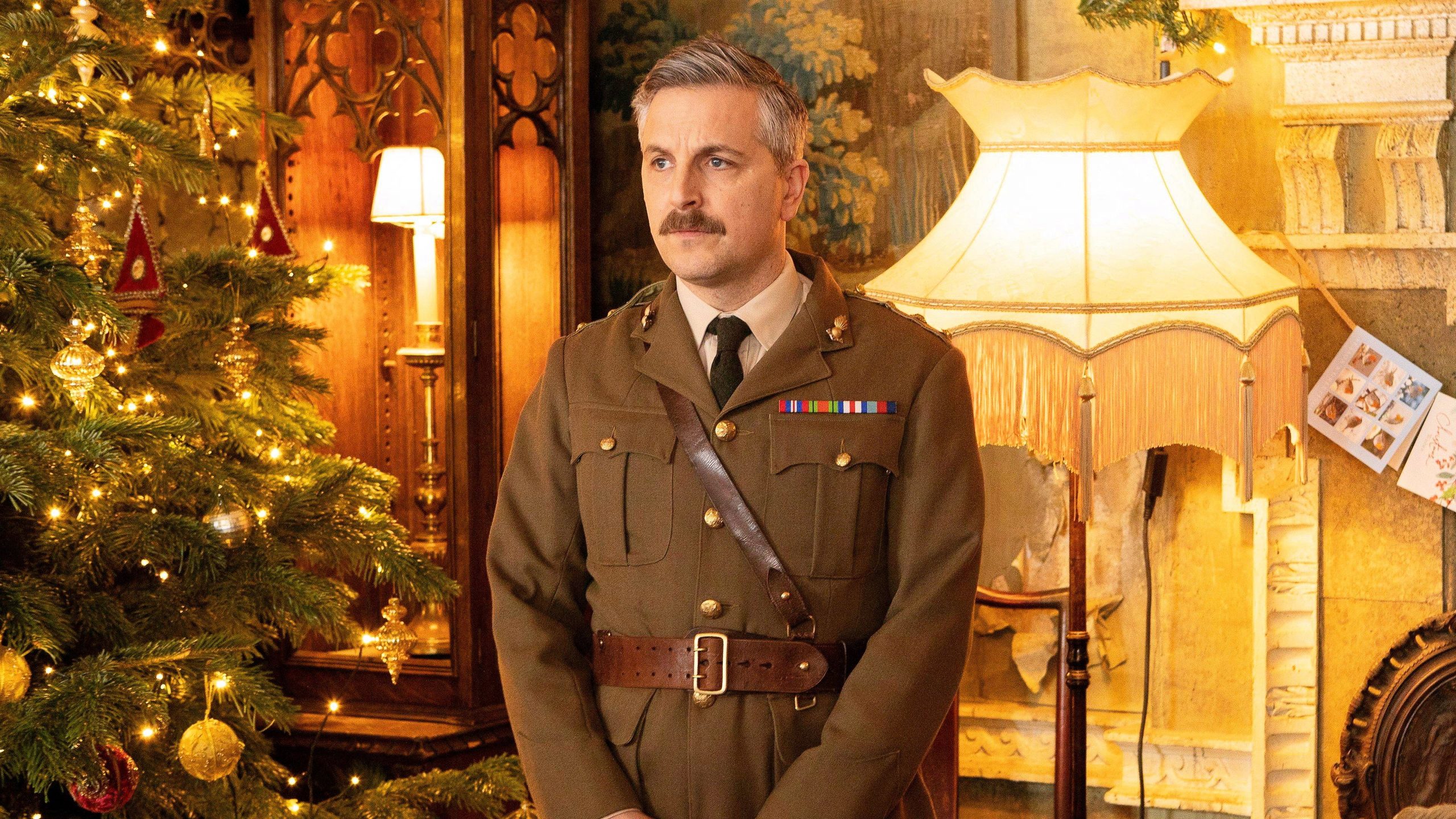
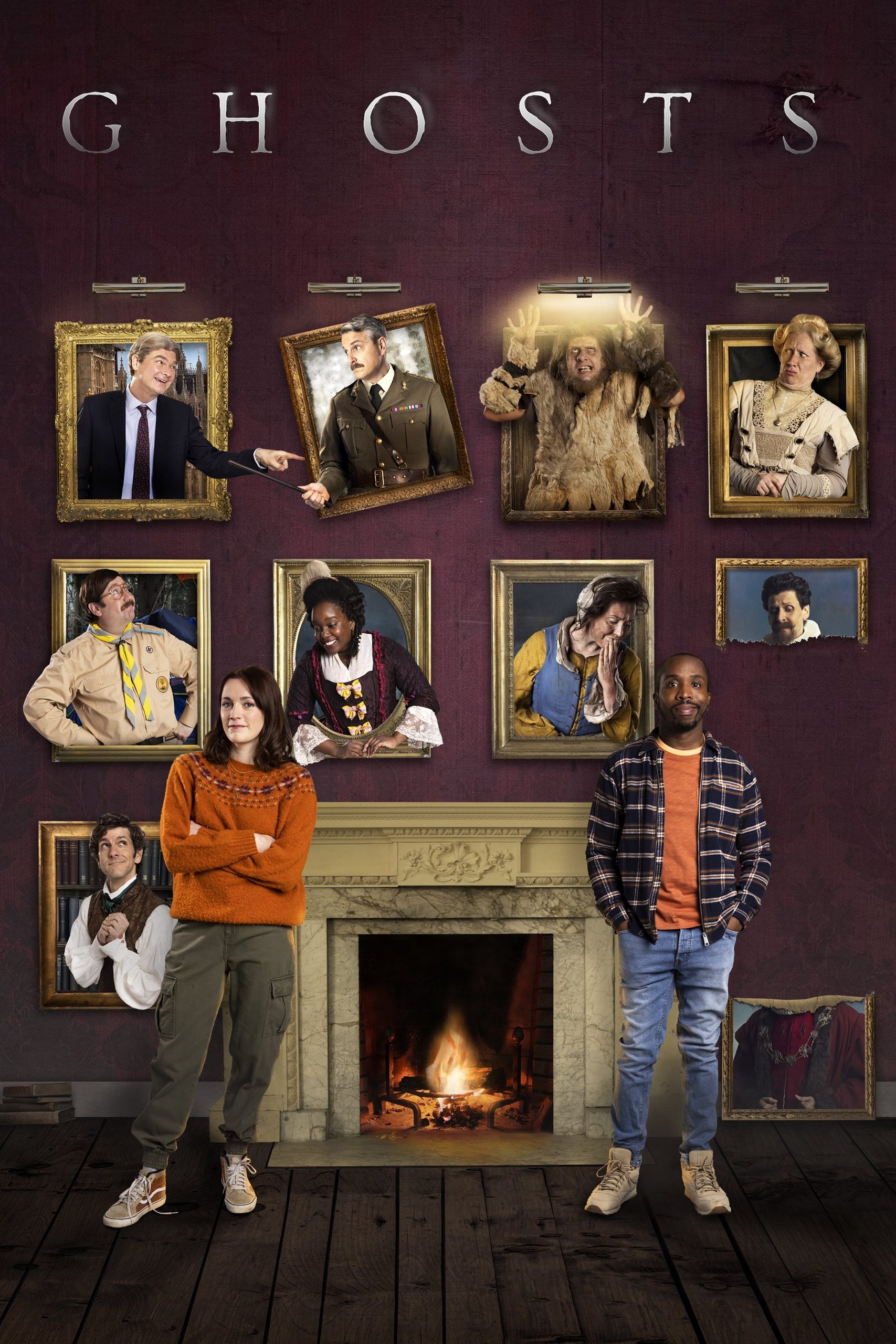
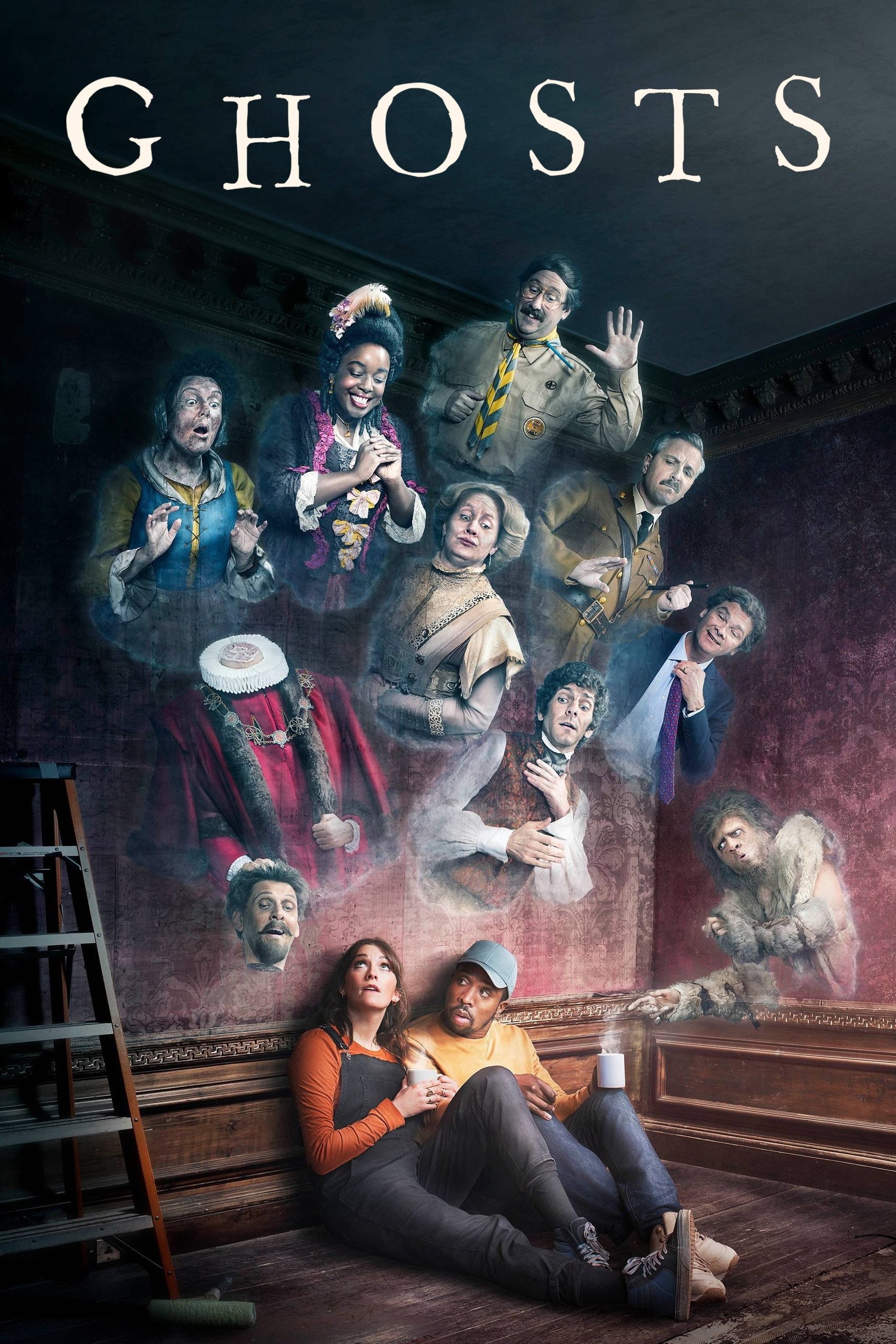
Amy Maguire’s production design does a good deal of the work. Button House has peeling plaster, dust sheets over the furniture and wallpaper from three different centuries visible in the same corridor; it looks like a house that has been dying as slowly as its tenants have been dead. Will Hanke shoots it in plain daylight, with no fog and no blue filter, so the ghosts stand about in ordinary rooms like relatives who have overstayed. Lucy Williams’s costumes tell you who each of them is before they speak: Pat (Jim Howick) in his scoutmaster’s uniform with the arrow still through his neck, Julian (Simon Farnaby) in shirt and tie and nothing below, the Captain (Ben Willbond) in battledress that has not creased in eighty years. That is how a nine-strong ensemble stays legible in a half-hour comedy.
The ensemble is the reason to watch. These people have worked together for a long time and nobody fights for the camera. Mathew Baynton’s Thomas, a Regency poet, moons over Alison in verse. Martha Howe-Douglas’s Fanny is appalled by everything and says so. Lolly Adefope’s Kitty is the find, a Georgian girl of enormous and badly aimed enthusiasm, and Katy Wix’s Mary, burnt as a witch, describes it as if it were a spot of bad weather. Laurence Rickard plays both a caveman and a severed head, and is funnier as the head. Most of the jokes are reaction shots, six faces at once, and Mike Holliday’s editing nearly always cuts to the right one.
What we did not expect was the sadness. Every one of them died badly and none of them knows why they are still here. Mary’s account of her death in the first series is played for laughs, and we laughed, and then it sat with us for longer than the joke seemed to want. The second series slows down to tell us how some of them died, and one episode, which we will not identify, stopped us cold in the middle of what had been a farce. Arthur Sharpe’s music does not push either way; the theme is jaunty and faintly sinister at the same time, which is about right.
The caveat is the living. Ritchie is the anchor, and her weary patience with the dead is the show’s best running joke. Mike is given the boiler and the bank statements. Smith-Bynoe is funny with what he has, but for five series he is mostly the man who cannot see, asked to react to an empty room. The hotel plan never advances; the money worries are the same in the last series as in the first. Some episodes fall into one shape, a visitor arrives, the ghosts panic, Alison covers, and Thomas’s crush is thin by the third time round.
Set against the team’s own children’s work, this is quieter and stranger, and it trusts a silence more often. Set against the American remake, which several critics prefer for its sunniness, this one is happier to let a sad moment sit unrescued, and we think it is the better for it. The directors, Simon Hynd, Nick Collett and Tom Kingsley, keep the staging flat and let the faces do it.
Watch it two episodes at a time, with somebody you are stuck with. It is a comedy about being unable to leave, and it is at its best when it admits that it rather likes the company.