Hudson Williams and Connor Storrie make this explicit hockey romance worth following, even when the writing gives them too little to work with. We recommend it for the lovers, with modest expectations of the sport.
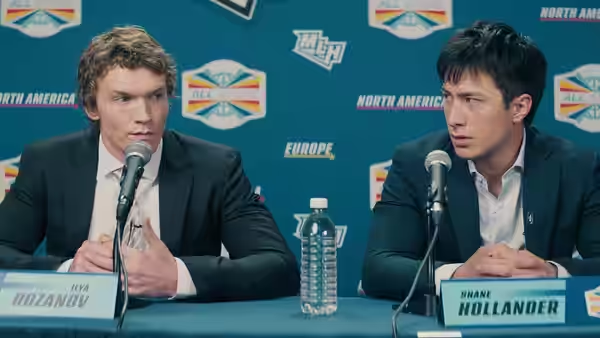
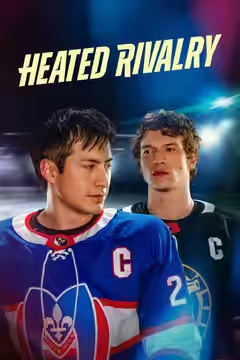
Heated Rivalry is a good adult romance with enough chemistry to carry it through some thin writing. Creator, writer and director Jacob Tierney treats sexual attraction seriously and gives it plenty of screen time. The six-episode first series follows rival hockey players Shane Hollander and Ilya Rozanov as their physical relationship develops into something more complicated. Its strongest asset is the casting: Hudson Williams and Connor Storrie make the attraction convincing before the writing has done much to explain either man.
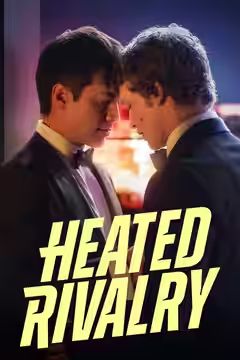
Hudson Williams plays Shane Hollander opposite Connor Storrie’s Ilya Rozanov, and their chemistry makes the familiar progression from antagonism to affection worth following. Connor Storrie is especially good at making the melodrama seem something a person might actually be living through. We were won over by the tenderness within the sexual encounters. The care in the choreography gives the actors space to respond to each other, and those responses make the growing affection believable.
Jackson Parrell’s cinematography has its most rewarding material in that physical closeness. The explicit scenes feel carefully arranged without losing the sense that these particular men want each other. That matters when the writing has not made their other wants especially clear, and it helps the encounters remain personal through a considerable amount of repetition. There is less hockey than the premise might suggest, so anyone coming chiefly for the sport should adjust their expectations.
The larger difficulty is the passage of time. Editors Véronique Barbe and Arthur Tarnowski have a relationship to sustain across abrupt title-card transitions, and the joins are sometimes too obvious. Individual encounters have room to develop, but moving between them can make the relationship seem to have advanced without showing us enough of how the men have changed. Repeated sex scenes then begin to do similar jobs, leaving stretches where the series becomes less involving despite the performers’ efforts.
Peter Peter’s music provides effective support, but it cannot give those repeated encounters a new purpose each time. The series becomes more affecting when it makes room for intimacy that is not chiefly sexual, and a secondary romance supplies welcome breathing space. The supporting characters are less securely written than the central pair. We wanted a clearer sense of what these people do and want when the lovers are elsewhere; their limited development also makes the series feel smaller than it needs to.
Jacob Tierney makes a welcome choice for an adult gay romance by allowing sexual pleasure to matter without loading it with punishment or instruction. That gives the series an ease which helps its more sentimental passages. It does not excuse writing that can make grown men seem younger than they are, or substitute attraction for the slower business of getting to know someone. The genre can accommodate plenty of fantasy, but a little more curiosity about these men would have made their affection more persuasive.
There is enough warmth here to forgive some awkward storytelling, and the performances make that forgiveness come readily. That does not make every return to bed equally interesting. We recommend it to those who want an explicit romance and can accept a narrower view of its characters than the actors promise. Anyone choosing it for the hockey should have another programme in reserve.