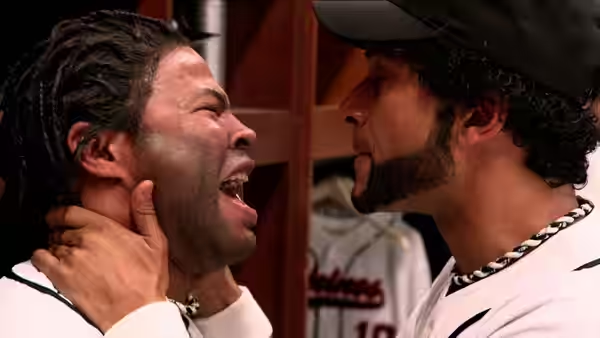
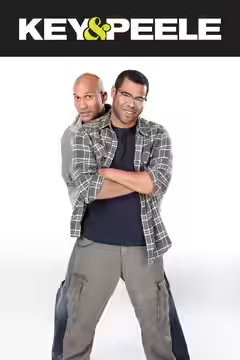
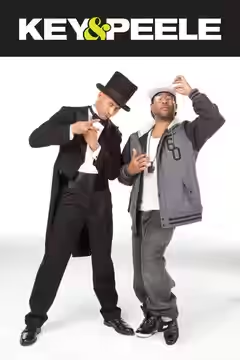
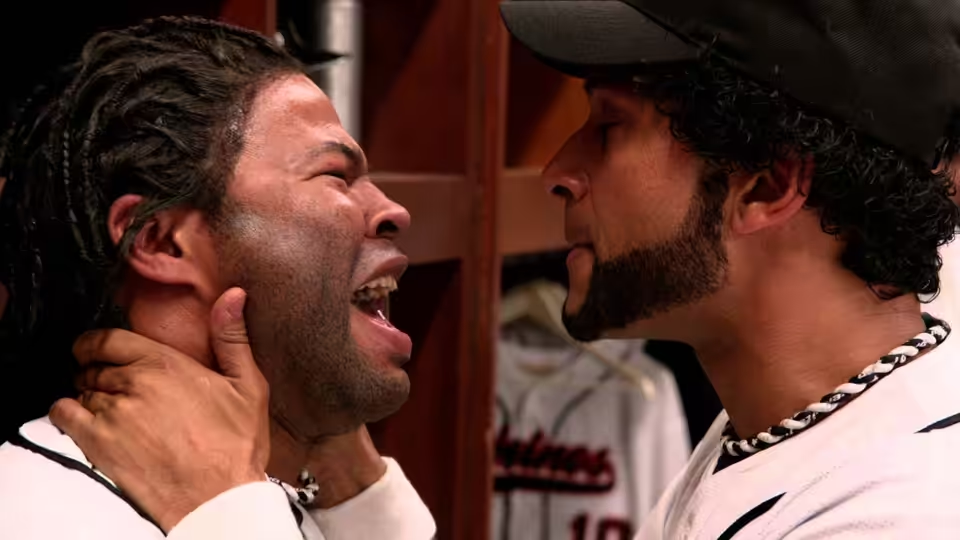
Keegan-Michael Key yelling as Jordan Peele grips his chin in a locker room
Series review

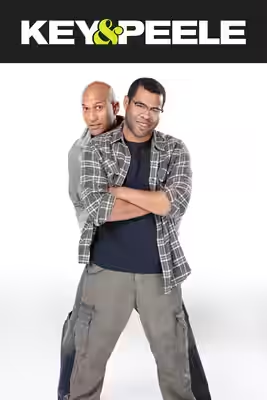
Key & Peele

2012 · Created by Keegan-Michael Key, Jordan Peele · Series · 20m

In a sentenceTwo men, a great many wigs, and a president who finally gets to say what he means

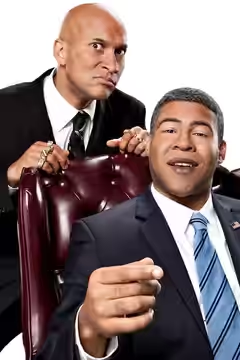
Keegan-Michael Key and Jordan Peele stand on a small stage in front of a live audience, two comedians talking to each other and to the crowd, and then the programme cuts away to filmed sketches in which they play almost everyone. Peele is President Obama, calm at a lectern; Key is Luther, the anger translator standing beside him, saying what the president is actually thinking. Elsewhere Nicole Parker is Fantine and Thomas Middleditch is Thénardier in a Les Misérables sent up with full costumes, Jason Schwartzman turns up as himself, and Sarah Baker serves coffee as a barista. Each episode runs about twenty minutes. The series began on 31 January 2012 and ran for five seasons and 53 episodes.

Plays from YouTube when you press play; nothing loads from them until then.

Fi1m review

Key and Peele’s sketch show is the most carefully made comedy of its kind we have seen, each sketch shot and cut like the film it is sending up. The stand-up between the sketches is thin, and not every idea earns its running time.

Sketch comedy on television is usually made on a studio floor, and it looks it. Key & Peele does not. Keegan-Michael Key and Jordan Peele, who created the programme and play nearly everyone in it, made 53 episodes over five seasons for Comedy Central, beginning on 31 January 2012, and each one runs about twenty minutes: the two men on a stage with a live audience, then filmed sketches, then back to the stage. The sketches are the point. They are built like short films, with sets, costumes and camera moves that a sketch show has no business affording, and the best of them are as funny as anything we have seen on television. We recommend it warmly, with two caveats: the stage material is the weakest thing in it, and 53 episodes is more than the good ideas strictly required.

The rule seems to have been that a parody must look exactly like its target. A horror sketch is lit like a horror film, with the fill light taken away and the camera creeping. A sports segment has the graphics package and the crowd noise. The Les Misérables parody, with Nicole Parker as Fantine and Thomas Middleditch as Thénardier, has wet streets, candlelight and singing performed straight, so that the joke is not that the genre is silly but that these particular people are. Nicholas Monsour edits, and he understands that a sketch has one cut that matters: the one after the line, when you hold on a face for a beat longer than seems polite. He gets it right almost every time.

The two leads divide the work cleanly and then swap. Key is the taller and the louder, with a face that can go from confidence to panic without passing through anything in between. Peele is the still one, the one who has noticed something is wrong and has not yet decided what to do about it. Peele plays the president as measured to the point of blankness; Key, as Luther, stands beside him and translates every careful phrase into what it means, at volume. It is a joke about who is allowed to be angry in public, and it works because neither of them winks. We laughed harder at Luther than we have at anything in a long while. It was Key’s body that did it, wound tight beside a man who will not move, and Monsour’s cutting, which goes back to Peele’s unchanged face exactly when we want to see it.

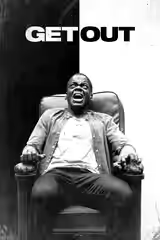
Some of the sketches are not really comedies at all. They begin as a small social embarrassment, two men being polite to each other on a street, say, and end somewhere close to horror, and the picture changes before the writing does: the light drops, the lens gets longer, the sound thins out. We felt an unease we had not expected from a comedy programme, and only afterwards worked out why. Peele went on to write and direct Get Out (2017), and you can see it being learned here.

The stage links let it down. Two likeable men are pleasant to a live audience, tell it roughly what the next sketch is about, and it laughs generously. It is the one part of the programme that looks like every other sketch show, and it slackens the pace each time. Some sketches take a single idea and repeat it four times when three would have done. The later seasons are more elaborate than the early ones, and occasionally the elaboration is where the money went instead of the joke. The supporting cast, though, is well chosen throughout: Paul Walter Hauser, Sarah Baker, Leslie David Baker and Matt Jones turn up in small parts and play them without trying to steal anything.

This is a sketch show that spent its budget on pictures rather than a costume rail, and the gamble pays because the look is so often the joke. Watch two episodes at a sitting, and skip nothing the first time through. The sketch you nearly fast-forwarded is the one you will be quoting in a year.
Critical consensus AI synthesised

81
Positive
4
Mixed
1
Negative
0

With only 5 reviews in so far, the reviews lean firmly positive, with most critics praising the chemistry between Key and Peele and the way the sketches handle race and identity without heaviness or hectoring. The Obama anger translator is the recurring point of reference, and Vulture argues the sketches are built to last on craft and character work rather than topicality. The one reservation comes from Variety, which finds the material mostly so-so beyond that single inspired bit and doubts the series will displace the sketch shows that came before it. Others admit the occasional weaker sketch but say the overall hit rate makes up for it.

The AV Club
1 February 2012 · A · Steve Heisler
95

The critic praises the refreshing simplicity of the sketch show from the biracial comedy duo and their strong chemistry, noting how they draw on personal perspectives around race and identity without feeling heavy-handed while mixing in silly, grounded bits like an Obama anger translator sketch.

Read the full review →
Vulture
10 September 2015 · Matt Zoller Seitz
90*

The critic hails Key & Peele as a comedy masterpiece whose sketches are built to last due to their craft, character work, and inventive storytelling rather than mere topicality. He singles out the show's consistent ability to push sketches to surprising and inevitable conclusions while exploring psychology and behavior.

Read the full review →
Variety
31 January 2012 · Brian Lowry
55*

The critic views the series as a respectable but niche addition that won't displace earlier sketch shows like In Living Color. The Obama 'anger translator' sketch stands out as the one genuinely inspired moment amid mostly so-so material.

Read the full review →
Digital Spy
8 April 2014 · Tom Eames
85*

The piece positions Key & Peele as possibly the funniest sketch show in the world, praising the duo's chemistry and their mix of stand-up and epic skits that consistently deliver laughs with little filler. It highlights their handling of race relations and recurring characters like the Obama anger translator without alienating viewers.

Read the full review →
Collider
18 April 2014 · Rob Vaux
80*

The first two seasons of the Comedy Central sketch series are fresh, smart, and consistently funny, with strong chemistry between Key and Peele and a knack for accessible yet pointed comedy. Occasional weaker bits are offset by the overall quality and the duo's ability to stay true to their sensibilities.

Read the full review →

Straight answers AI written, from our review

Is Key & Peele worth watching?
Key & Peele is worth watching for anyone who likes sketch comedy and wants it made with more care than the form usually gets, and we scored it 82. The filmed sketches are built like short films and the best are as funny as anything we have seen on television. The stage links between them are the weak part, and 53 episodes is more than the good ideas needed.
How long is Key & Peele, and what is it rated?
Key & Peele has episodes of about 20m. It is a comedy series.
Where can I watch Key & Peele in Lithuania?
Key & Peele is not on any streaming or rental service in Lithuania at the moment. It is available in 4 other countries; change your country at the top of the page to see where. Availability is checked daily.
How violent or frightening is Key & Peele, and is it suitable for children?
Key & Peele is a sketch comedy with no UK certificate and a US TV-14 rating, which puts it at teenagers and above rather than children. Some sketches start as small social embarrassments and slide towards horror, with the lighting and sound changing to match, and we felt an unease we had not expected. There is swearing at volume in the Luther sketches, and the humour is adult in subject if not graphic.
How does Key & Peele compare to Get Out?
Key & Peele is a comedy sketch show in twenty-minute episodes; Get Out is a horror film in which Peele takes the polite-conversation-turns-to-horror idea from the sketches and runs it for a whole film. The series is the funnier and the more varied, and the film is the more frightening and the more sustained. Anyone who liked the uneasy sketches will find the film the natural next step; anyone who wants laughs first should stay with the series.

Cast

If you liked this, try…

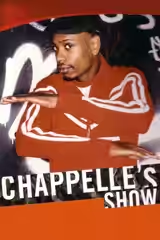
  1. Chappelle's Show (2003) · not reviewed yetThe sketch show about race and manners that this one is plainly answering.

  2. The Kids in the Hall (1988) · not on Fi1m yetFive Canadians, hundreds of characters, and a similar taste for the sketch that turns strange.

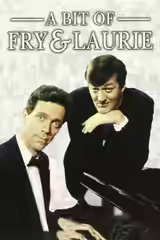
  3. A Bit of Fry & Laurie (1989) · not reviewed yetA British double act built on language, with links between sketches that actually earn their keep.

  4. Get Out (2017, Fi1m 89)Peele takes the polite-conversation-turns-to-horror sketch and runs it for a whole film.

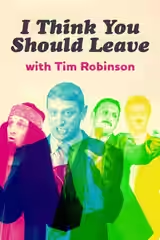
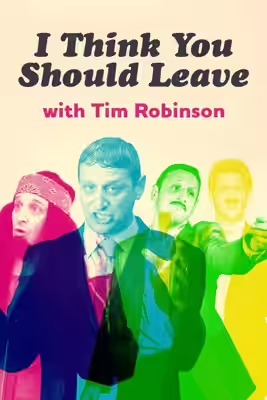
  5. I Think You Should Leave with Tim Robinson (2019) · not reviewed yetSketches that refuse to end at the sensible moment, from a man who will not be corrected.

Free account

Know what to watch tonight

Two lists that know where things are streaming, collections you can share, your own score beside ours, and Discover that remembers what you have seen.

  • Want to see, sorted by what is streaming now
  • Seen, with your score out of ten
  • No adverts, ever