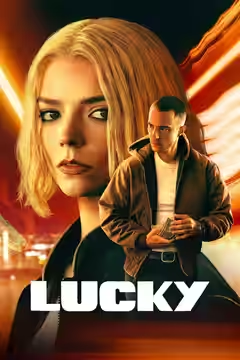
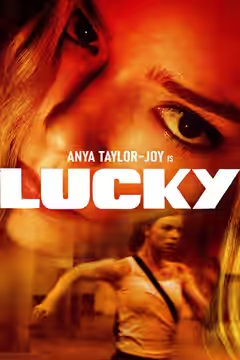
Luciana 'Lucky' Armstrong (Anya Taylor-Joy) in a desert under an orange sky
Series review

Lucky

2026 · Created by Jonathan Tropper · Series · ACB MA 15+

In a sentenceAnya Taylor-Joy changes wig, name and state every episode, and the show still cannot decide who she is

Luciana Armstrong, known as Lucky (Anya Taylor-Joy), is a con artist who has spent her life changing names and cities. A heist goes wrong, someone she trusted sells her out, and she is left running with the money everyone wants. Behind her come the Mastersons, a criminal family headed by Priscilla (Annette Bening), and the FBI, led by Agent Billie Rand (Aunjanue Ellis-Taylor). Timothy Olyphant plays John Armstrong, Clifton Collins Jr. plays Harris Dutch and Drew Starkey is Cary Masterson. Adapted from Marissa Stapley’s novel, the series runs seven episodes and carries a 15 certificate.

Plays from YouTube when you press play; nothing loads from them until then.

Fi1m review

Anya Taylor-Joy gives this seven-part con-artist chase a lead worth following, and the first episode moves with real snap. After that the series repeats itself, explains itself, and never finds out what it is about beyond the running.

Marissa Stapley’s novel becomes a seven-episode series in which Anya Taylor-Joy plays Luciana Armstrong, called Lucky, a con artist who walks out of a heist betrayed and with everybody after her. On one side are the Mastersons, a criminal family run by Annette Bening’s Priscilla. On the other is the FBI, in the shape of Aunjanue Ellis-Taylor’s Agent Billie Rand and Mo McRae’s Agent Eli Gates. It is a chase, and for one episode it is a good one. Then it settles into a pattern it never breaks: new town, new name, somebody catching up, and by the middle of the run we could have set a watch by it.

Taylor-Joy is the reason to stay. She plays each of Lucky’s identities as a different set of habits rather than a different voice: how she stands in a doorway, how long she lets a stranger look at her before she looks back. The pleasure is watching her choose, and she never lets us see the choosing until it is done. It is a controlled, unshowy piece of work in a show that is neither of those things, and it is better than the scripts it is serving.

Bening has fun. Her Priscilla is polite, expensively dressed by Christine Wada, and unhurried in a way that reads as a threat, and whenever the series remembers she exists it improves. Ellis-Taylor plays Rand as tired, patient and unimpressed, the one person on screen who behaves like an adult with a job. Clifton Collins Jr. does more with Harris Dutch than the writing gives him. Drew Starkey’s Cary Masterson is the one the camera likes and the script does not bother with. Timothy Olyphant’s John Armstrong belongs largely to the flashbacks, alongside Quinn Aune as the young Lucky, and the flashbacks are where the writing is weakest, each one landing exactly the lesson you expect.

Three directors, Jet Wilkinson, Jonathan van Tulleken and Greg Yaitanes, share the seven episodes, and five editors share the cutting. The seams show. The opening episode has a tempo the later ones keep reaching for and not finding. Yaron Orbach and Doug Emmett shoot the road and the rooms cleanly, and Keith P. Cunningham’s production design gives us motels, bars and back offices that would serve any crime series of the last twenty years, which is the trouble: nothing in the frame belongs to this story alone. Isabella Summers’s score drives hard under the chases and drops out when the show reaches for feeling, and that restraint is the right call even when what is under it is thin.

Here is what we felt. The first episode’s set piece had us leaning forward, glad to be watching, sure we were in good hands. By the fourth episode we were bored, and then we were irritated at being bored, because everything needed was there: a lead who can hold a screen alone, two proper antagonists, a premise that has fed good films for fifty years. What was missing was anybody deciding what Lucky wants beyond the next exit.

The writing keeps stopping to explain. Who the Mastersons are, what was taken, who is owed what by whom: every second scene is a briefing, and the details of the syndicate get more tangled the more time is spent on them. Meanwhile the thing the genre lives on, the con itself, the small performance for a small audience, gets less room each hour. Paper Moon (1973) and The Grifters (1990) understood that the lies are the character. Here the plot does the talking and the character waits in the car.

The reviews so far are split, some finding it gripping, others finding it assembled from better crime stories, and we sit unhappily in the middle. There is a tight, nasty four-episode series in here, and we would have liked to see it.

Watch the first episode, which earns its length. If Taylor-Joy is enough to carry you through the rest, she is good enough to do it. If not, you will know by the end of episode two, and the show will not change your mind.


Critical consensus AI synthesised

52
Positive
4
Mixed
1
Negative
4

The reviews split almost exactly down the middle, so there is no lean to report, only a division. What critics do agree on is Anya Taylor-Joy. Nearly every review finds her committed and watchable as the con artist on the run, slipping between personae with ease, and several credit her with carrying scenes the writing does not. The action sequences are the other point of agreement: the set-pieces, particularly in the opening episode, are called tense and well staged even by critics who like little else about the series.

The reservations gather around the writing. The negative reviews find the series thin on character, heavy on exposition and stretched too far across seven episodes. IndieWire and Vulture both argue that the plot moves fast at the expense of anyone worth caring about, while The Telegraph goes further and calls it a cliché-ridden Tarantino imitation assembled from better work. The spread is wide: four warm reviews, four firmly dismissive, and only Collider in the middle.

Variety
15 July 2026 · Aramide Tinubu
90*

The critic finds the Apple TV limited series a captivating story of a young woman's attempt to escape her criminal past. They single out the high-voltage thriller elements and Anya Taylor-Joy's performance as a con artist on the run.

Read the full review →
The AV Club
14 July 2026 · B- · Saloni Gajjar
70

Anya Taylor-Joy delivers a committed lead performance in this repetitive crime thriller about a scam artist on the run. The premiere's action sequences stand out, but the show struggles with shallow storytelling and over-reliance on exposition.

Read the full review →
The Guardian
11 July 2026
70*

The critic praises Anya Taylor-Joy as audacious and undeniably cool in this Apple TV crime thriller about a betrayed conwoman on the run after a heist. They single out the cat-and-mouse thrills, explosive set-pieces, and her competent, morally ambiguous antiheroine for praise while noting plausibility takes a back seat to excitement.

Read the full review →
IndieWire
15 July 2026 · Ben Travers
30*

The series features strong performances but ultimately feels more surface-level than substantive. It follows a con artist navigating betrayals and pursuits but lacks deeper character exploration beyond its propulsive plot.

Read the full review →
The Hollywood Reporter
15 July 2026 · Daniel Fienberg
30*

The critic concludes that the series never clicks despite a strong cast. They single out the entertaining action sequences and Taylor-Joy's ability to inhabit multiple personae, while noting weaknesses in lighter elements and overall cohesion.

Read the full review →
The Telegraph
15 July 2026
30*

The critic calls the Apple TV series a creaky, cliché-ridden Tarantino knock-off that under-serves its lead and feels assembled from better shows and films. They single out the formulaic heist caper plot and generic crime setting for complaint, though one supporting performance stands out for having fun with the material.

Read the full review →

Straight answers AI written, from our review

Is Lucky worth watching?
Lucky is worth watching only for Anya Taylor-Joy, whose lead performance is better than the seven episodes around it, and we scored it 57. The first episode moves with real snap; after that the series repeats one pattern, new town, new name, someone catching up, and stops to explain itself every second scene. Watch the opener, and you will know by episode two whether she is enough.
How long is Lucky, and what is it rated?
Lucky is rated MA 15+ by the ACB in Australia. It is a drama and crime series.
Where can I watch Lucky in Australia?
Lucky is streaming on Apple TV and Amazon Prime Video in Australia. Availability is checked daily; the links above go straight to each service.
How violent or frightening is Lucky, and is it suitable for children?
Lucky carries a 15 certificate in the UK and TV-MA in the US, so it is not for children. It is a crime drama built on a heist gone wrong, a criminal family and an FBI pursuit, with chases and threat rather than sustained horror. Older teenagers and adults who can take the standard violence of a crime series will find nothing here beyond what the certificate implies.
How does Lucky compare to The Grifters?
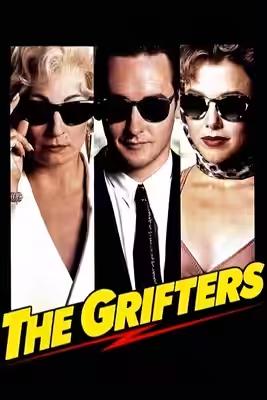
Lucky and The Grifters both follow con artists caught between family and the law, and the earlier film is much the better of the two. Stephen Frears keeps his story to a few liars and wastes no scene; the series stretches a similar premise across seven episodes and lets plot briefings crowd out the cons themselves. Choose The Grifters for a tight, cruel drama and Lucky if you want Taylor-Joy for company over a longer run.
Is Lucky based on a true story or a book?
Lucky is based on a novel by Marissa Stapley, not on a true story. The series follows the book's premise of a con artist betrayed after a heist and pursued by a criminal family and the FBI, though we cannot say how closely it keeps to the page. You do not need to have read the novel to follow the show.
What should I watch after Lucky?
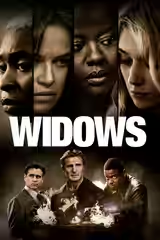
After Lucky, try Paper Moon (1973, Fi1m 86): The con as character, with a child who out-thinks every adult she meets. Then The Grifters (1990, Fi1m 84): Three liars, one family, and not a wasted scene among them; and Widows (2018, Fi1m 83): A heist built on grief, with women who plan better than the men they replace.

Cast

If you liked this, try…

  1. Paper Moon (1973, Fi1m 86)The con as character, with a child who out-thinks every adult she meets.

  2. The Grifters (1990, Fi1m 84)Three liars, one family, and not a wasted scene among them.

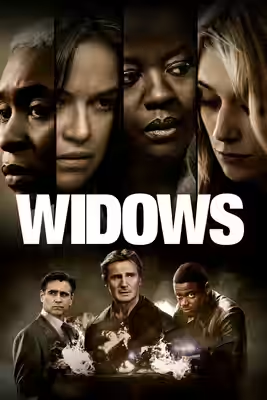
  3. Widows (2018, Fi1m 83)A heist built on grief, with women who plan better than the men they replace.

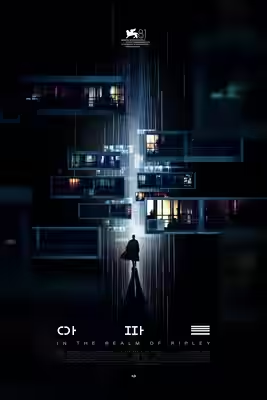
  4. Ripley (2024) · not reviewed yetAnother identity thief on the run, filmed slowly and in black and white, to greater effect.

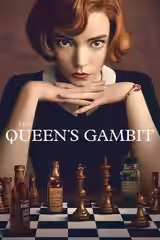
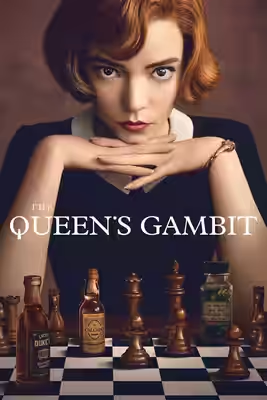
  5. The Queen's Gambit (2020, Fi1m 74)Taylor-Joy given a whole series that trusts her stillness.

Free account

Know what to watch tonight

Two lists that know where things are streaming, collections you can share, your own score beside ours, and Discover that remembers what you have seen.

  • Want to see, sorted by what is streaming now
  • Seen, with your score out of ten
  • No adverts, ever