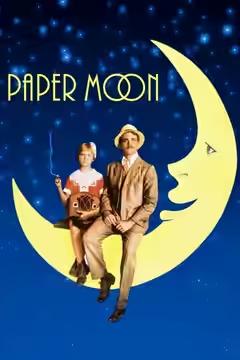
Bogdanovich’s Depression road comedy puts a con man and a small girl in a car and lets Tatum O’Neal win every scene. It is dry, handsome and funny; only a slack stretch in the middle keeps us from handing it to strangers.
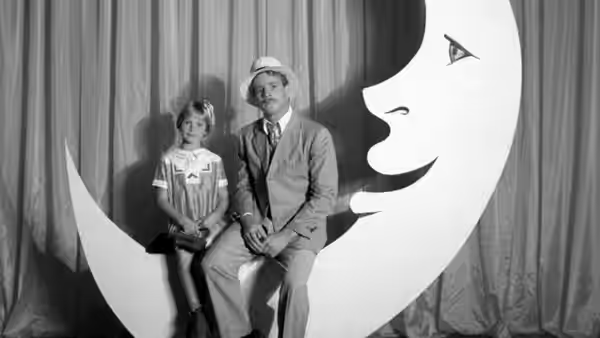
Peter Bogdanovich made this straight after The Last Picture Show and What’s Up, Doc?, and it borrows from both: the black-and-white Depression of the first, the speed of the second. Alvin Sargent’s script, from Joe David Brown’s novel, is simple. A woman has died in Kansas. A man in a good hat, Moses Pray (Ryan O’Neal), arrives at the graveside late and is asked to take her daughter, Addie Loggins (Tatum O’Neal), to an aunt in Missouri. He agrees because he has seen a way to make two hundred dollars out of it. Addie, who is small and silent and misses nothing, works out what he has done within a day. We think it is the best film Bogdanovich made, and we recommend it warmly, with one soft stretch to report.
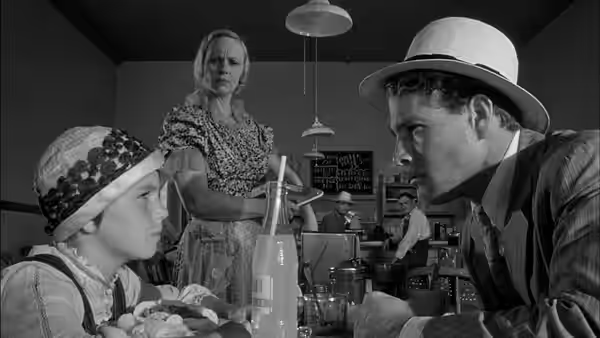
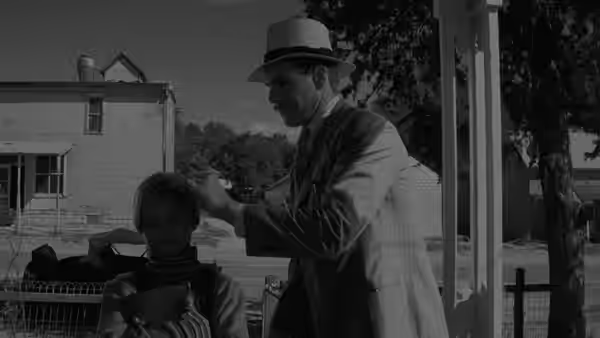
The trade Moses is in is selling Bibles. He reads the obituaries, has the widow’s name embossed in gold on the cover, knocks on the door and tells her that her late husband ordered it. It is a cruel scam and the film does not pretend otherwise; it also lets you watch Addie get better at it than he is. She knows which widow is poor and which has money, and she adjusts the price. The scene in a diner where she tells him, over and over, that she wants her two hundred dollars is where the film declares what it is: a comedy about two people who each think they are the senior partner.
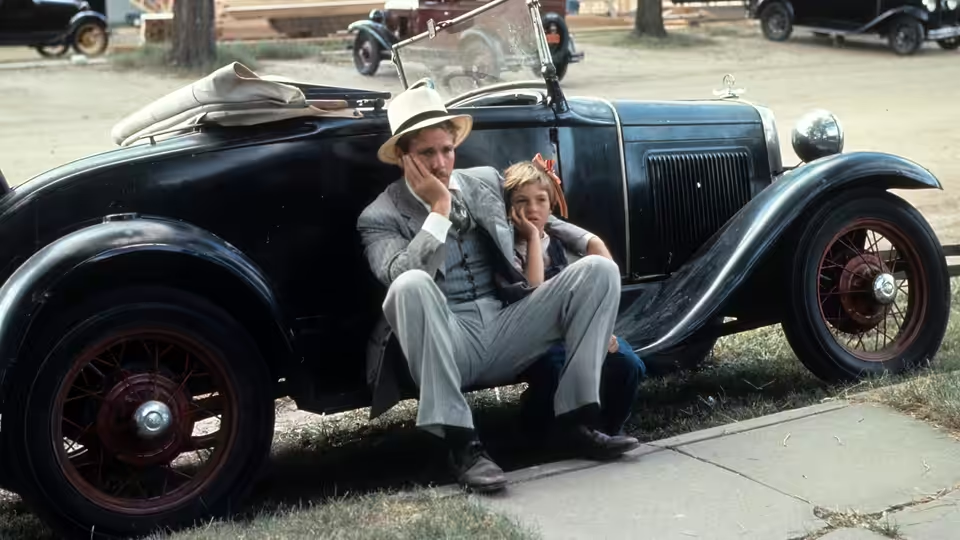
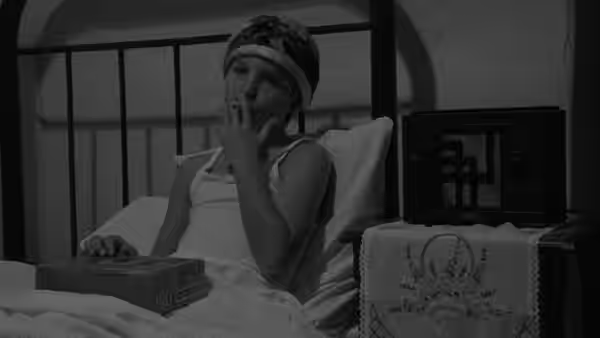
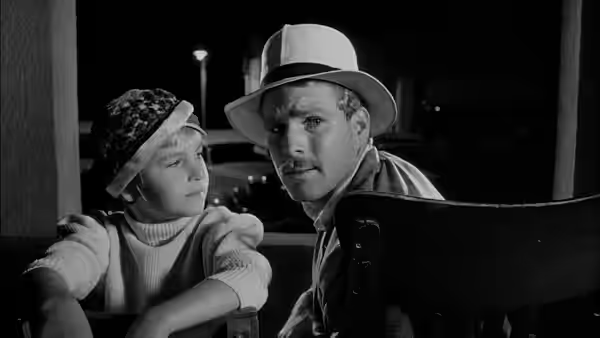
László Kovács shoots it in black and white with the camera kept low and everything in focus, so that the Kansas horizon sits flat across the frame and the sky takes up most of the picture. Scenes are played in long takes, with both O’Neals in the shot and no cutting to tell you who won. Verna Fields mostly leaves the takes alone, and the film is quicker for it. Polly Platt did both the production design and the costumes: the dust on the Ford, the hotel rooms with iron bedsteads, Addie’s overalls, and the cloche hat and cigarette she adopts because her mother had them. There is no composed score; the music comes out of car radios and parlour sets, and it stops when someone switches it off.
Tatum O’Neal is the reason people still talk about the film, and they are right. She does not ask to be liked, she does none of the things a child actor is usually asked to do, and she can hold a close-up while thinking. Ryan O’Neal is better than he is usually given credit for: he plays Moses as a man slightly less clever than his suit, who is being out-negotiated by a child and knows it. There is a scene in a hotel room where Addie sits at a dressing table with a photograph of her mother, trying on lipstick, the radio playing, and nobody says anything. It moved us more than we were ready for. It is the stillness that does it, and the fact that the camera does not cut away to Moses to tell us how to feel.
Madeline Kahn arrives at a carnival as Trixie Delight, a dancer with a maid, Imogene (P.J. Johnson), and a plan for Moses. Kahn is funny in the way she is always funny, all breath and bosom and pretended refinement, and she gets one speech, on a hillside, that is sad without the film pointing at it. But her stretch is where the picture slackens. The cons stop, the car stops, and for a quarter of an hour the film waits in a hotel for the two women to settle who owns the man. John Hillerman’s Deputy Hardin brings a proper crime plot into the last third, and that works better, though the mechanics are the least interesting part of the film. At 102 minutes it is not long, and the slack is noticeable only because the rest is so taut.
Set against the director’s own work, it is warmer than The Last Picture Show and better built than What’s Up, Doc?, and it has aged less than either. The ending reaches for a feeling it has already earned, which is a small vanity and not a fault.
Watch it with a child who thinks she is cleverer than you. She will side with Addie, and so, by the end, will you.