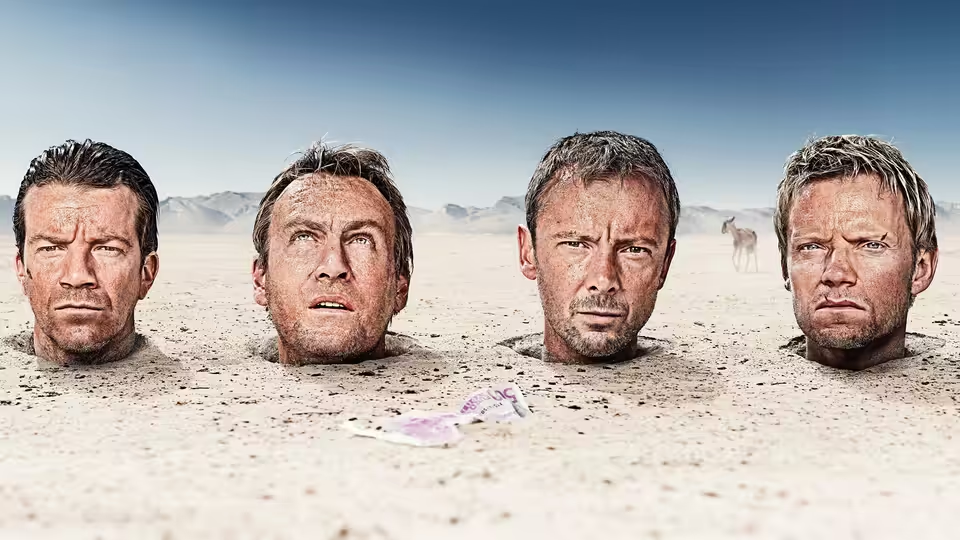
Cris Cole’s four-part series puts five good actors in a sunlit villa and lets the weather do the menacing. For three episodes it is tense, funny and nasty in the right order; the fourth sits down when it should run.
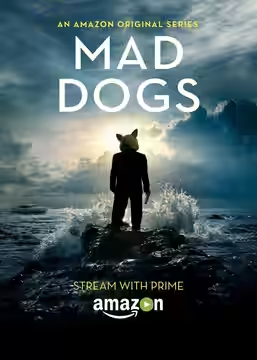
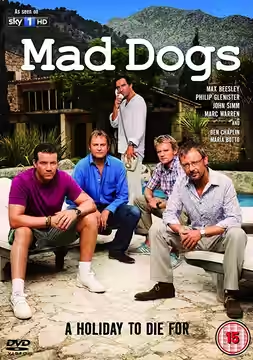
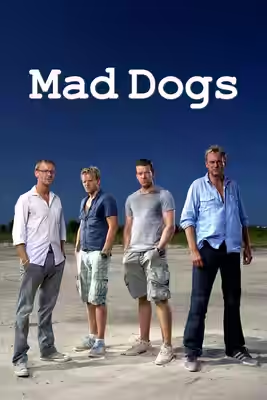
Cris Cole’s Mad Dogs sends four old school friends abroad to visit the fifth, Alvo (Ben Chaplin), who has done well out there and wants everyone to see it. It is a lads’ holiday that turns, within an hour of screen time, into a crime story, and the trick it is attempting is to make the turn without changing the weather. Nobody skulks in an alley. Everything bad happens by a swimming pool in hard white light. For three of its four episodes that trick holds, and it is a good one. The last episode lets go of it, and of most of the tension, which is why we can only recommend it with a caveat.
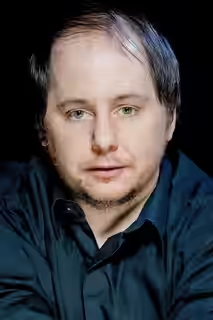
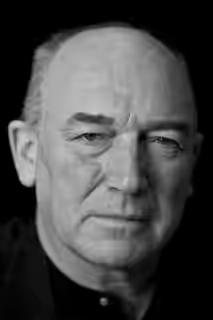
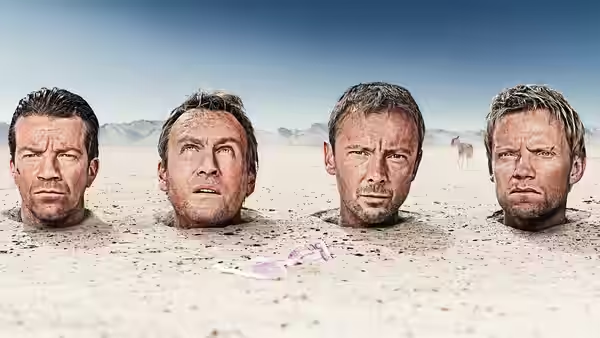
The casting is the reason to watch. John Simm’s Baxter is the sensible one, which in this company means the one who says the sensible thing and is ignored. Philip Glenister plays Quinn as a man who has been the one everyone listened to since he was fourteen and has started to notice they have stopped. Max Beesley’s Woody is loud, broke and the first to panic; Marc Warren’s Rick is the one who went quiet at school and has stayed quiet. Chaplin, as the host, is the best of them, generous in the way a bully is generous, buying drinks and boats and telling his guests how grateful they should be. Every scene with the five of them is a scene about who outranks whom, and nobody has to say it.
Adrian Shergold and James Hawes direct, and they keep the camera out in the daylight. The villa is white walls, blue pool and a view of the sea, and the dread is made of small wrong things in a frame that should be a holiday photograph. The goat in the pool made us laugh. The man in the mask, a minute later, did not, and the gap between the two reactions is the show in miniature. We spent the rest of the first episode slightly cold in the sun, which is exactly what it wanted.
Cole writes men who talk over each other. The banter is quick and true, old nicknames and older grudges, and it sharpens whenever one of them is frightened; the characters reach for a joke the way other people reach for a drink. There is a monologue from Beesley in the second half, a long, tired account of what Woody’s life has come to, that is the best thing the series does, and Beesley plays it with his back to the view. The directors have the sense to hold on him.
The trouble is that the plot underneath the talk is thin, and the talk is asked to cover it. The four decide on a plan, then argue themselves out of it, then arrive at the same plan an episode later. By the third hour we found the bickering had stopped sounding like character and started sounding like padding. The finale we will not describe; what we can say is that it ends an episode early in spirit and then keeps going, and that the last twenty minutes have less at stake than the first twenty did. We were tense for three evenings and then, on the fourth, we were waiting for it to stop.
The two reviews we have read split it: one calls it unsettling and highly watchable, the other finds the ending flat after an entertaining run. We think both are right and the flat ending is the smaller sin. Three strong hours of television with a weak fourth is still a good week.
It went on to four series and fourteen episodes, and it is the first four that matter; the villa is where the idea lives. Watch it at home, over two nights, with people who went to school with you. The arguing will be familiar. The goat, we hope, will not.